
The Ibex Bracelet Terminal
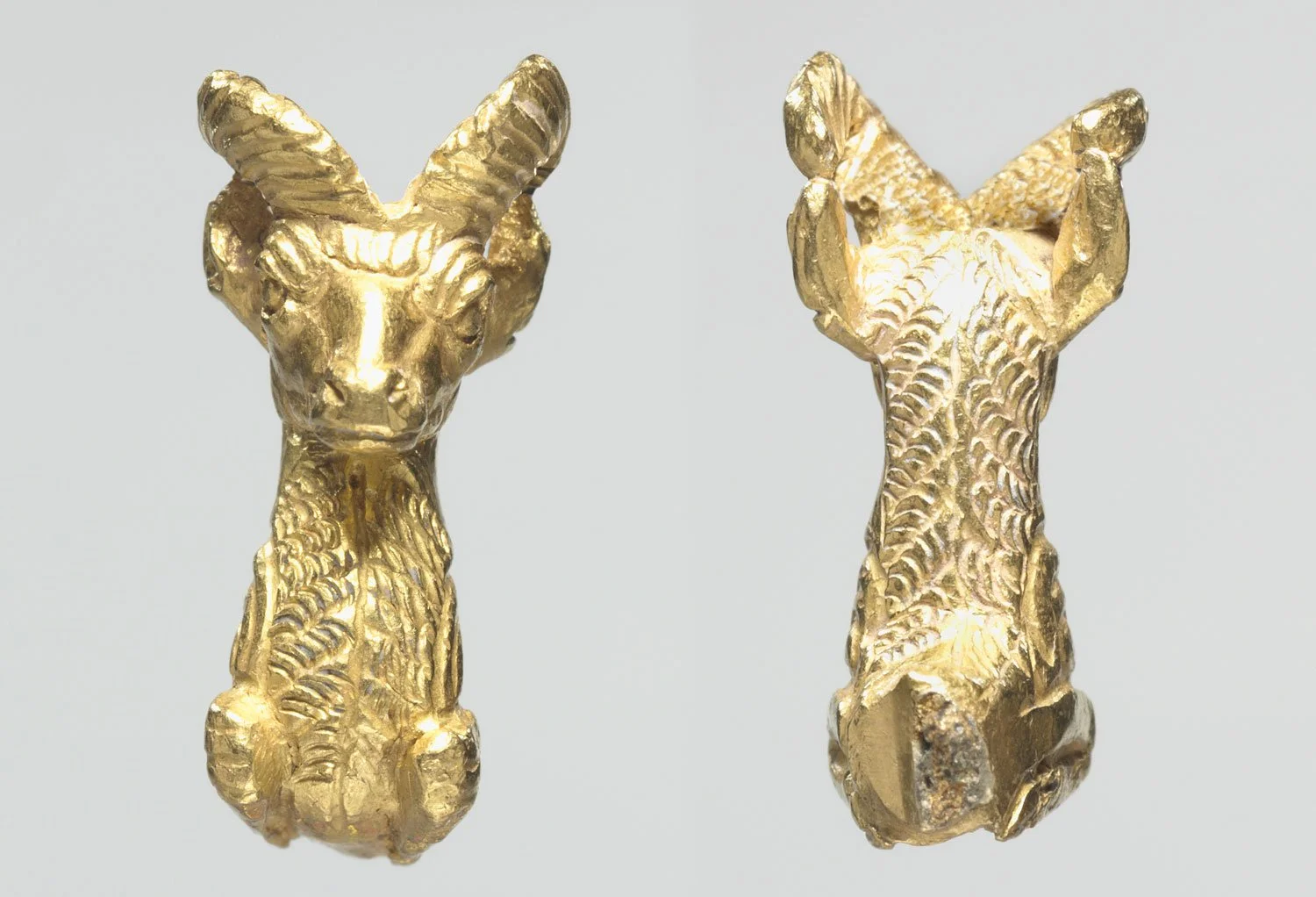
The Ibex Terminus, Iran, Achaemenid, 550–330 BCE. At the Cleveland Museum of Art.
First, A Little About the Fabulous Achaemenid Empire…
The Achaemenid Empire, founded by Cyrus the Great around 550 BCE, was the first great Persian Empire and eventually stretched from Egypt and Anatolia to Central Asia and the Indus Valley. Its royal courts were celebrated for magnificent works of gold and silver, created by skilled artisans who blended Persian traditions with artistic influences from across the empire.
Luxury jewelry, including torcs, earrings, rings, and open-ended bracelets adorned with lions, ibexes, rams, griffins, and other animals, served as both personal ornament and a visible expression of wealth, status, and royal favor. Gold bracelets were especially prestigious: they appear among the tribute offerings carved on the palace reliefs at Persepolis and were sometimes presented as gifts of honor by the Persian king. Surviving examples reveal exceptionally sophisticated casting, engraving, and stone-inlay techniques, reflecting the splendor and cosmopolitan character of the Achaemenid court.

Gold Armlet with winged griffins, Achaemenid Empire, 5-4c, BCE.
© The Trustees of the British Museum, shared under Creative Commons license.
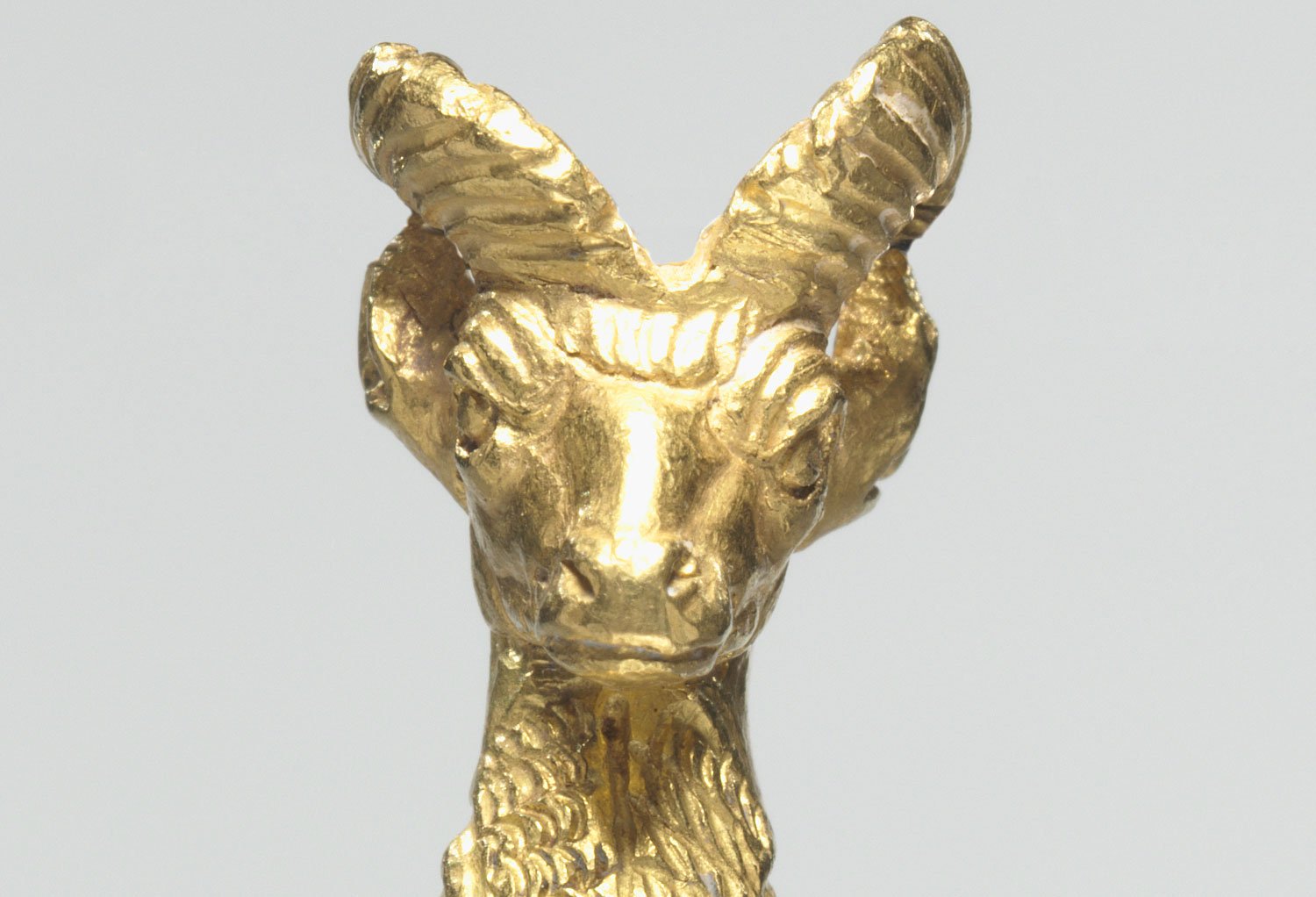
A closer view of the ibex face and expression.
The Ibex in Achaemenid Iran
The Ibex on this bracelet terminal has, like many objects from this age and area of the world, wonderful pattern and stylization. Not to mention a perturbed look on his face. His eyebrows are knit together in consternation!
Although apparently ‘in a mood,’ this ibex depiction is both beautiful and charming.
The small gold ornament, known as the Ibex Bracelet Terminal, was made in Iran between about 500 and 400 BCE. It once formed the decorative end of an open bracelet or armlet, depicting the head and upper body of an ibex, also called the Persian wild goat, with long, ridged horns and a patterned neck. Although only the terminal survives, its gold construction suggests that the original bracelet was a valuable object associated with wealth, rank, or courtly distinction. Bracelets were highly prized in Achaemenid society and could even be presented as gifts of honor.
An Emblem of the Iranian Landscape…
The ibex had appeared in Iranian art for thousands of years, particularly on pottery, metalwork, seals, and rock carvings. Native to Iran’s rugged mountain country, it became a recognizable emblem of the Iranian landscape and, perhaps, of the agility, endurance, and vitality needed to thrive within it. Its enormous curving horns were its most significant feature. Scholars have associated their crescent shape with the moon, rain, water, fertility, abundance, and the seasonal renewal of nature. Ibex imagery may also have carried protective or healing associations: bezoar stones* found within wild goats were once believed to possess magical power against poison and snakebite.
*Solid masses or ‘stones’ consisting of hair, plant and mineral deposits found undigested in the stomachs of goats and other animals.
The Cleveland Art Museum ibex terminal combines an ancient and distinctly Iranian animal motif with the luxury of Achaemenid Empire goldwork offering its wearer not only beauty and status, but also the ibex’s associations with vitality, abundance, protection, and the mountainous homeland of Persia.