
A Visit to ISAC, Formerly The Oriental Institute, in 2026
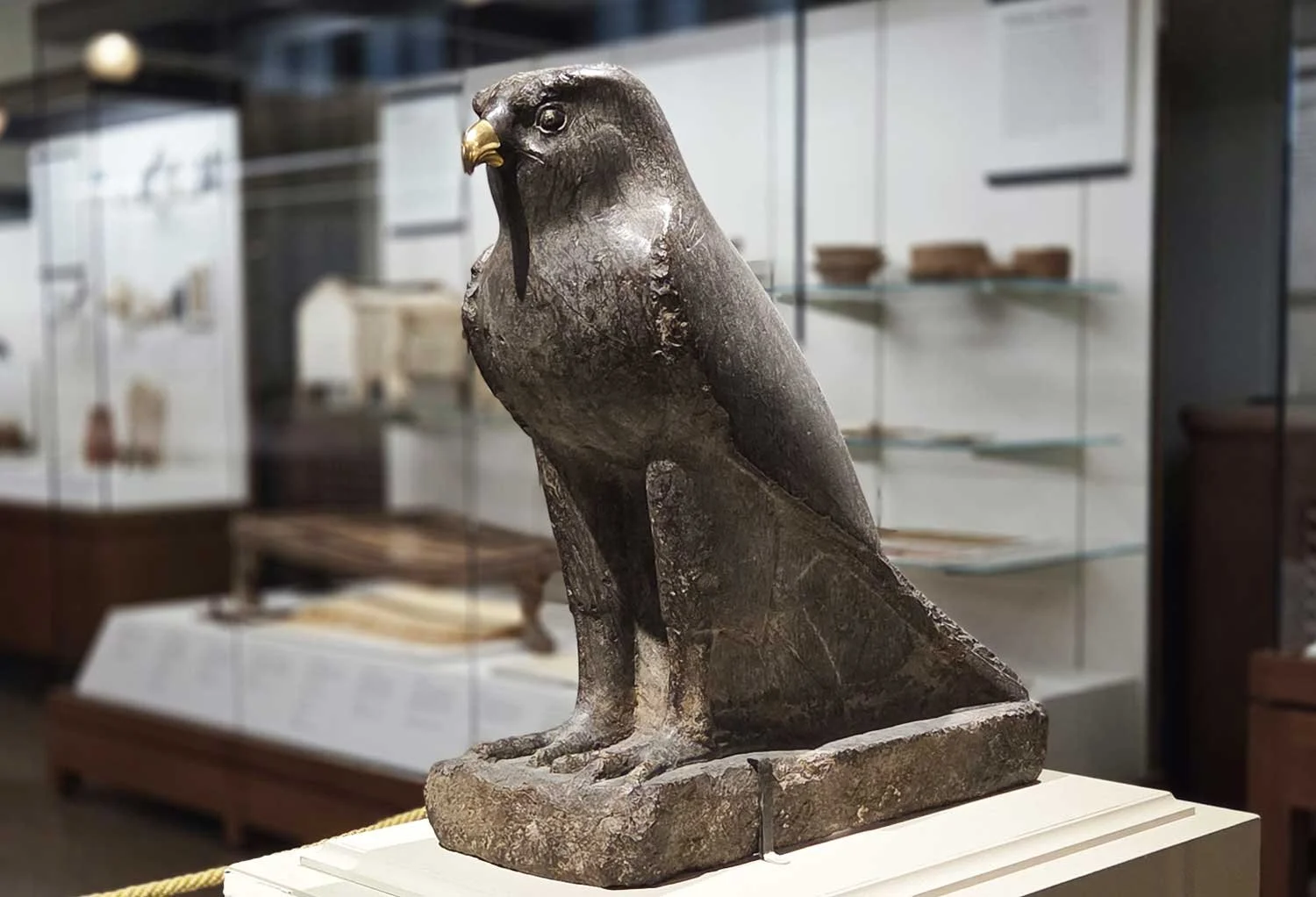
The Ancient Egyptian God, Horus, in the form of a Falcon. Made of serpentine stone or rock. New Kingdom, 1569-1081 BCE.
I was back at the ISAC (Institute for the Study of Ancient Cultures) last week and as usual, it was time well spent.
I make it to the this museum about twice a year but it’s been a while since I did a blog post update and this time I took a plethora of photos.
But First, A Recap of the ISAC…
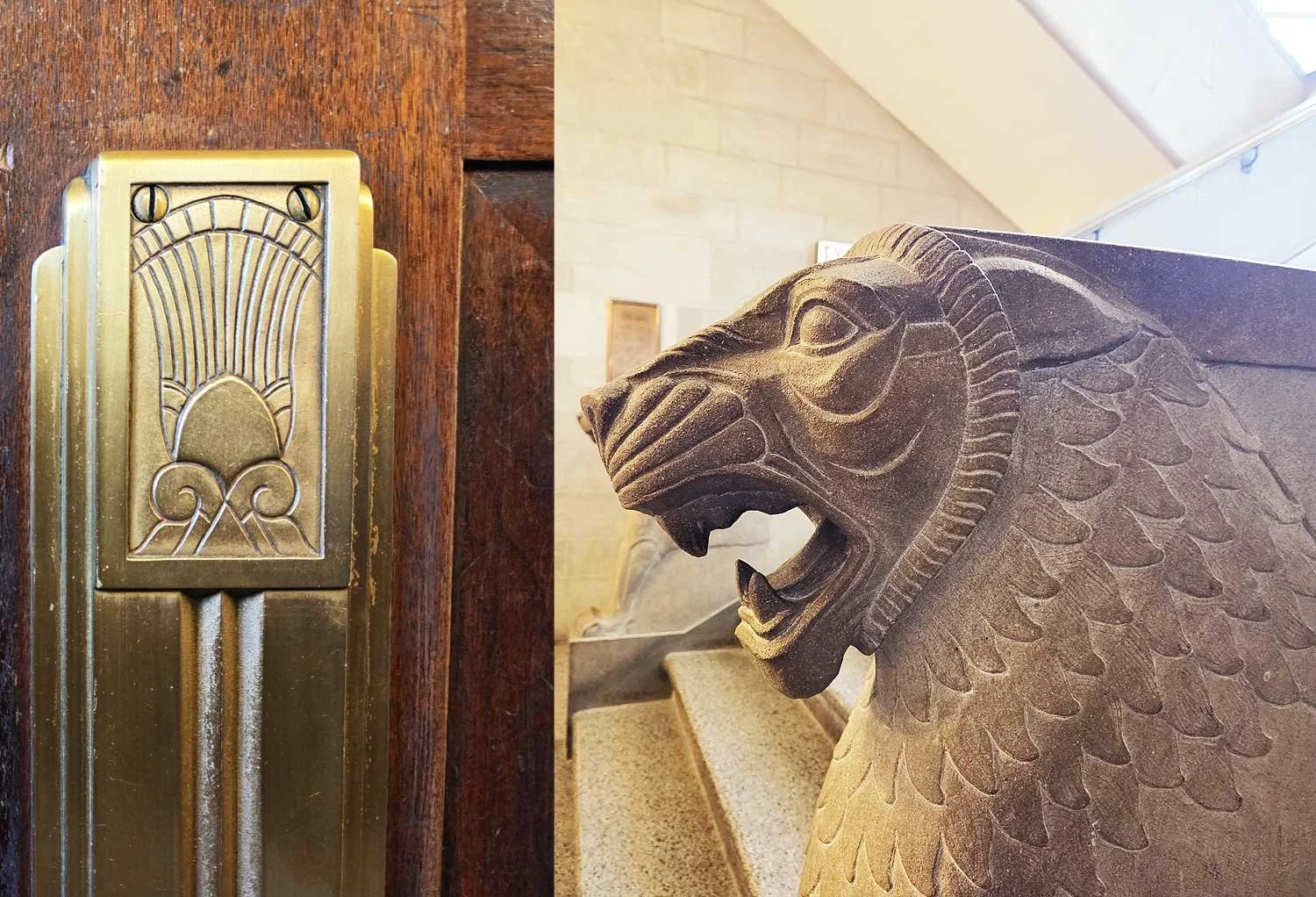
Detail of brass door hardware with stylized lotus (I believe) and roaring statue that flanks the stairs.
The Institute for the Study of Ancient Cultures, known as the Oriental Institute until 2023, was founded at the University of Chicago in 1919 by the pioneering American Egyptologist James Henry Breasted. It was funded by John D. Rockefeller, Jr.
Dedicated to the archaeology, languages, history, and art of the ancient Middle East and North Africa, the Institute combines scholarly research with an exceptional public museum.
Its present building opened in 1931 and was designed by the architectural firm Mayers, Murray & Phillip. Although created to harmonize with the University’s Gothic Revival campus, the building is distinguished by an Art Deco character enriched with Egyptian, Mesopotamian, and other ancient Near Eastern motifs, including lotus ornament, Assyrian-style lions, and sculpted figures inspired by antiquity.
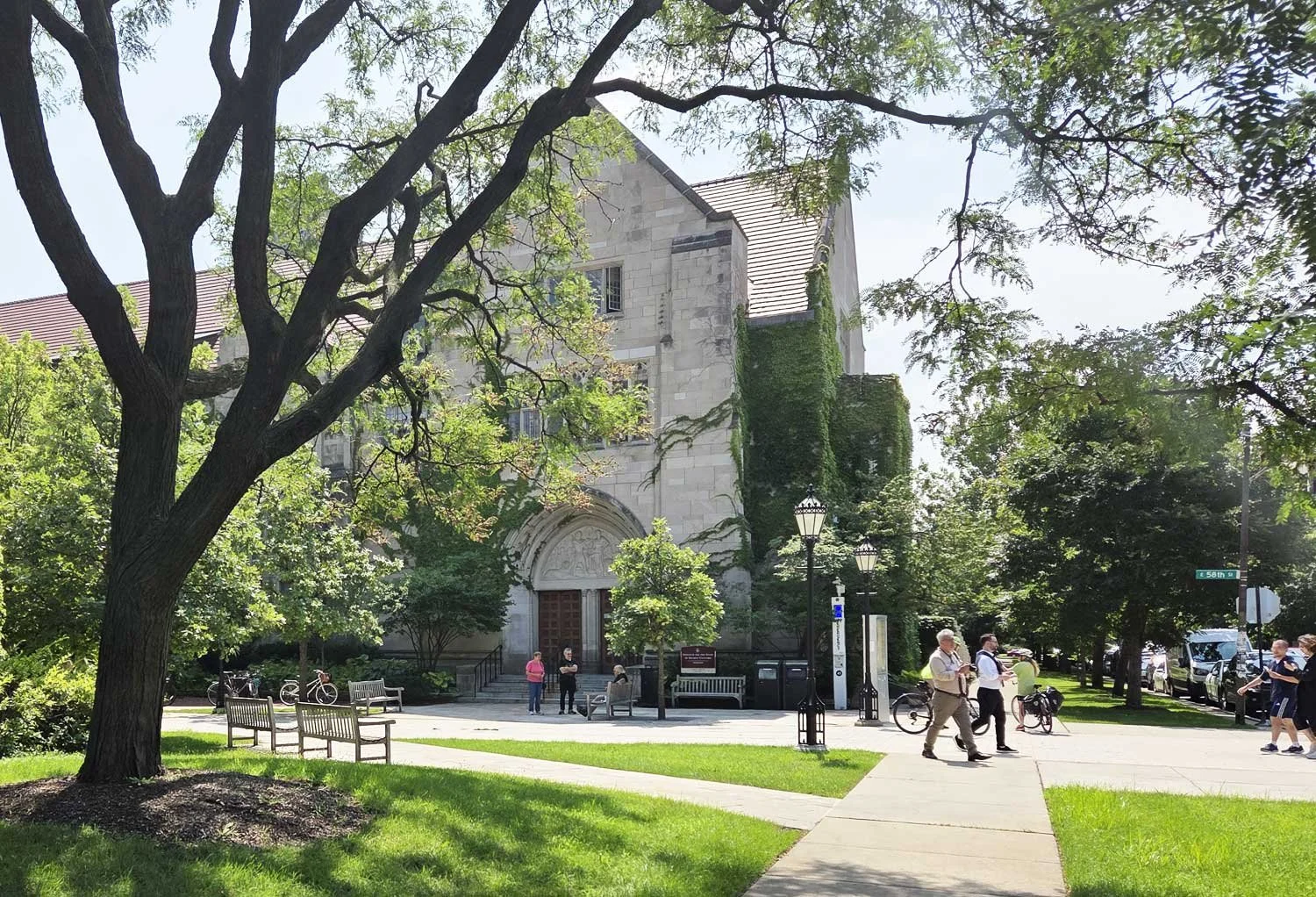
Exterior of ISAC at the University of Chicago.
Step Into Another Era…
Once you step through the doors of the ISAC, it’s as if you’re stepping into a bygone era. A time when museums were quieter. In some ways, the atmosphere at the ISAC feels more like a library than a museum.
I mean that in the best way.
Although I am a lover of the incredible, large libraries found in major cities, they do not exude serenity to me. Often, unless you go very early, they’re quite crowded and somewhat noisy.
But it’s not just the smaller scale of this museum and the fact that it’s located on the University of Chicago’s campus vs in the city, it’s things like the standing glass cases, which are sort of the equivalent of a card catalog, if I stick to the library comparison, as well as the overall architecture.
Now, there are many museums in old, historic buildings, but often the interiors are somewhat non-descript, which is maybe the way they want it. So, the art stands out rather than the color of the walls. But at the ISAC, the whole building with its Art Deco details is just, I don’t know, as I’ve mentioned in an earlier post about this museum, you kind of feel like you’re on an Indiana Jone’s set. It feels a bit academic-core too (I know there is dark academia and light academia as a trend, so I’m assuming there’s regular academia vibe as well).
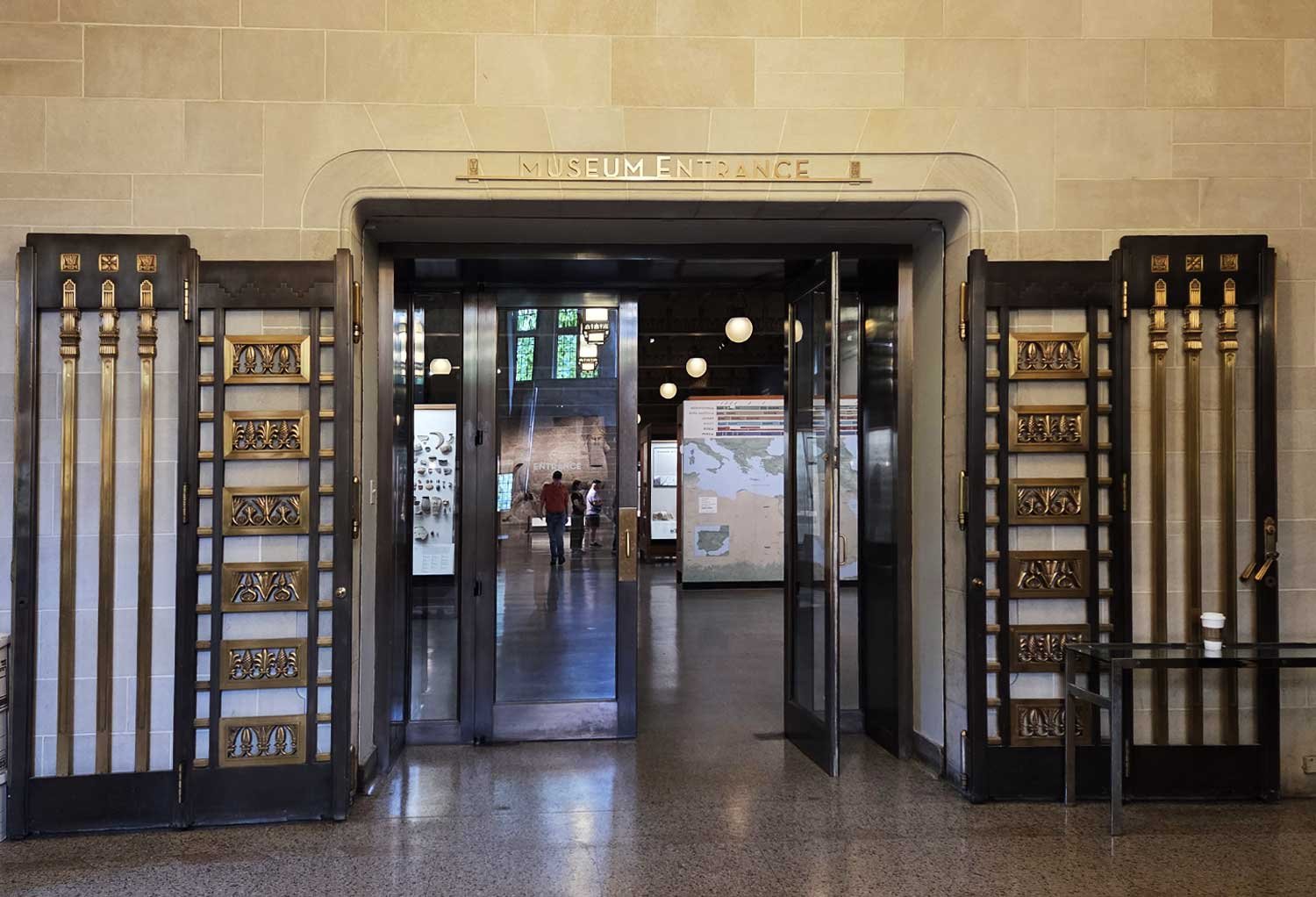
Walking into the museum through the front lobby, gift shop is off to the left.
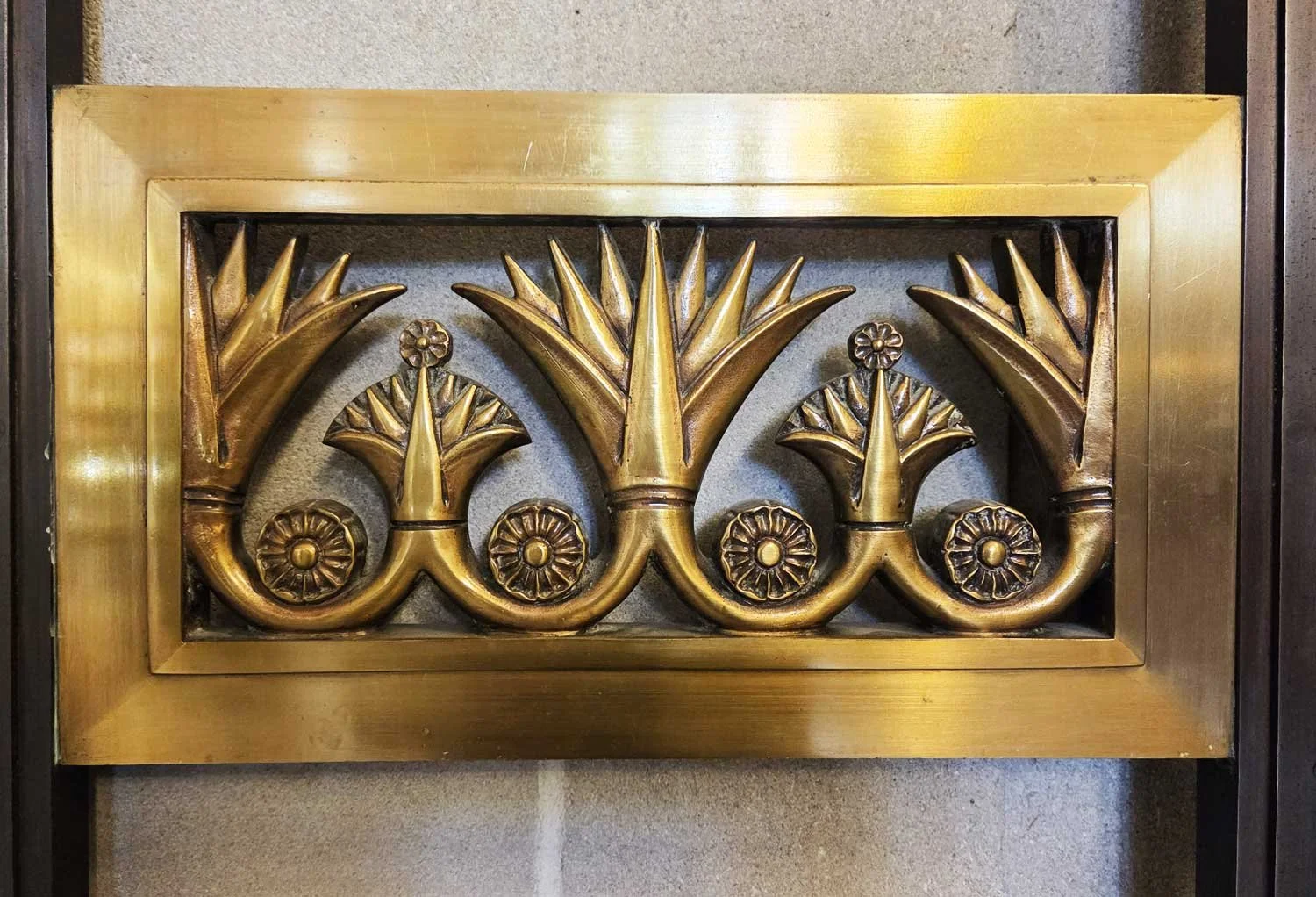
Close-up of lovely door detail. Craftmanship, it’s not what it used to be!
Stepping Into the Museum…
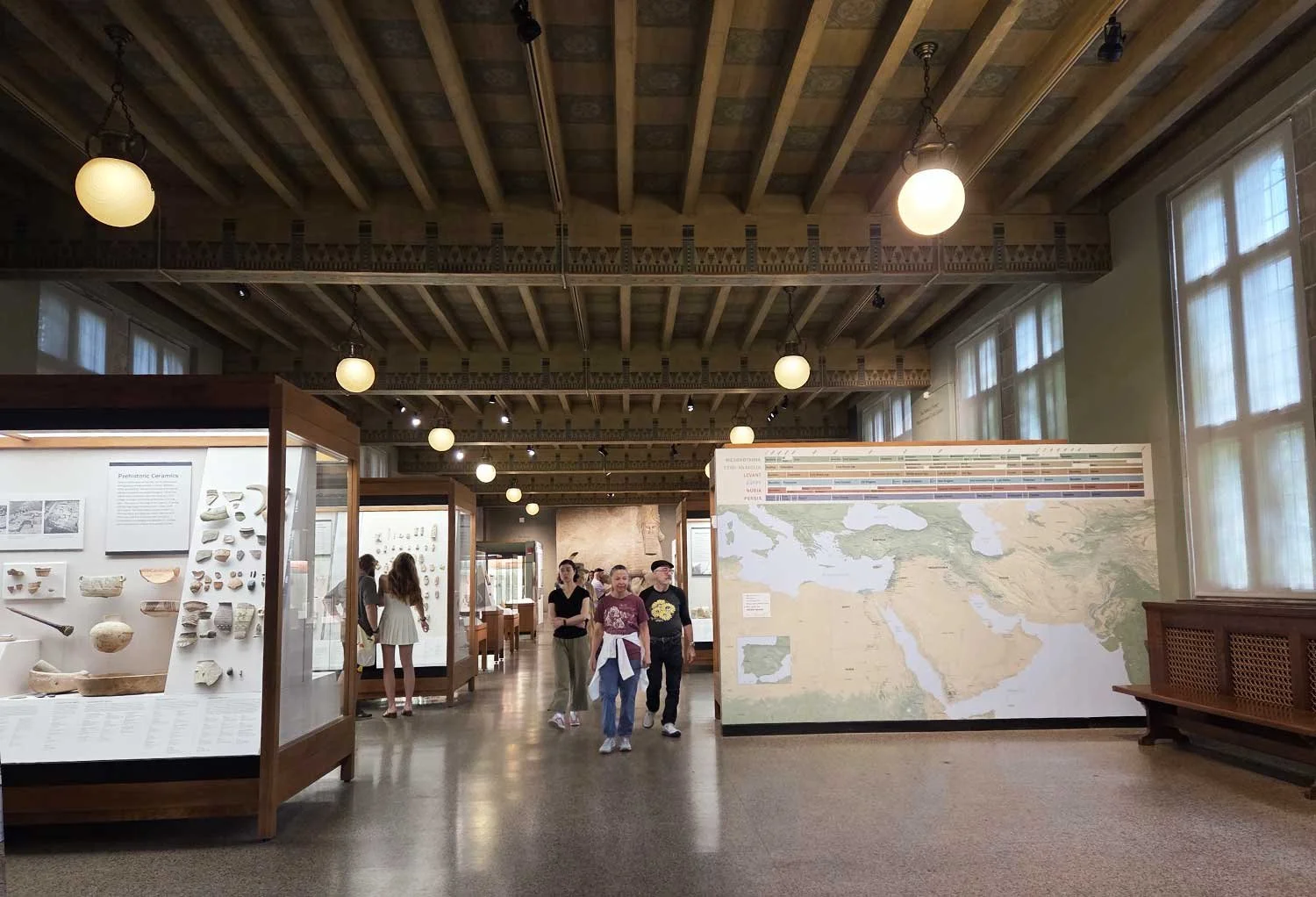
Orientation area and first galleries.
When entering the museum, you’re greeted by a large wall map and timeline, introducing you to the museum’s area of collecting.
After walking into the orientation area, you’re in the pre-history galleries. Then onto Mesopotamia, Khorsabad Court (this is where the large Lamassu reside), the galleries for Assyria, Syro-Anatolia, Megiddo, Egypt, Nubia, Persia and an area for special exhibits. Separately, there is a lecture hall, which again, has the academia vibe.
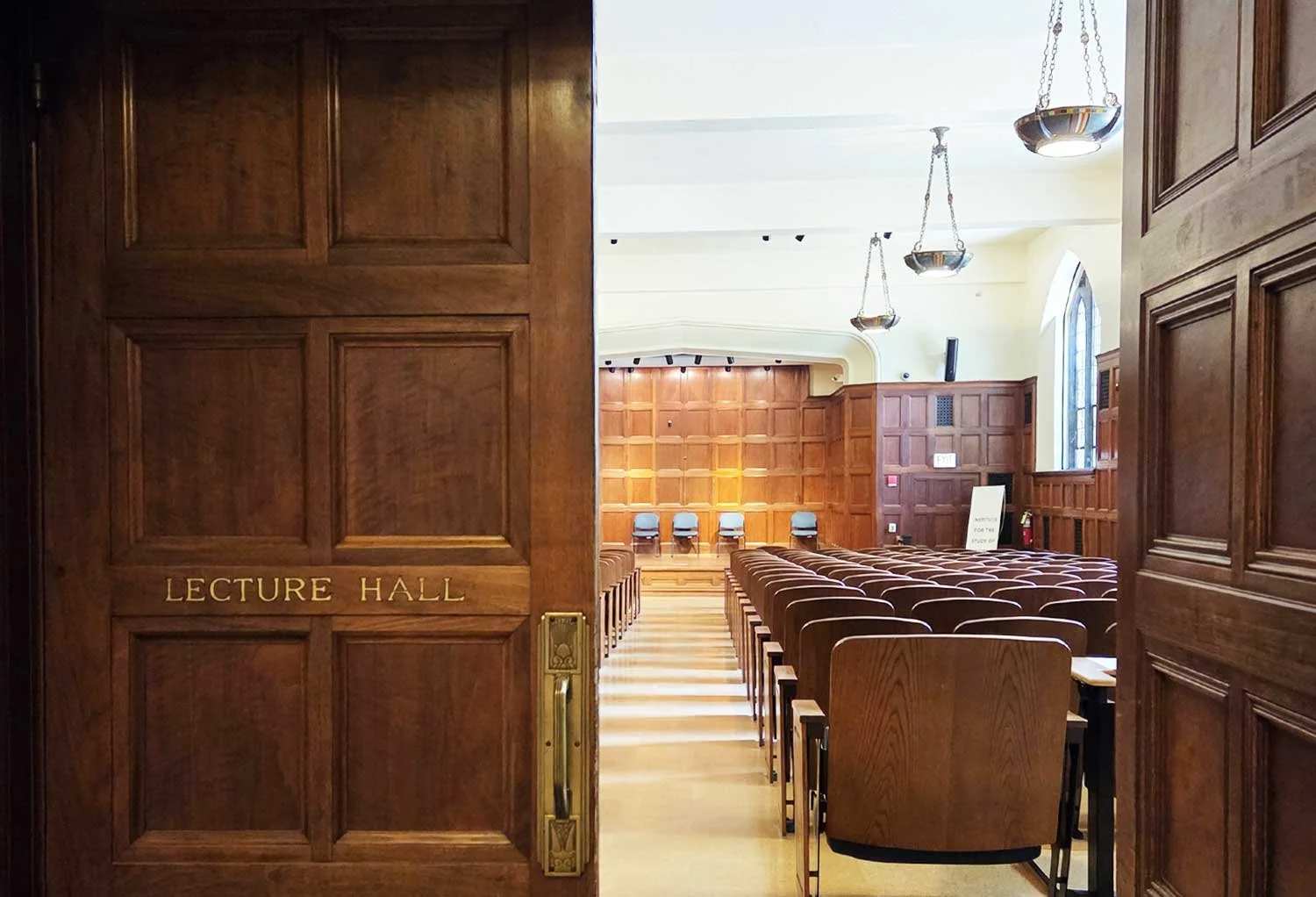
Paneled wood, arched windows, brass…all good, except for the contemporary chairs up front. It’s also too bad the lecture hall doesn’t have the beautiful, painted beams that run through the museum area.
And Now, Mostly Photos…
From here out, I’m just going to post photos with short descriptions. The art and interior shots will speak for themselves!
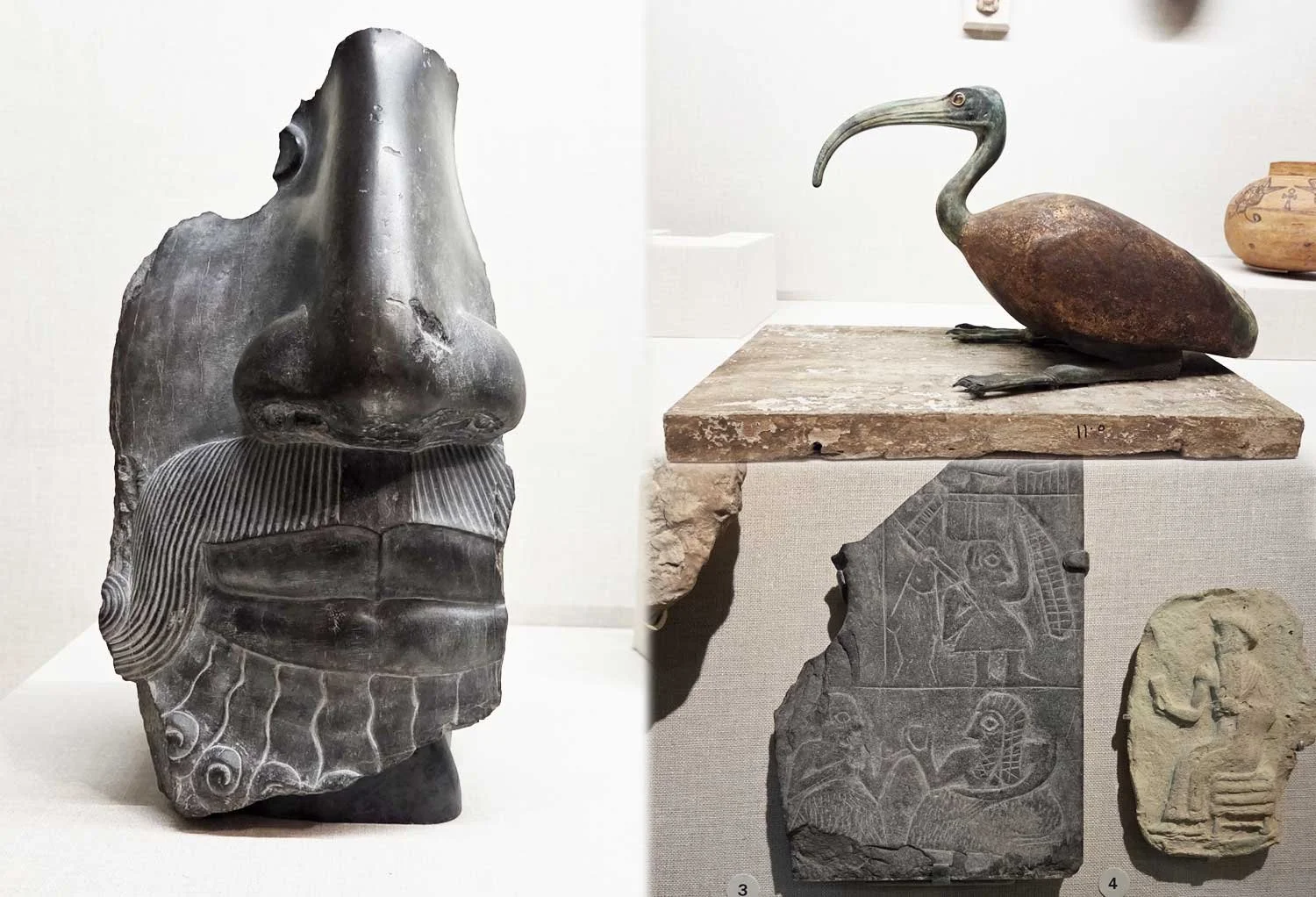
Left: Persian limestone fragment 486-465 BCE, Persepolis, Upper Right: Ibis Coffin, 723-333BCE, Egypt. Bottom Right: Fragments of door plaques, Early Dynastic period.
The Limestone fragment is part of a column that originally had two human-headed bulls. The Ibis was sacred to the Egyptian God, Thoth, a god who represented wisdom and science.
Door plaques were part of a locking system, often the images on them were depictions of feasts and musical performances and other sacred festivals.
The first image of the face fragment is exquisite! I love it. I call it ‘the nose.’
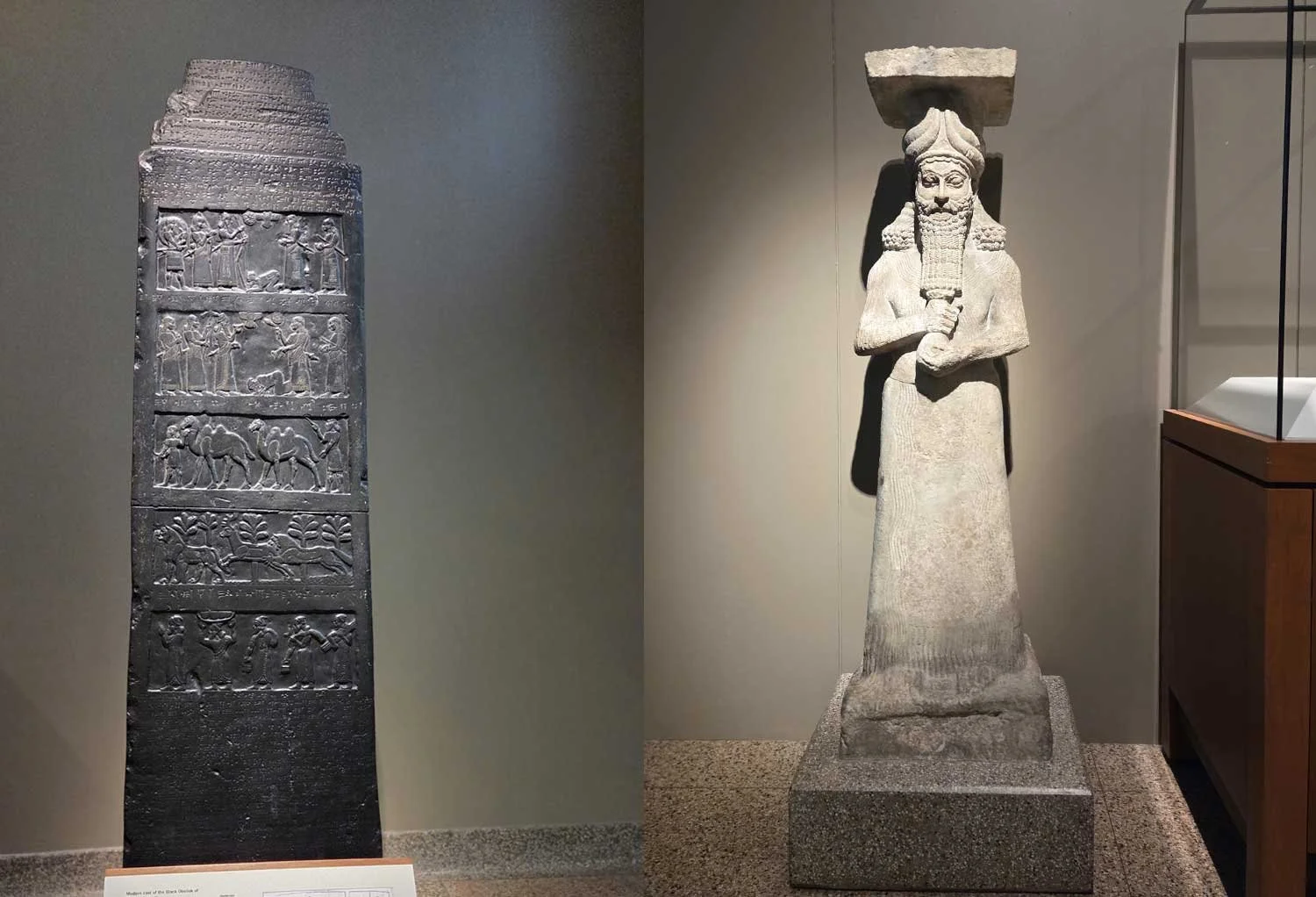
L: Cast of the Black obelisk of Shalmaneser III, original 825 BCE, Iraq. Divine Attendant, Iraq, 712-7032 BCE.
The black obelisk is a cast, one of several that the ISAC has on display. I think this is a really great way to bring these pieces to a larger audience. The original is at the British Museum, made of black limestone. I will very shortly be at the British Museum and will be sure to compare.
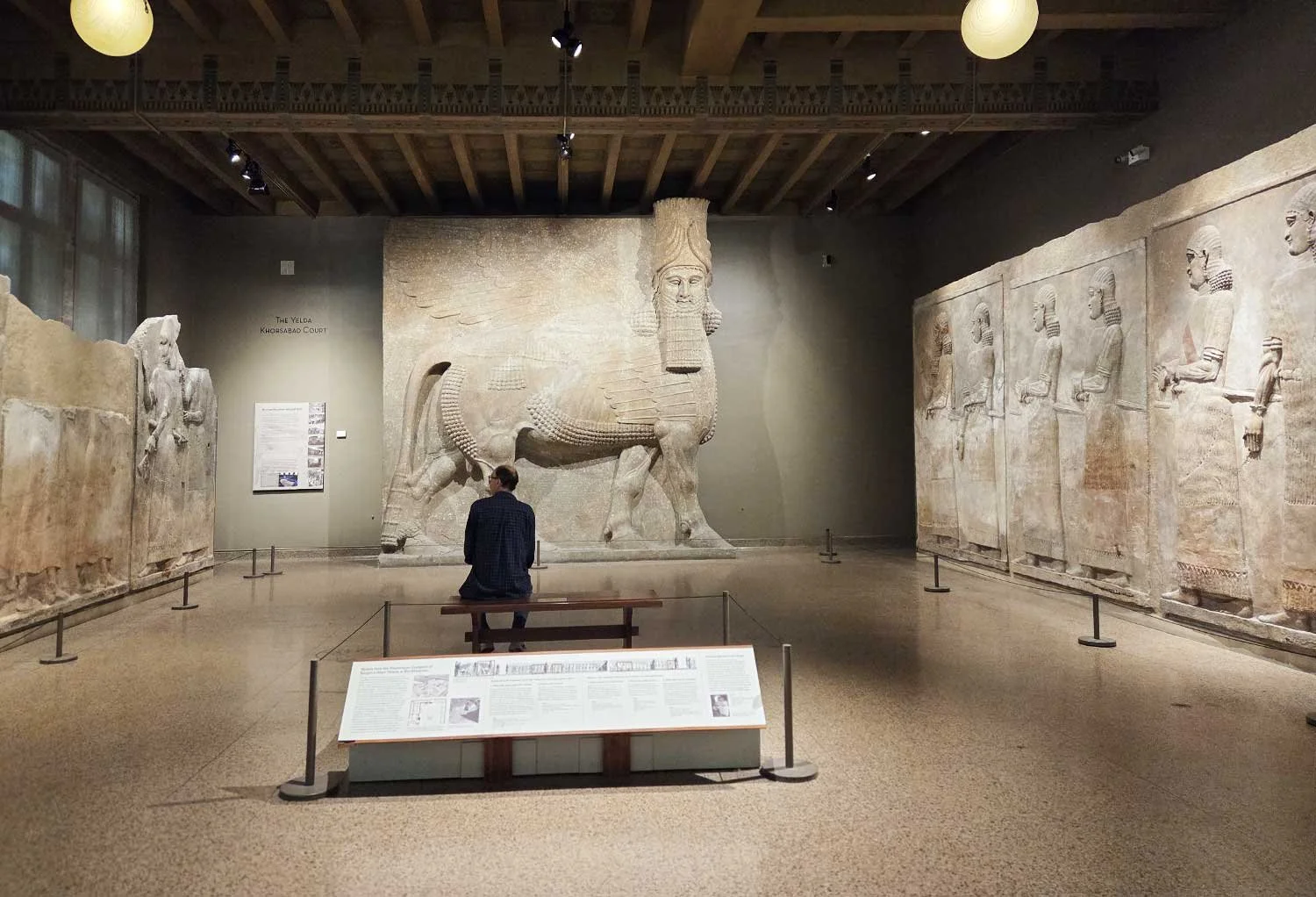
Engulfed in the Khorsabad Court with giant Lamassu.
Rather recently, I wrote a post on ancient stonework where I included the Lamassu from the Louvre. This courtyard is not as large as the Louvre gallery but is nonetheless amazing to be sitting amongst this history.
This Lamassu is 16 ft tall and weighs 40 tons. It originally guarded the entrance to King Sargon II’s throne room in Assyria.
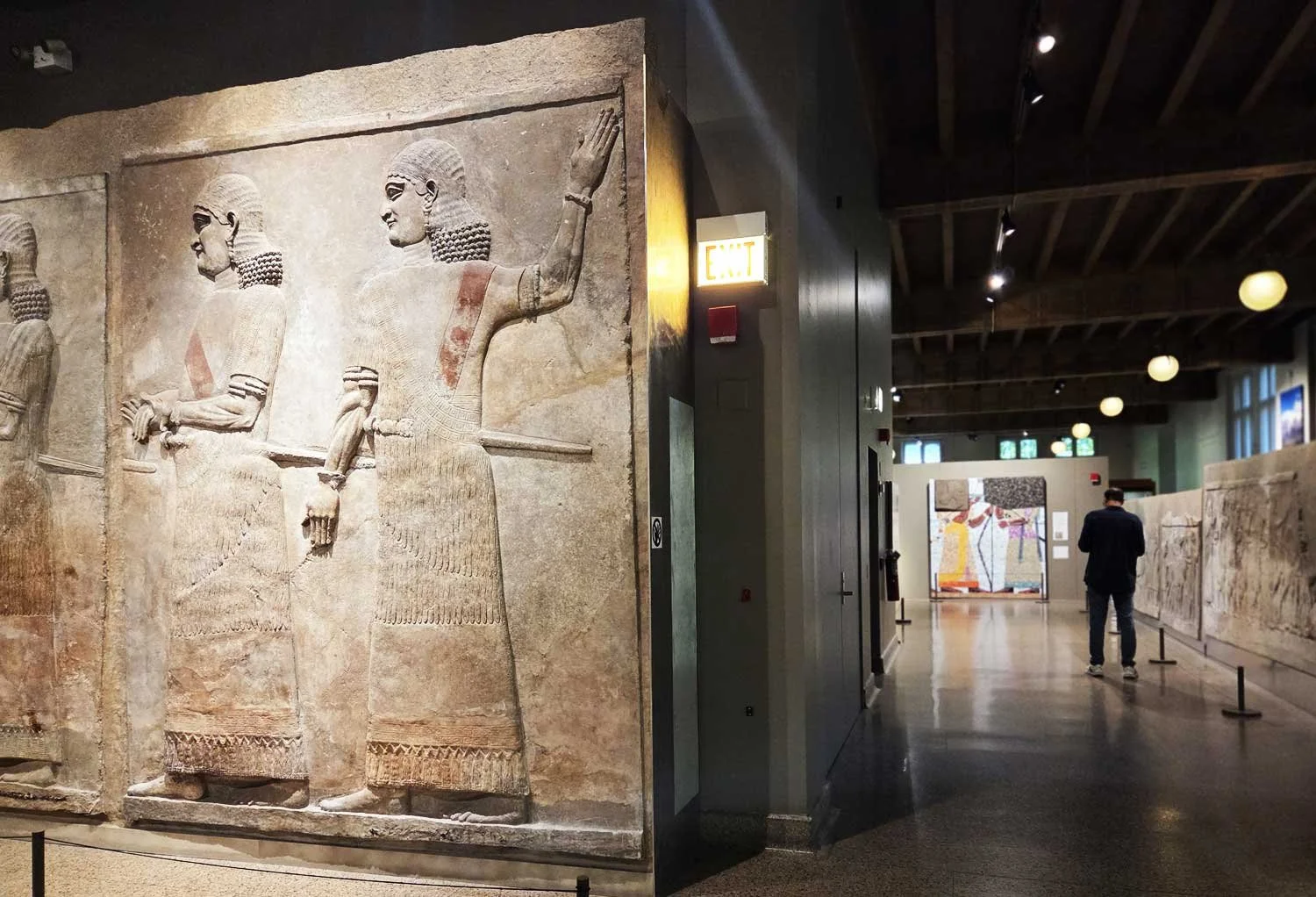
Assyrian courtiers from the throne room facade. Husband in photo by mistake, looking at his phone instead of incredible art.
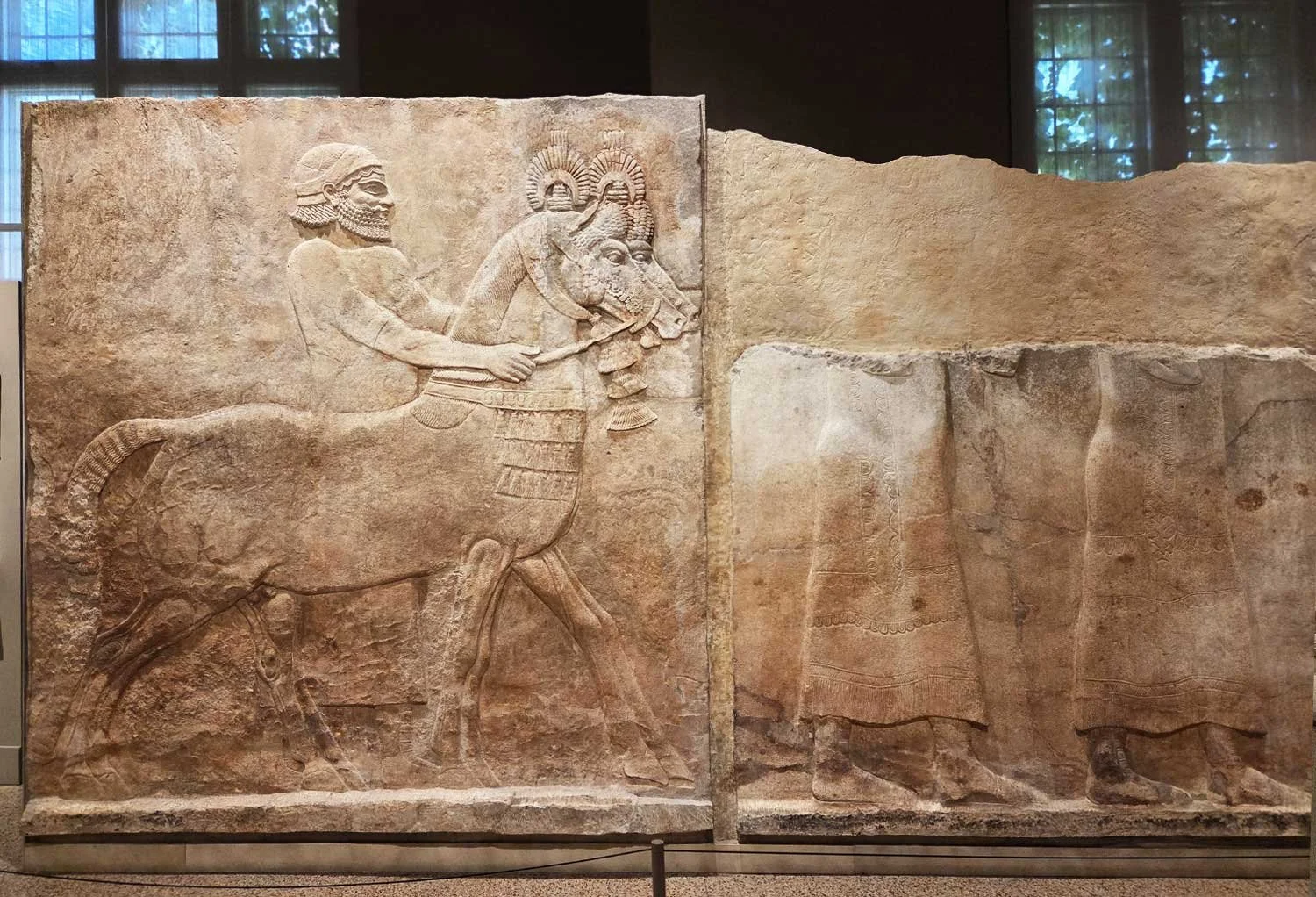
Groom leading horses in processional, carved reliefs in Neo-Assyrian Empire, northern Mesopotamia.
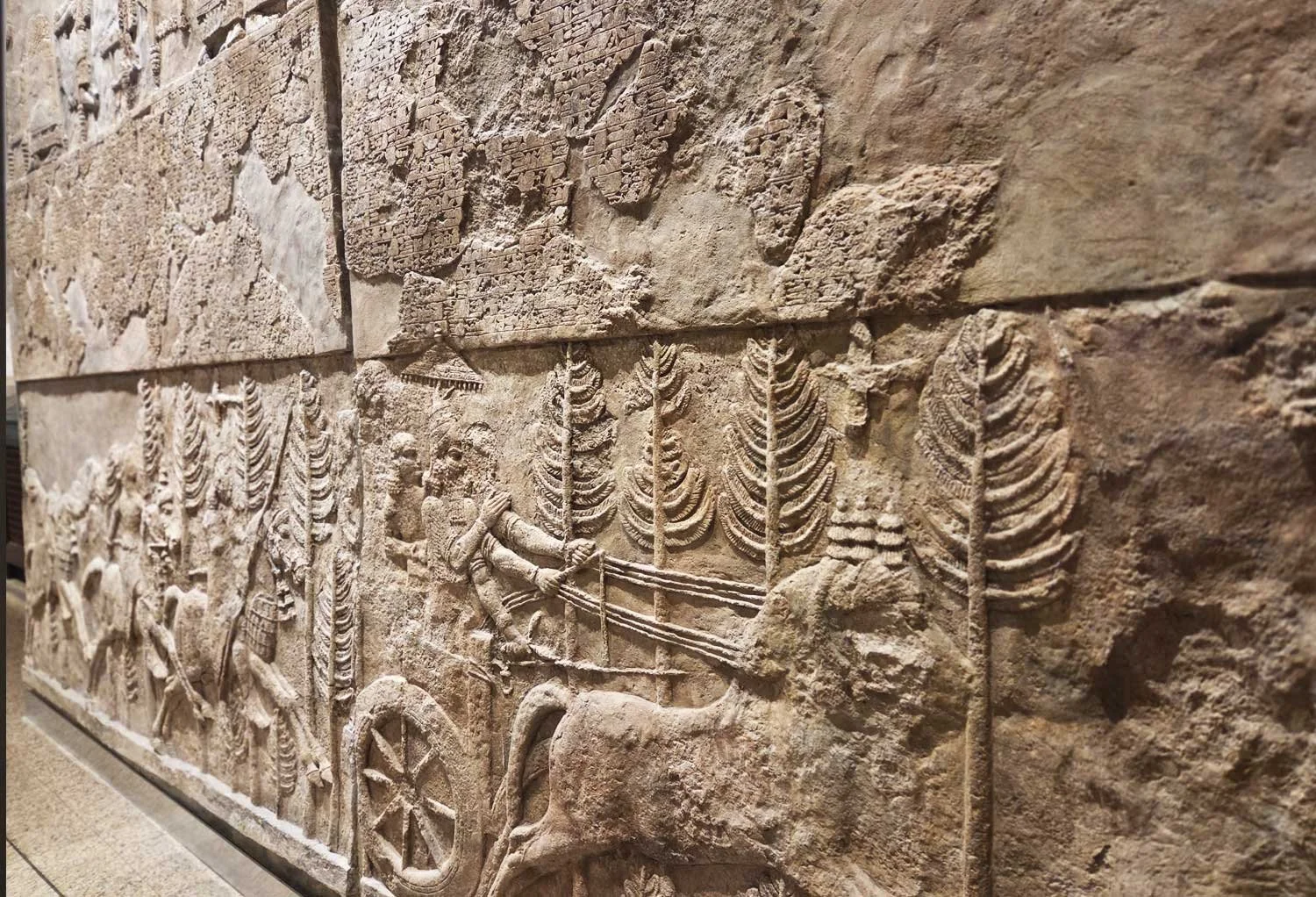
The Assyrian gallery has a large display of wall reliefs that show, according to the ISAC website,
A royal hunting scene and the presentation of tribute from the palace of king Sargon II at Dur-Sharurkin (modern Khorsabad).
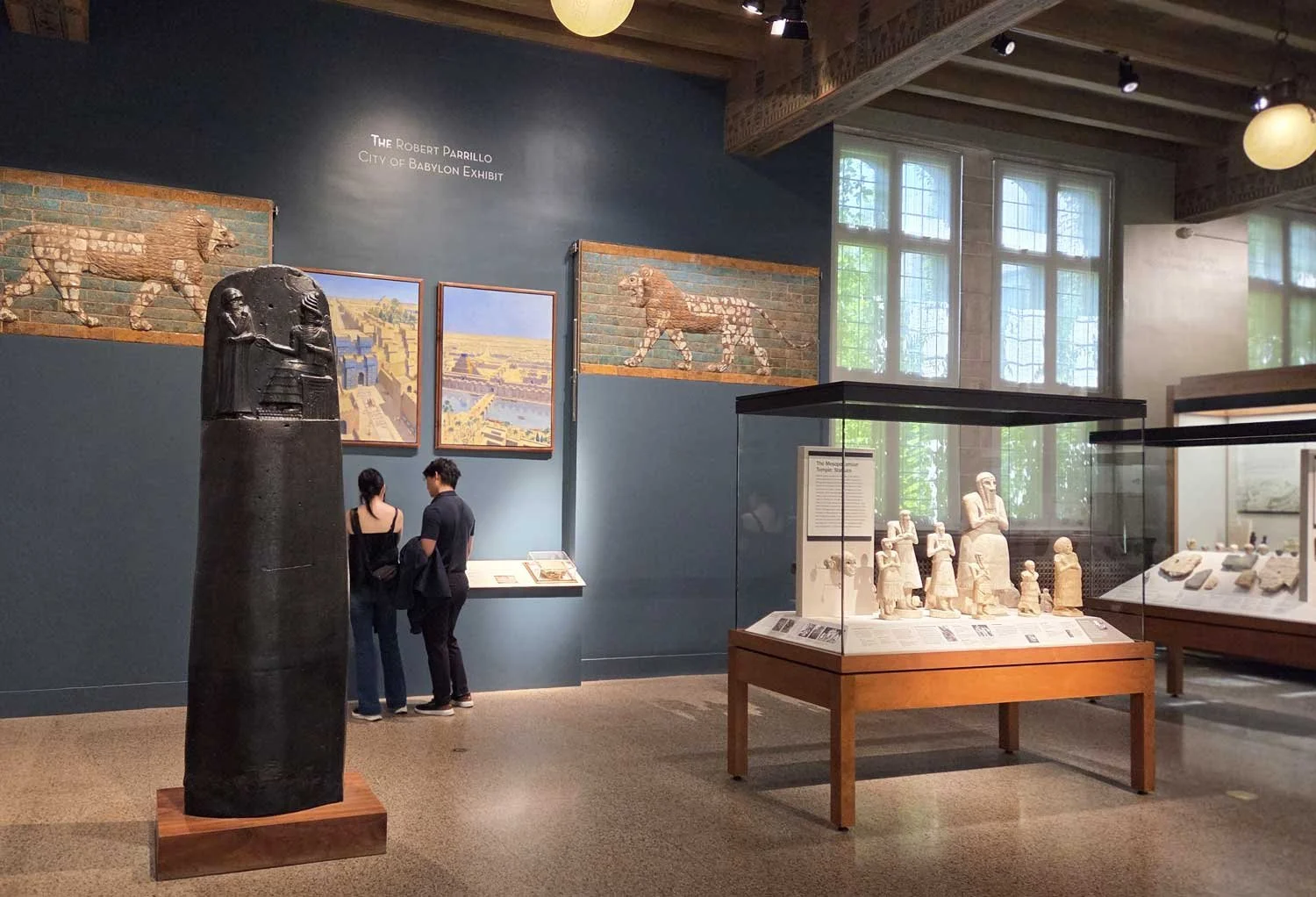
In the Babylon Exhibit, a cast of the famous Code of Hammurabi, Striding Lions in the background.
From the ISAC website:
This Law Code of Hammurabi is a cast of the original which is from Susa and dates to the Old Babylonian period. The cast depicts Hammurabi worshiping before Shamash at the top along with law code.
This is another cast of a very famous artifact. The actual stele was created in Babylon (Mesopotamia) in 1792- 1750 BCE. The original now resides at the Louvre in Paris, where I will also be very shortly!
The striding lions in the background are made of glazed clay-brick and were originally part of the processional way in Babylon.
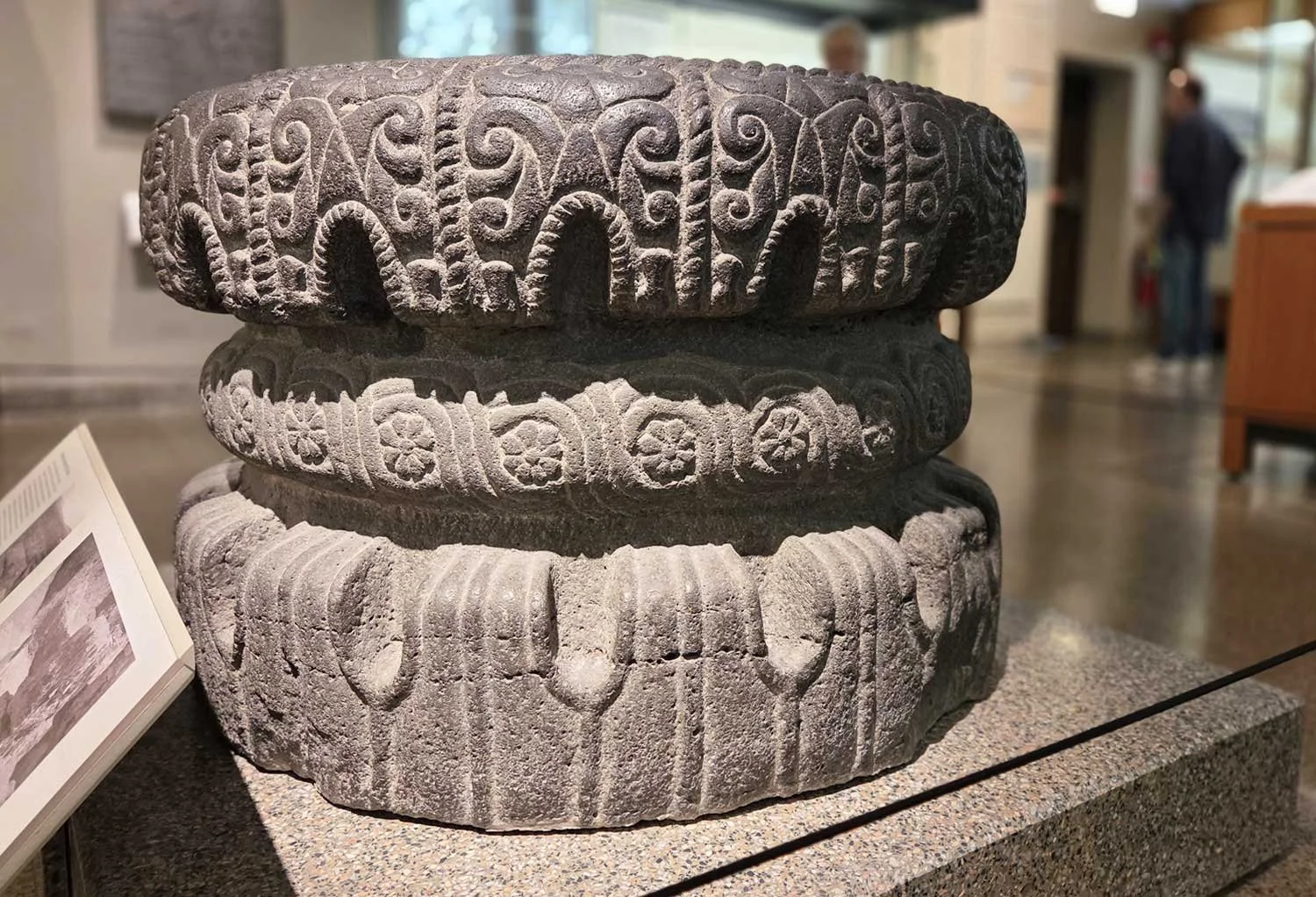
Ancient column base from Tell Tayinat in southern Turkey, 900-750 BCE, made of basalt.
One of my favorite pieces at the museum. The stylized, geometric design is gorgeous and although it is from Turkey, it has an Aztec-ness about it - at least IMO. Like something a tribe might gather around to grind cacao and shoot the breeze.
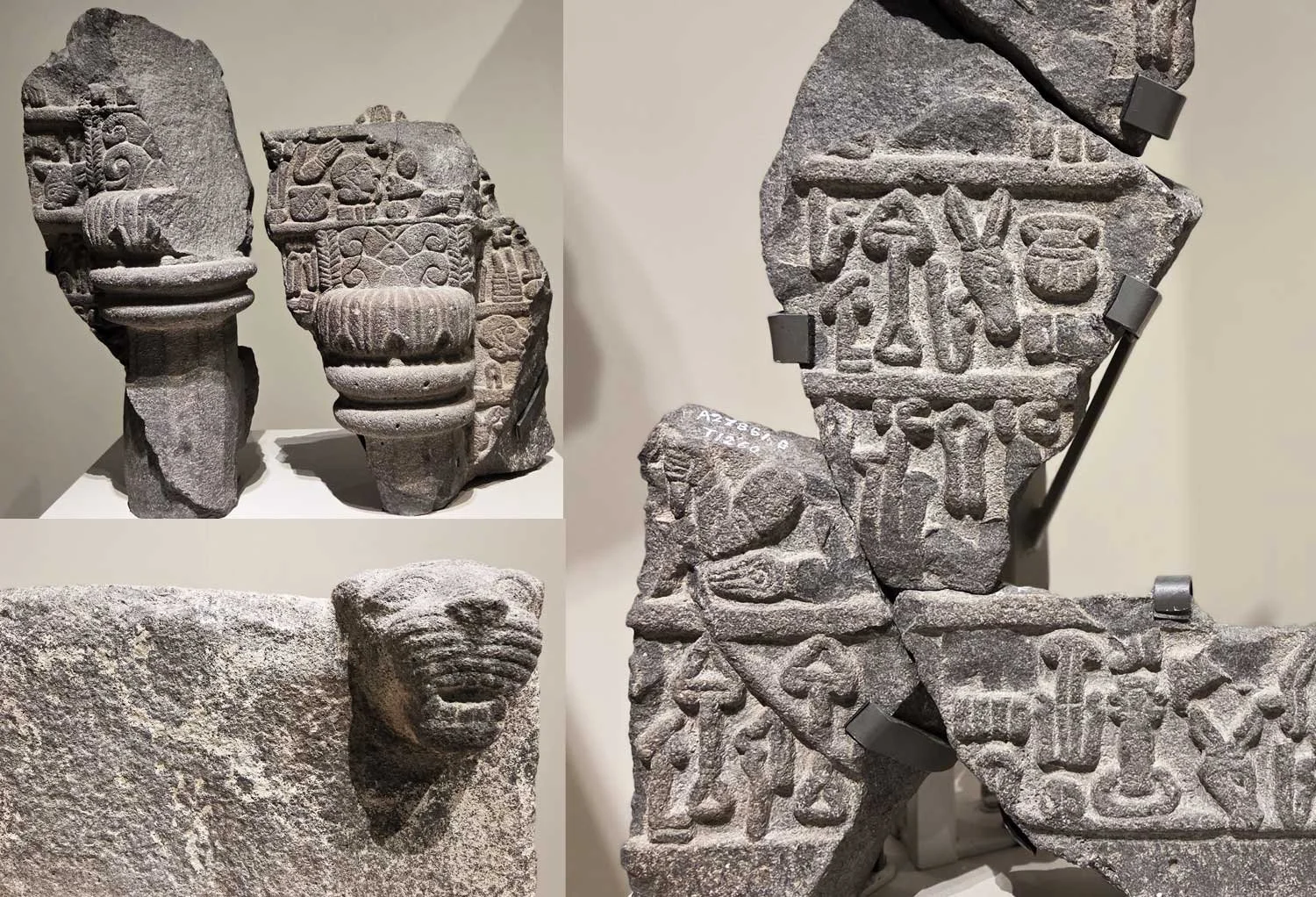
More basalt from Tell Tayinat…Lower left is a Lion.
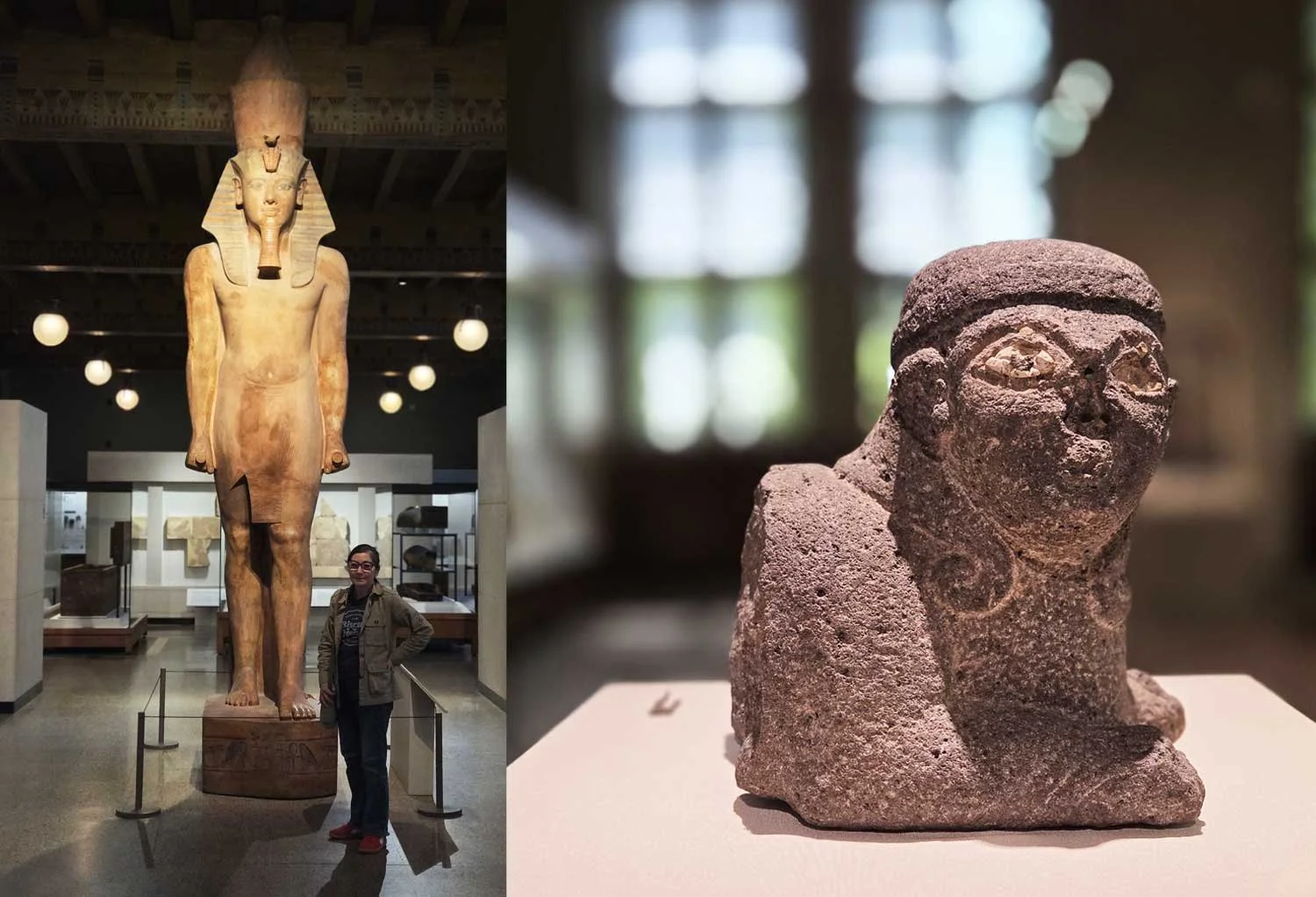
Me, standing next to giant King Tut statue. To the right, a small, female Sphinx.
Heading Into Egypt…
The colossal King Tutankhamun is probably the thing most people remember most about the ISAC. Or maybe it’s tied with the Lamassu. Either way, it is an impressive piece. I take a photo of myself with it each time I visit so I can watch myself getting older while Tut stays the same age.
I have more about this piece and others in my earlier visit to the ISAC, which you can find HERE.
The little female sphinx is actually not Egyptian, but from Turkey, like the previous basalt pieces. Female sphinxes were common in Anatolia (which, I’m sure you know is modern day Turkey, for the most part).
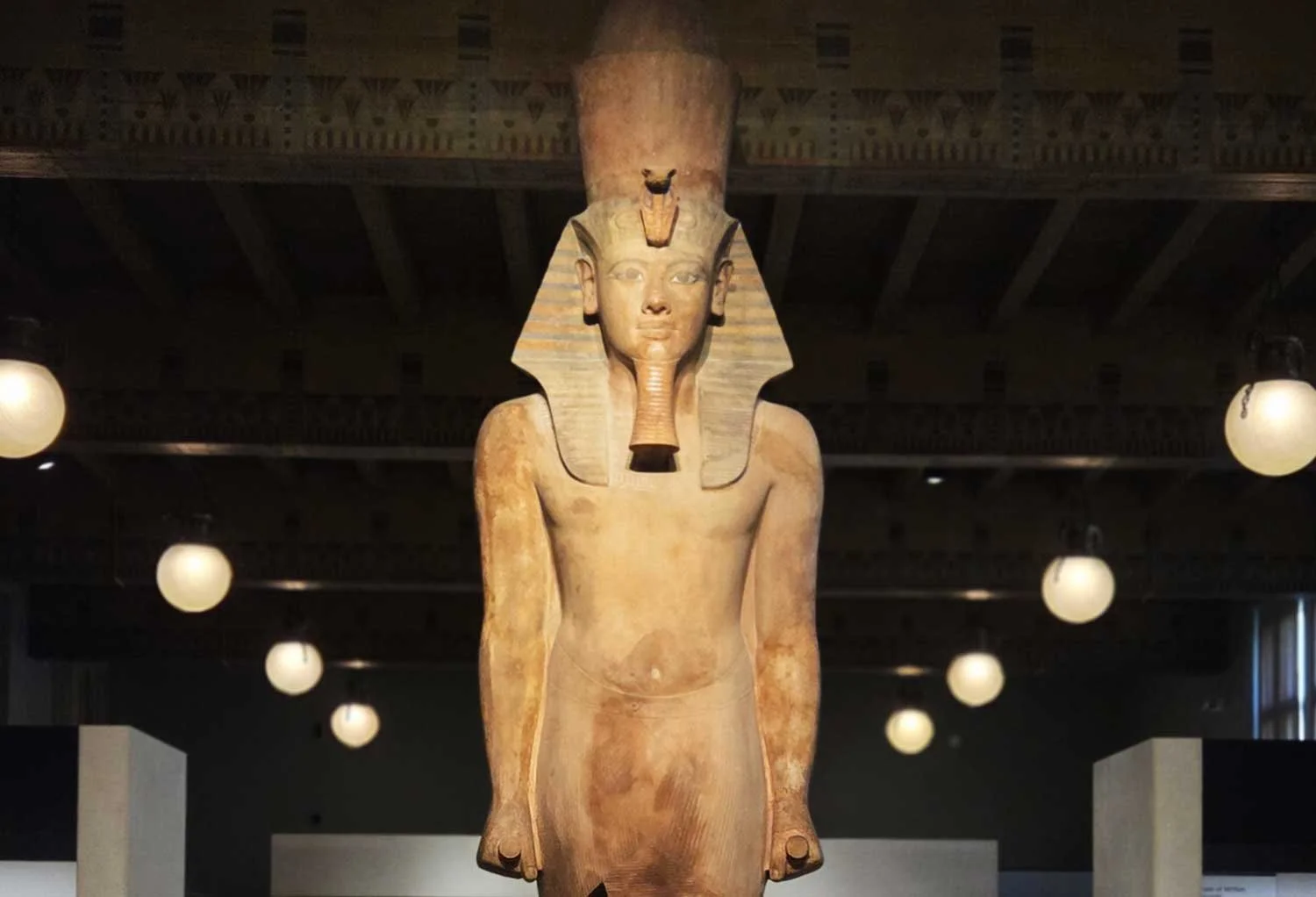
A closer detail…
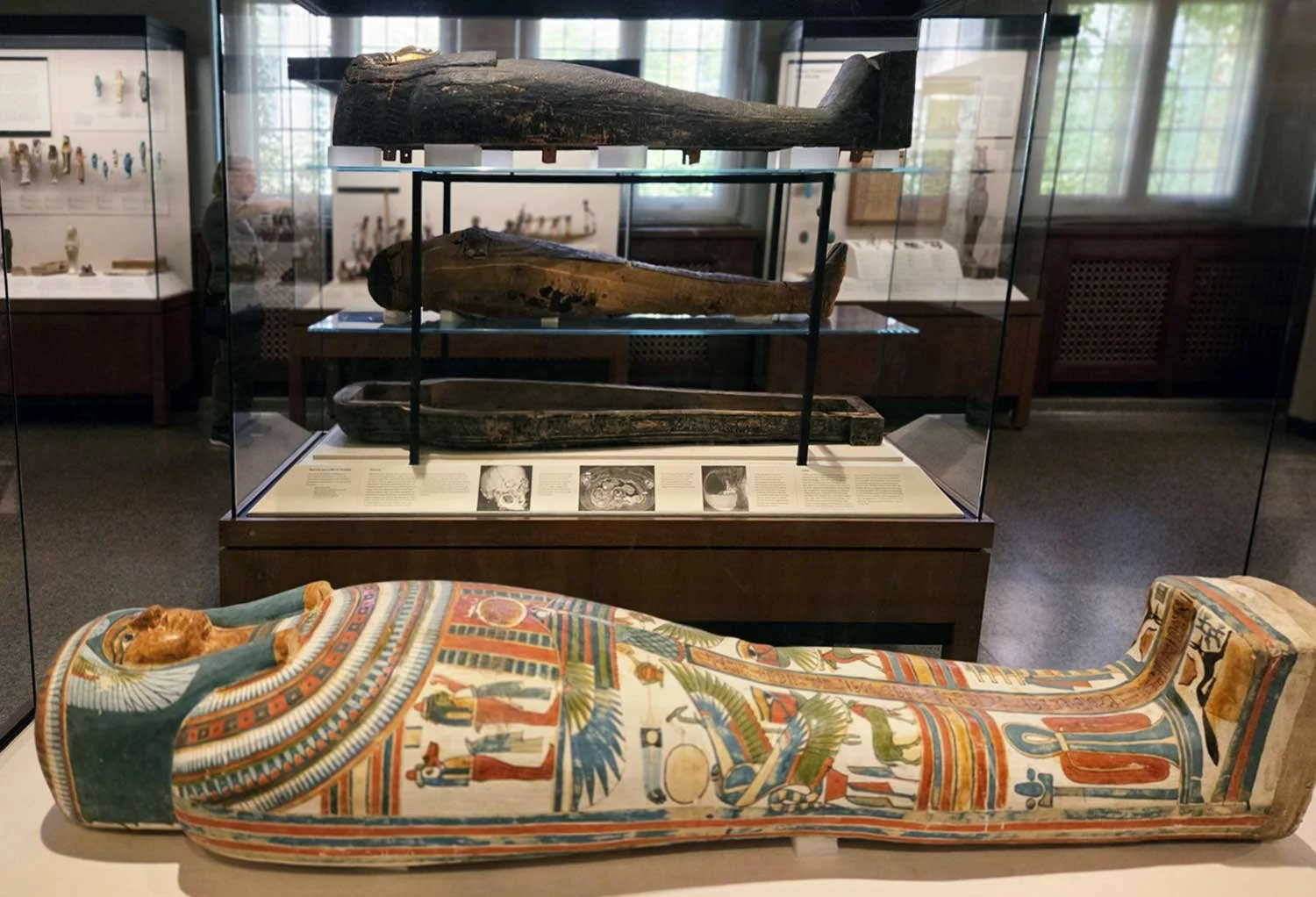
Mummy and the coffin of Meresamun, 950 BCE.
Mummies and colorful painted coffins.
The coffin and mummy of Meresamun have never been opened or unwrapped. It was examined using X-Ray initially, before later being CT scanned at the University of Chicago hospital. This was acquired in 1920…that’s 106 years of not opening!
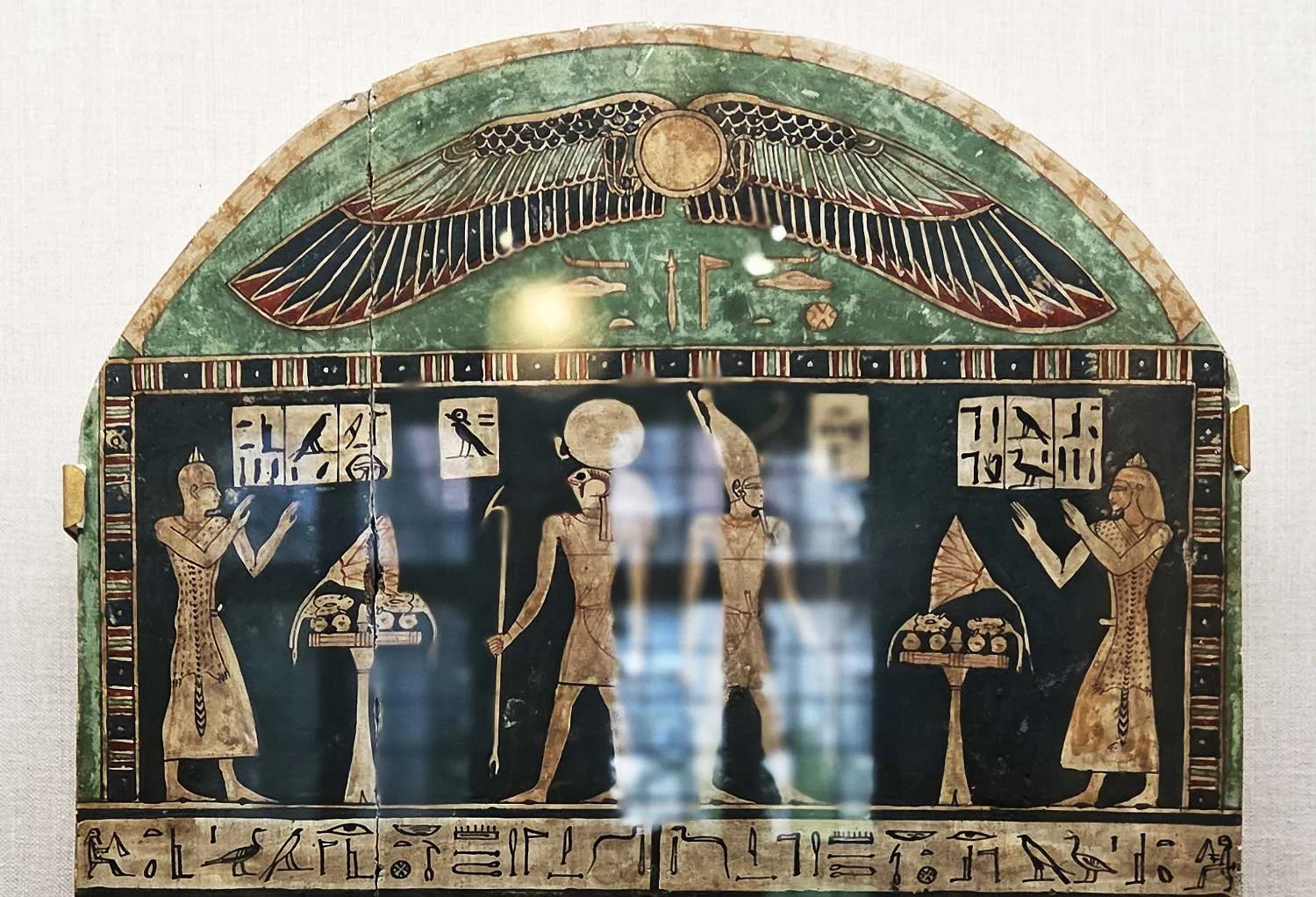
Stele, Egypt
I forgot to write down the information for this stele; this is actually just the top half of it, the bottom is filled with hieroglyphs similar to the band that the images are standing on. I apologize for the glare on the glass, the decoration was so beautiful, I included it anyway.
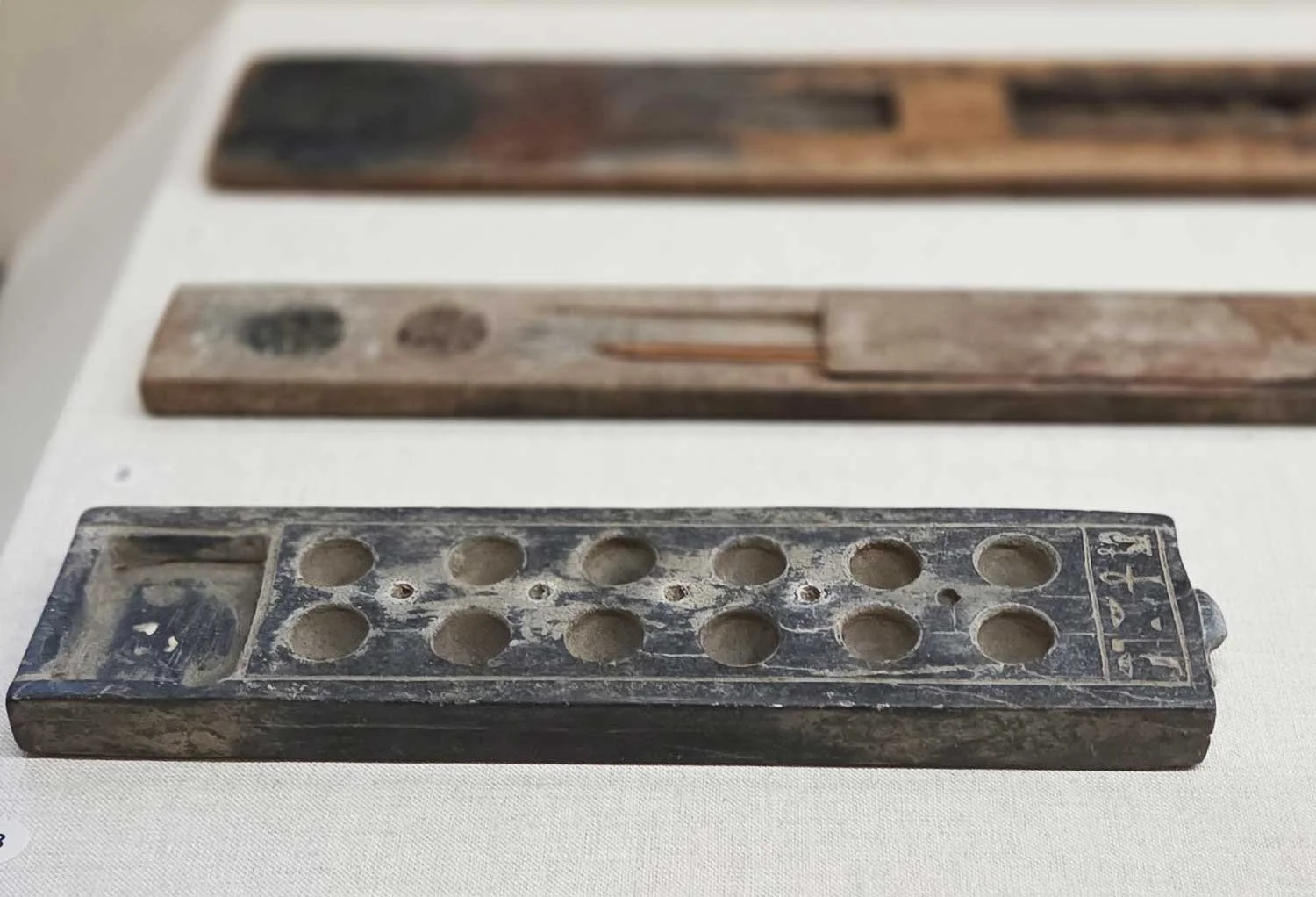
Wood palette, Egypt, 1569-1081 BCE.
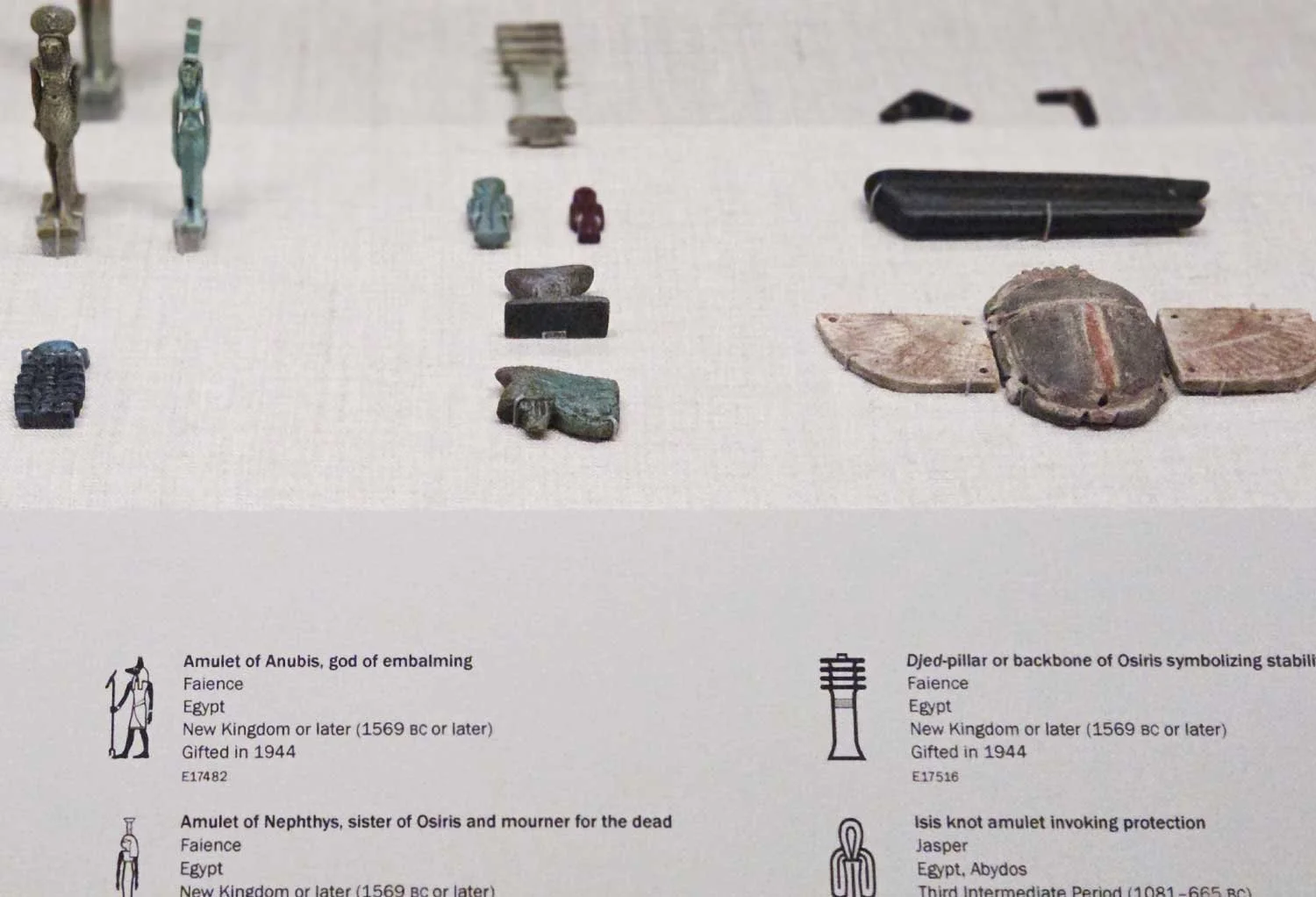
A variety of Egyptian amulets. Love the winged scarab.
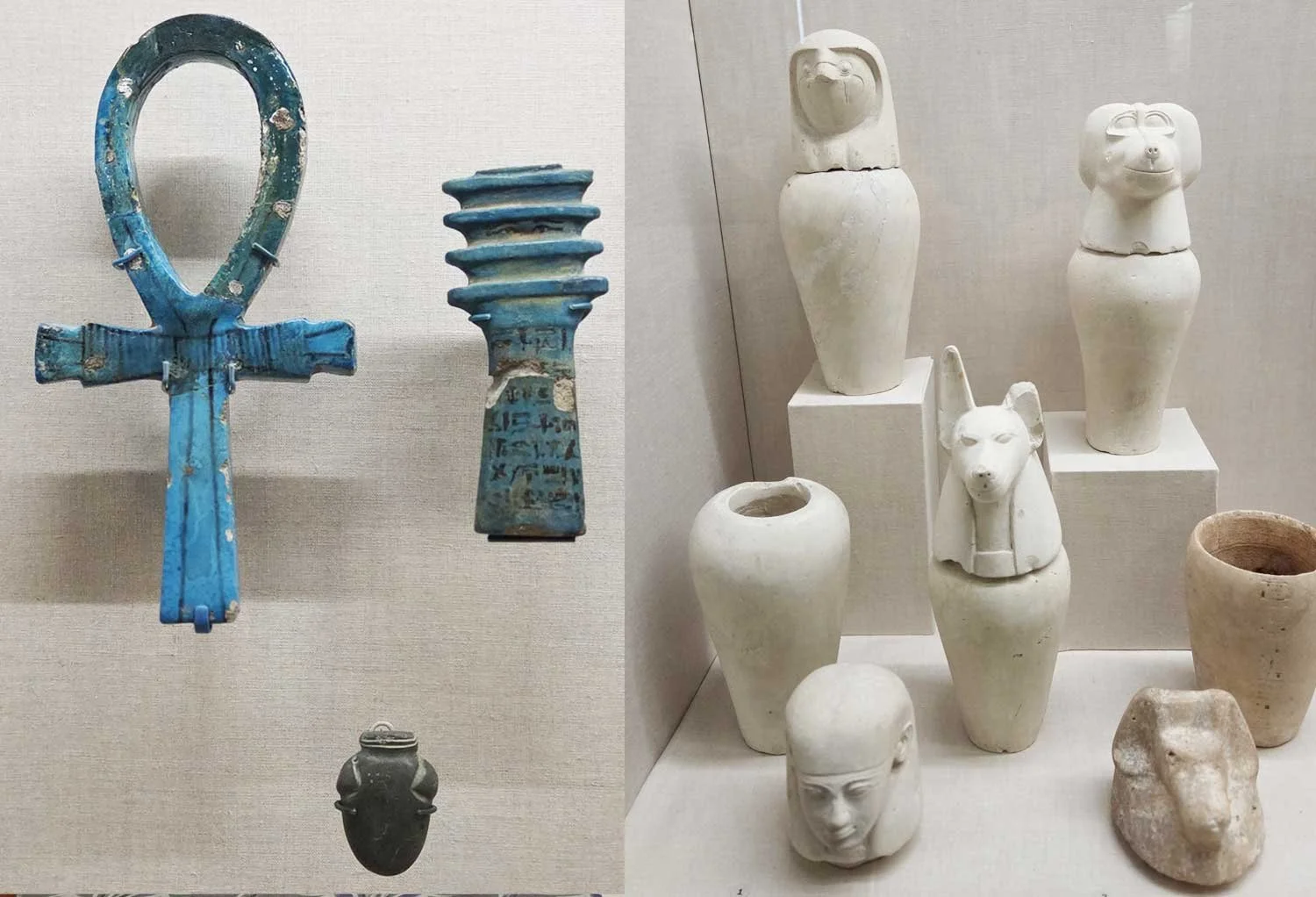
Faience Ankh and Djed-Pillar along with Canopic jars.
The Ankh is the symbol and hieroglyph for ‘life.’ Faience was a common material used for amulets and such. The Djed-pillar symbolized stability and is also called the ‘backbone of Osiris.’
Canopic jars, always intriguing, but then most items associated with the mummification process are. These held the organs of the deceased - stomach, liver, lungs and intestines. The heart stayed with the body because it was said that was where the soul rested.
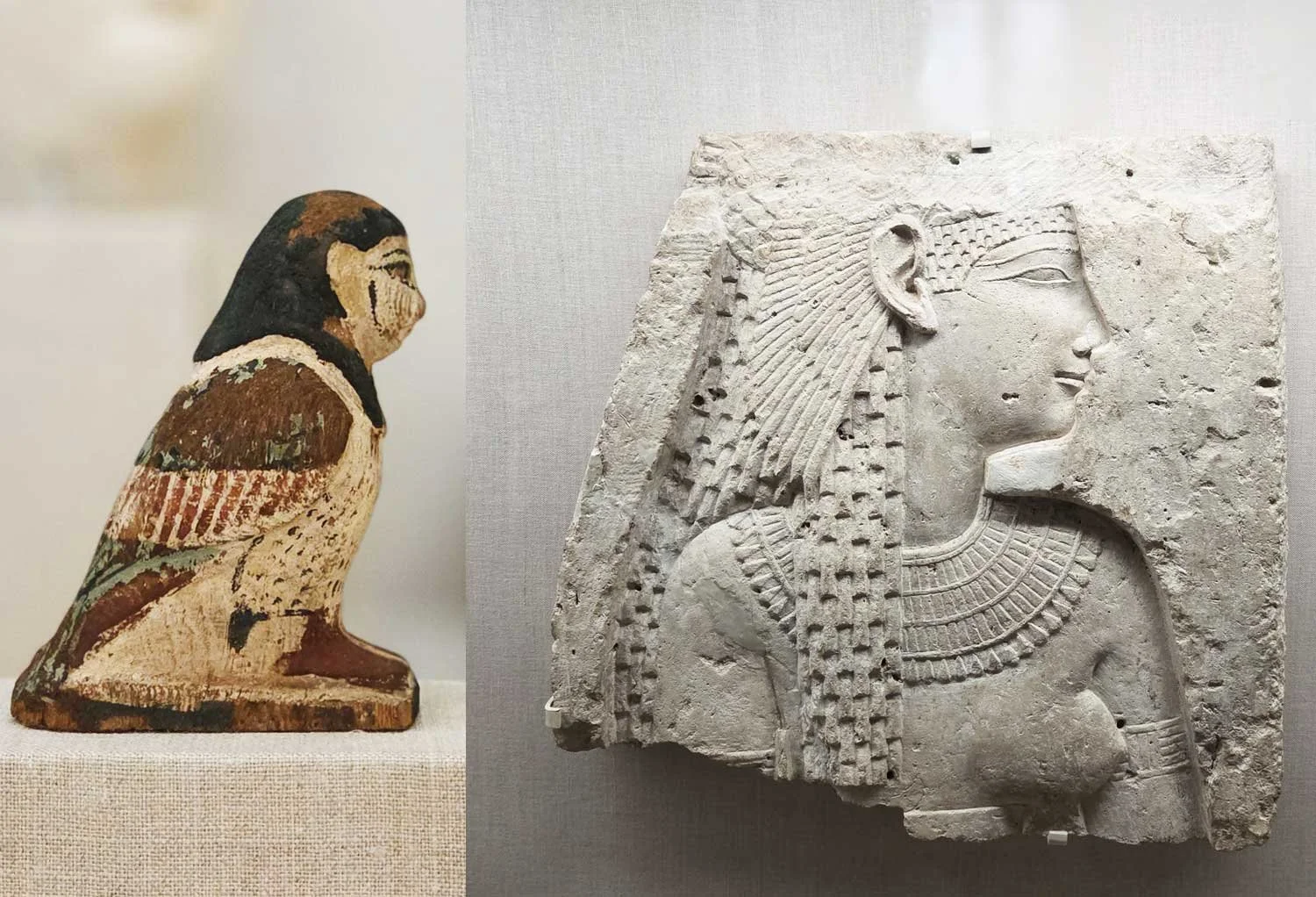
Ba-Bird and relief carving.
The Ba-Bird is one of my favorite symbols in Ancient Egypt. This one is from the Ptolemaic period 2nd century BCE. The Ba-Bird represents a person’s unique essence, their character as a non-physical being.
The gorgeous relief carving to the right, I don’t have information for. I just snapped the image and forgot to make a note, which is odd because I think it’s one of the most beautiful pieces in the museum. It seems like it was carved from limestone and it has that Ptolemaic look. Very Cleopatra-esque.
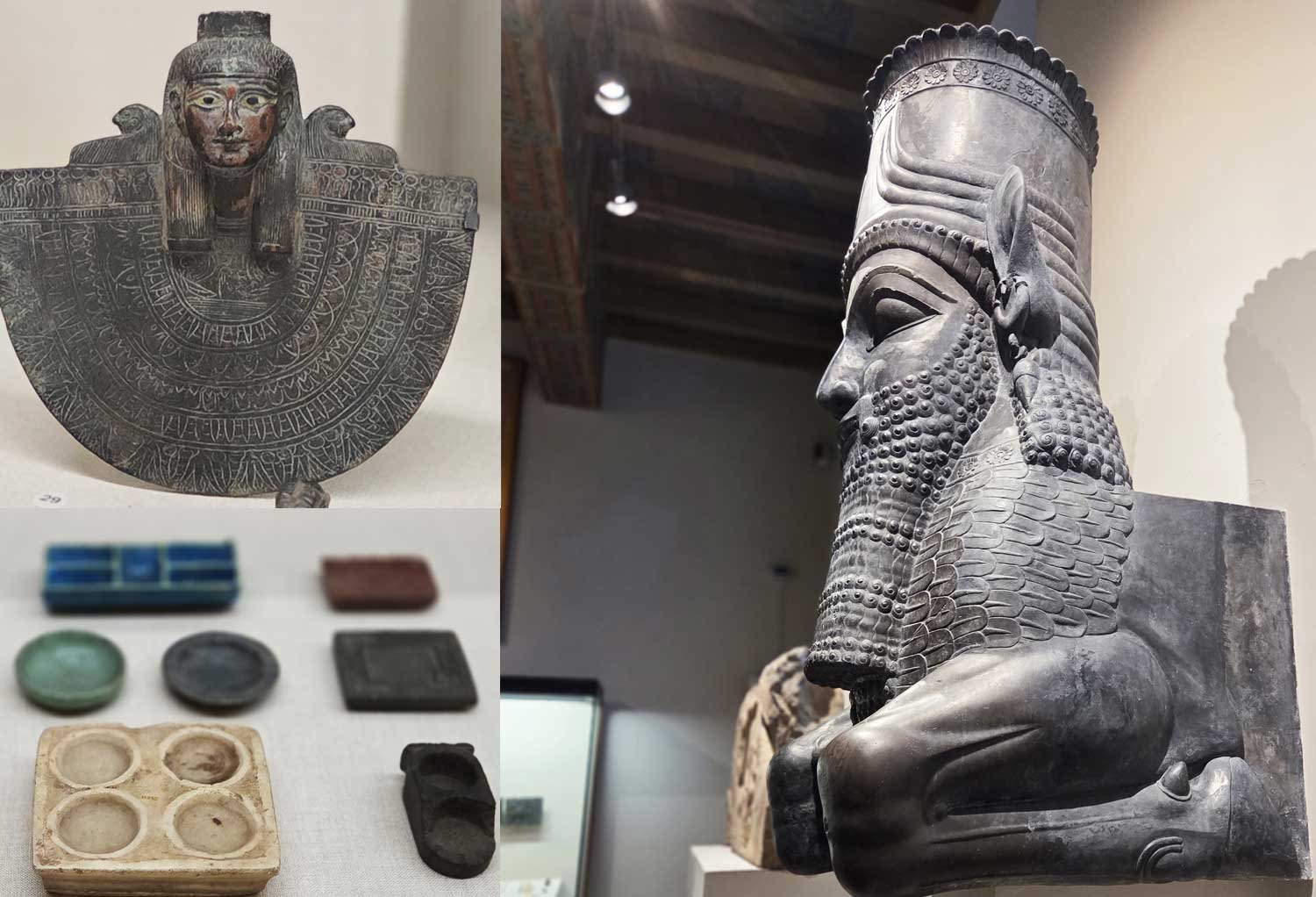
Egyptian Aegis, scribes’ tools and human-headed bull column capital from Iran, 486-465 BCE.
The Aegis is named after Athena’s breastplate. I don’t have information on this one either, but there is a very similar one at the Met Museum and according to their website, it’s worn in festival, ritual, and funerary contexts, the broad collars symbolized protection and regeneration.
There is also a selection of scribes’ ink dishes from Egypt around 1550 BCE and the human-headed bull capital made of limestone with modern restoration.
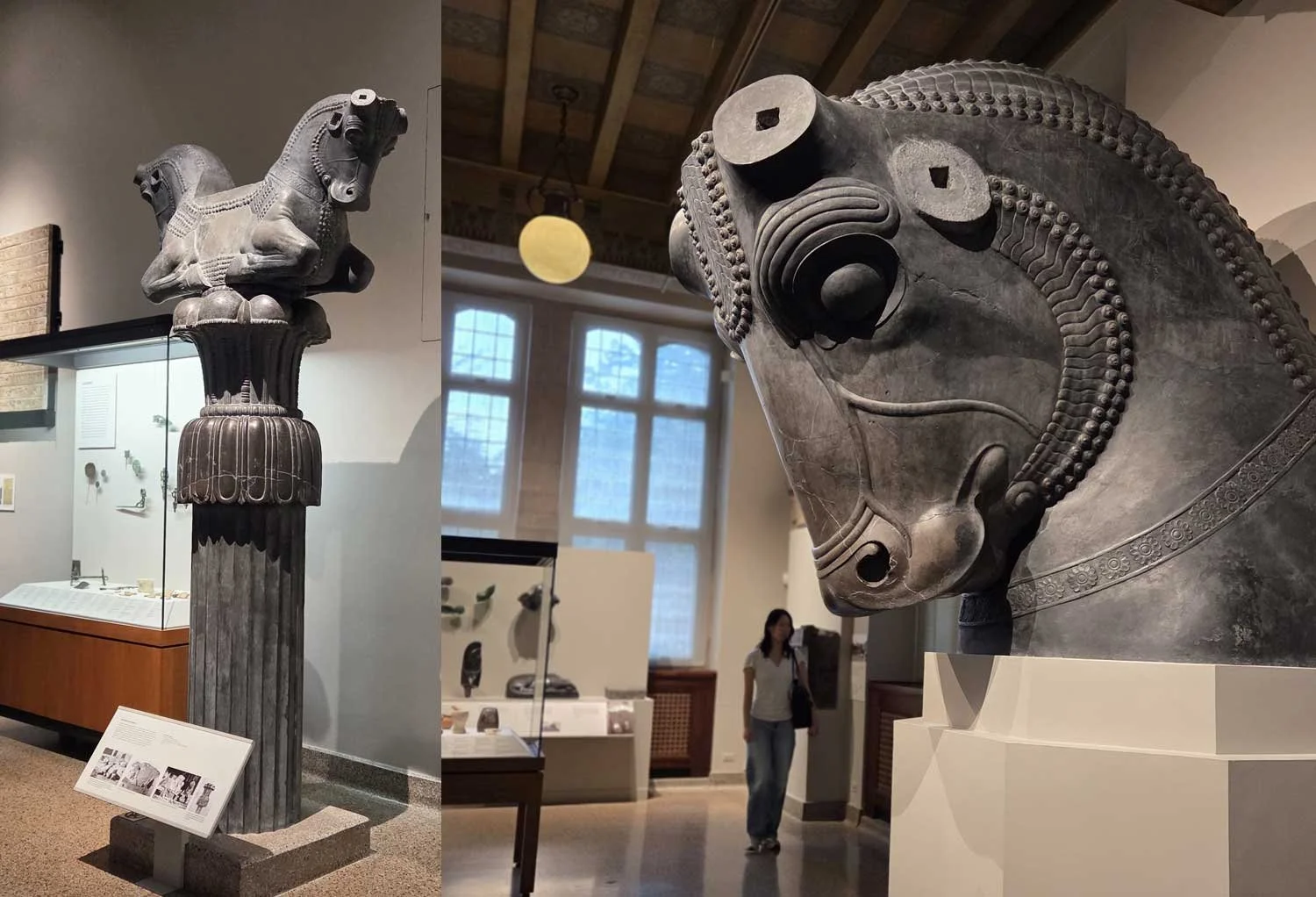
Reconstructed bull column and 10-ton bull head that was designed to guard a Throne Hall, 486-424 BCE, Iran.
The column with the double bull head was created with a mix of styles influenced by Egypt and Greece but the double bull ‘motif’ is Achaemenid in style all the way.
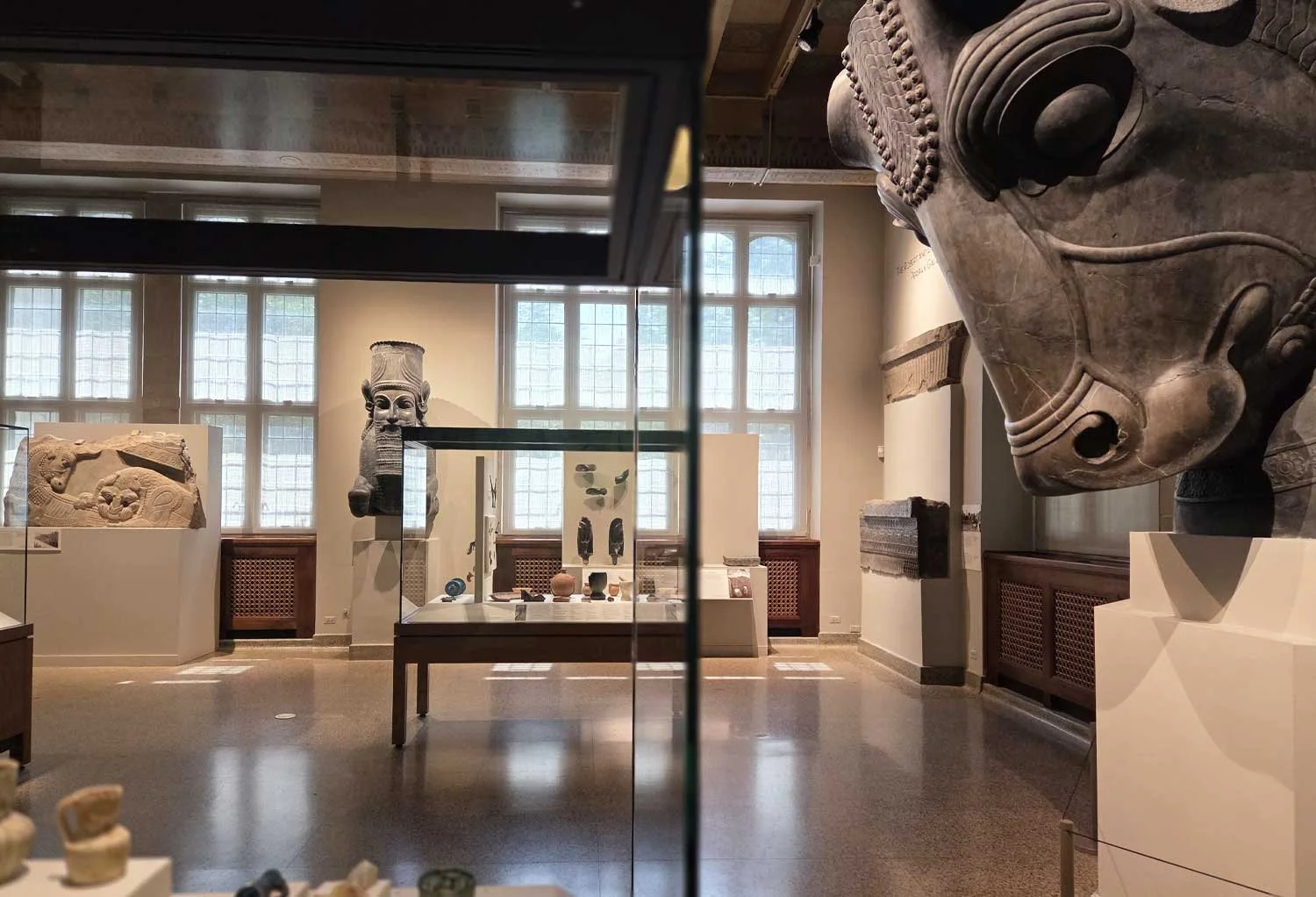
A bit of an overview of the Persian gallery.
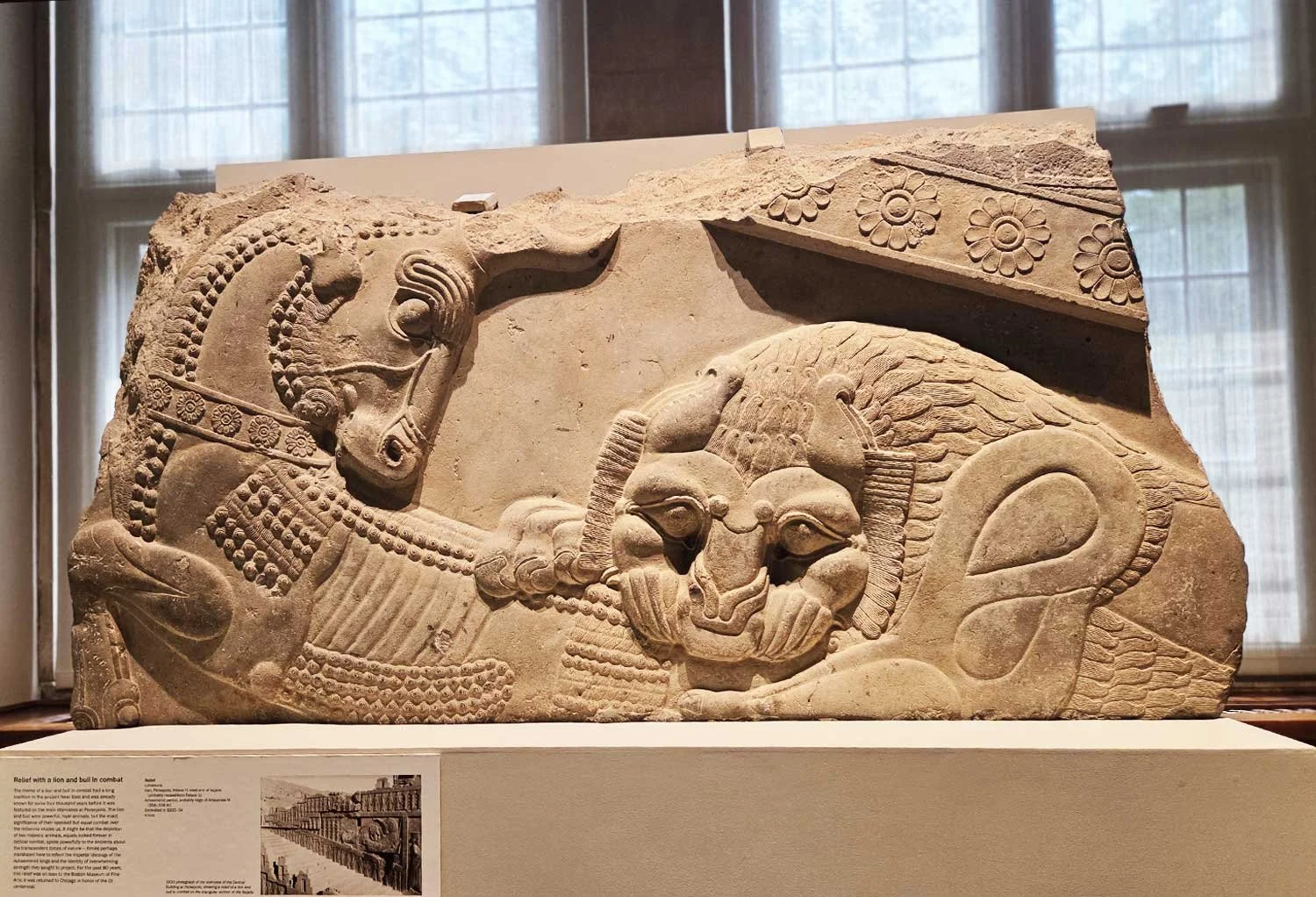
A relief with lion and bull in combat, Persepolis, Iran, Achaemenid Empire. Another favorite of mine.
Wrapping It Up…
Wrapping up with just a few other images from within the museum.
There are so many things I didn’t include, fabulous things, so if you haven’t visited the ISAC, please do so the next time you’re in Chicago.
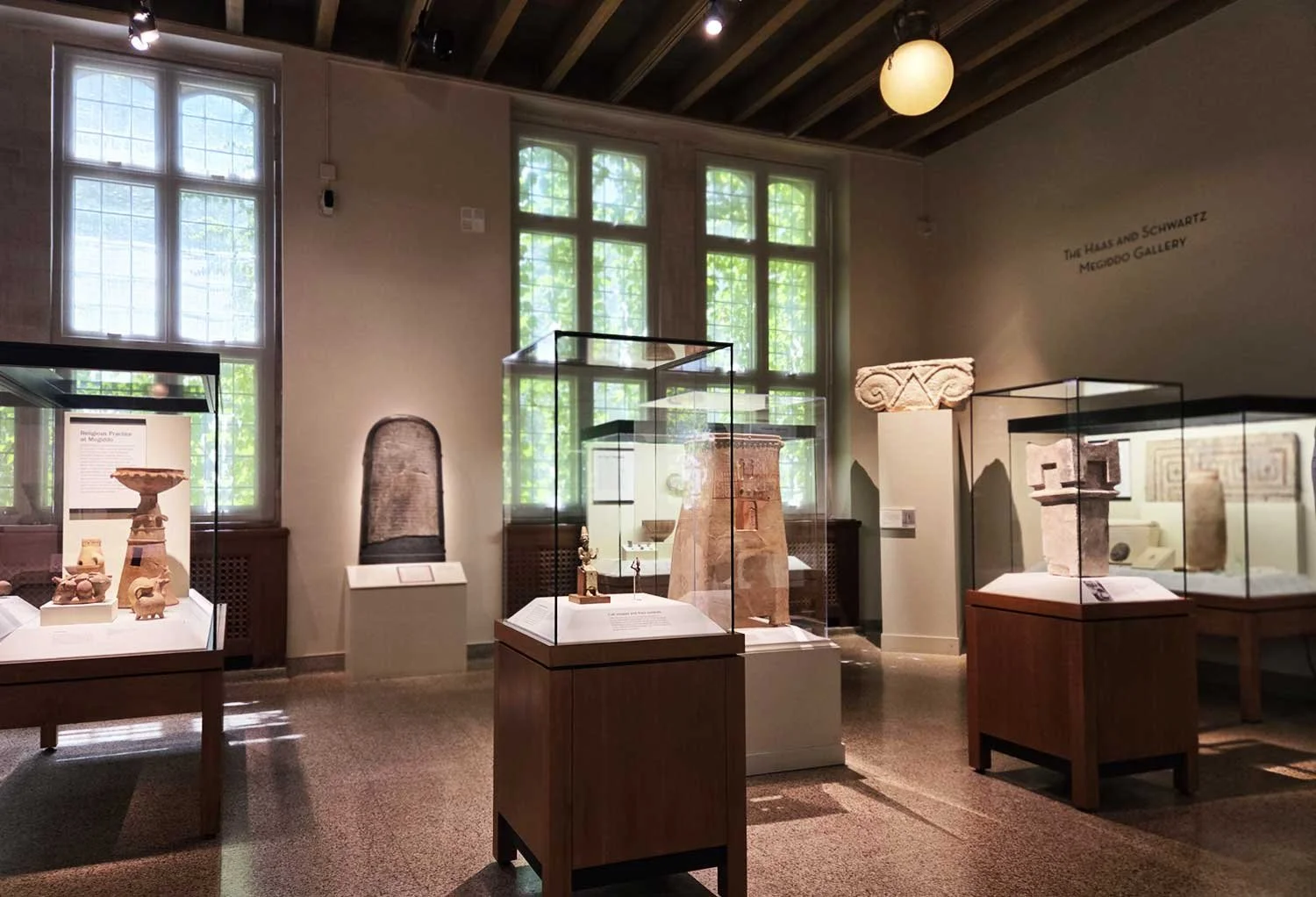
Megiddo Gallery…
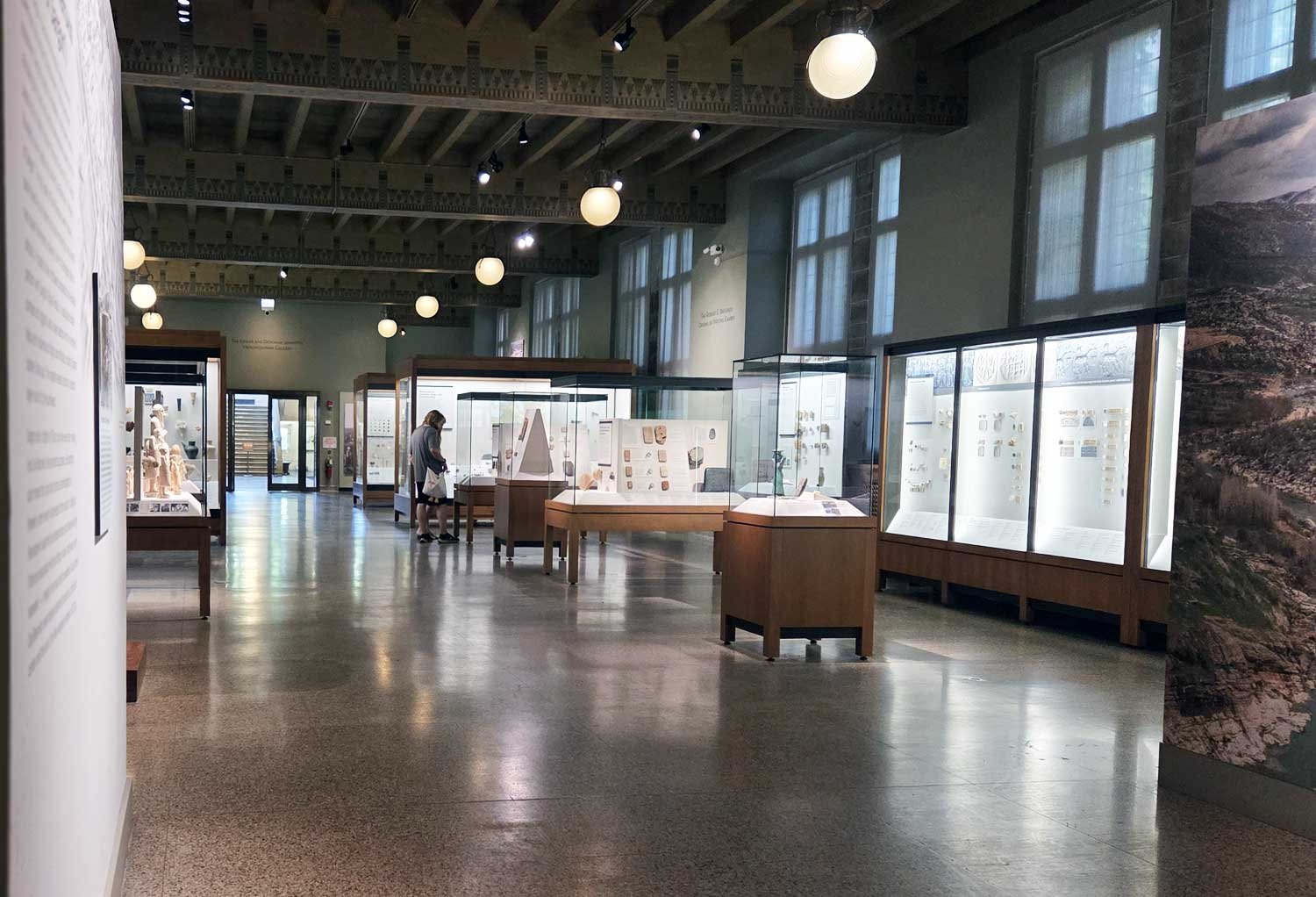
I love the way these cases look, very old school. Also, note the beautiful painted beams.
That’s that. Until my next visit:)
Visit the ISAC website HERE.