
Ancient Egyptian Pectorals
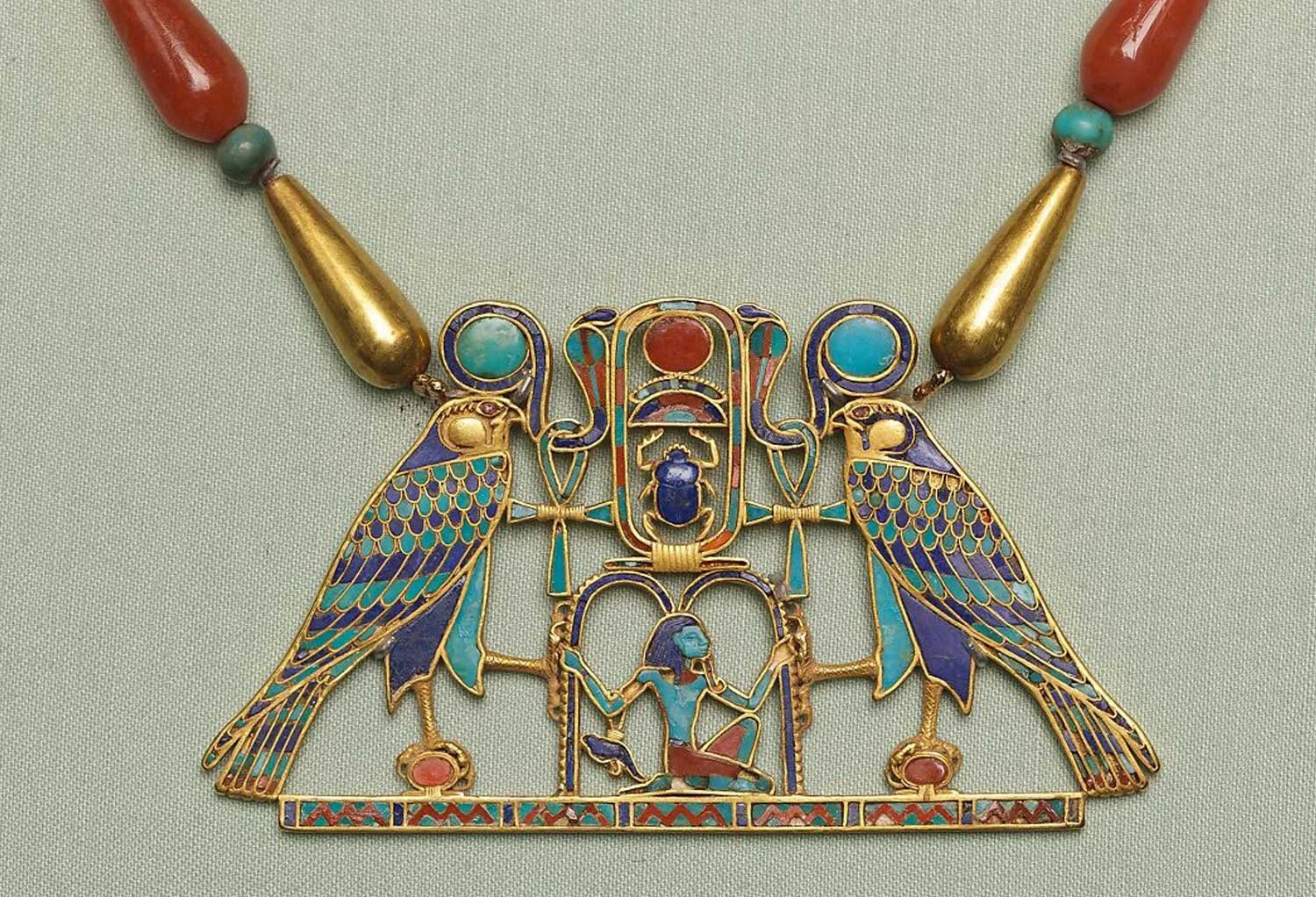
Egyptian pectoral of Princess Sithathoryunet, 1887–1878 B.C. Middle Kingdom, Met Museum.
It is designed around the throne name of King Senwosret II.
Ancient Egyptian Pectorals: Jewels of Protection, Power and Rebirth
Among the most magnificent ornaments created in ancient Egypt were pectorals—large decorative pieces designed to rest upon the chest. Fashioned from gold, silver, faience and brilliantly colored stones, they were worn by royalty and members of the elite, while other examples were made especially for burial.
Yet an Egyptian pectoral was far more than an elaborate piece of jewelry. Its images, hieroglyphs, materials and colors formed a carefully arranged message—one intended to surround the wearer with divine protection, proclaim royal authority or assist the dead in achieving rebirth.
What Was an Egyptian Pectoral?
A pectoral was usually a broad pendant or plaque suspended from a necklace so that it lay across the upper chest. Many were rectangular or trapezoidal, while funerary examples were sometimes shaped like a small shrine or the monumental gateway of a temple.
The finest royal pectorals were made using cloisonné inlay. Thin strips of gold were soldered onto a gold backing to create tiny compartments, which were then filled with precisely cut pieces of lapis lazuli, turquoise, carnelian, feldspar, garnet, glass or faience.
A Famous Example: The Pectoral of Sithathoryunet
Created around 1887–1878 BC, during the Middle Kingdom, the pectoral of Princess Sithathoryunet is one of the great masterpieces of ancient Egyptian jewelry.
At its center is the throne name of Senwosret II. Falcons crowned with sun discs stand on either side, while protective cobras suspend ankhs representing life. Below the king’s name kneels the god Heh, associated with eternity and “millions of years.” The base evokes the primordial waters from which creation first emerged.
Together, these elements express a wish that the sun god grant the king life, dominion and an immeasurably long reign. The pectoral was therefore both a jewel and a carefully composed ritual statement. According to the Met, its primary purpose was religious: it reflected the princess’s role in magically assuring the king’s eternal well-being.
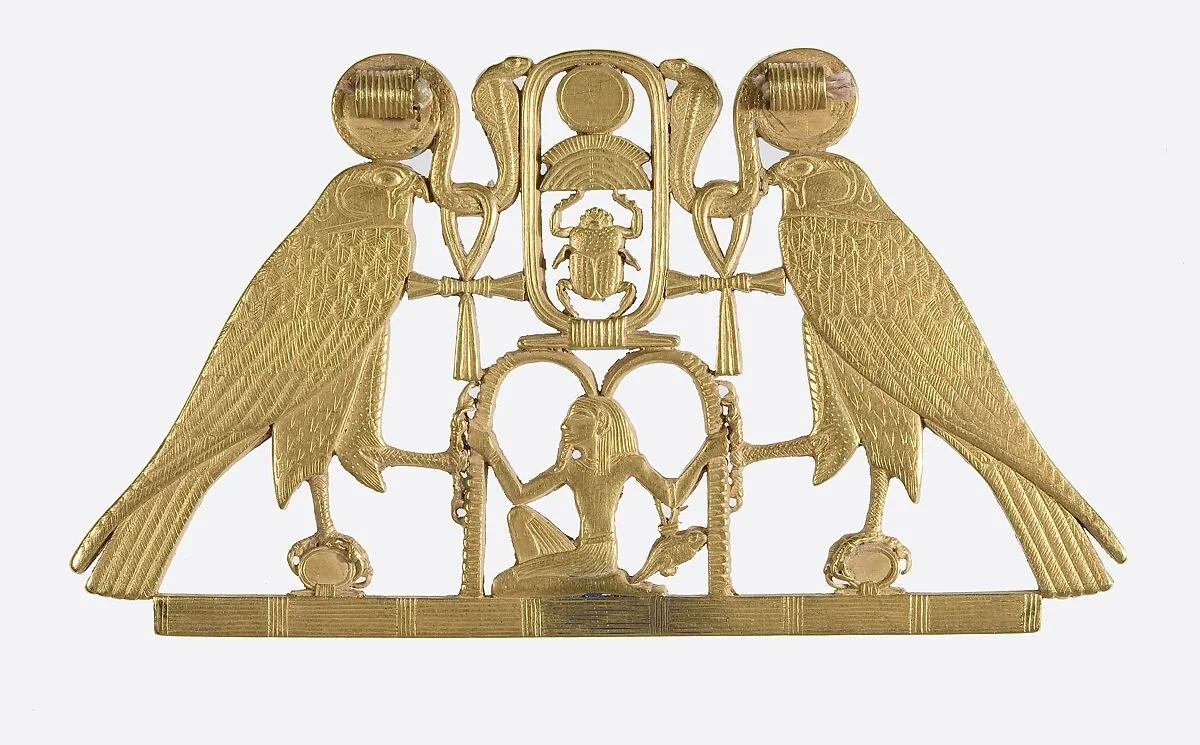
The back side of the Senwosret II pectoral, in gold. In my opinion, this side is just as beautiful.
Why Were Pectorals Worn?
Egyptian pectorals could serve several overlapping purposes.
Adornment and Status
Gold, imported stones and highly skilled craftsmanship made elaborate pectorals unmistakable signs of wealth and rank. Their size and placement made them particularly visible, turning the wearer’s chest into a display of color, royal affiliation and sacred imagery.
Royal Identity and Loyalty
Some pectorals incorporated the name of a pharaoh inside a cartouche. A royal woman wearing such a piece was not simply displaying her family connection; she was participating symbolically in the preservation of the king, his reign and the divinely ordered world he represented.
Divine Protection
The chest protected the heart, an organ the Egyptians regarded as the center of intelligence, memory, character and identity. Placing sacred signs and protective gods over this part of the body therefore had profound significance.
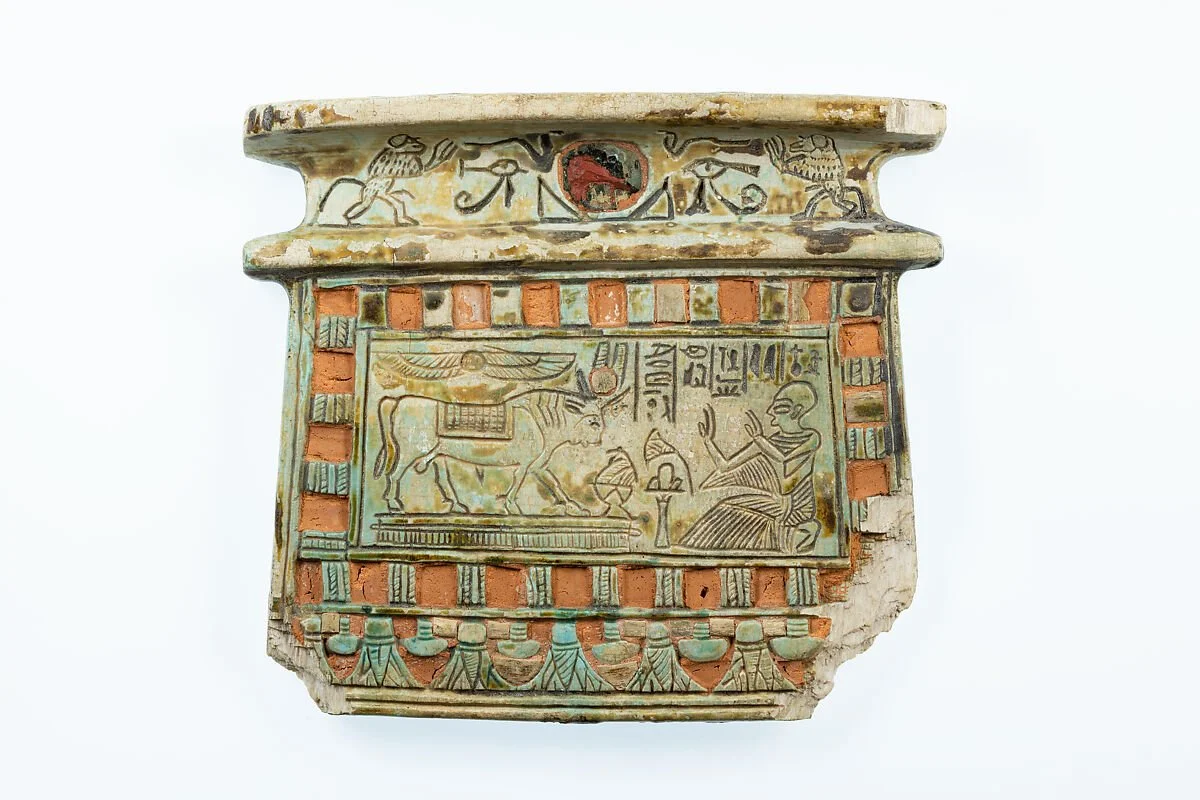
A pectoral found in a tomb for a person named Huynefer. New Kingdom, faience.
Preparation for the Afterlife
Funerary pectorals were attached to mummy wrappings or placed upon the body inside the coffin. Their imagery linked the deceased with both Osiris, the resurrected lord of the dead, and the sun god, Re, who disappeared each evening only to rise again at dawn.
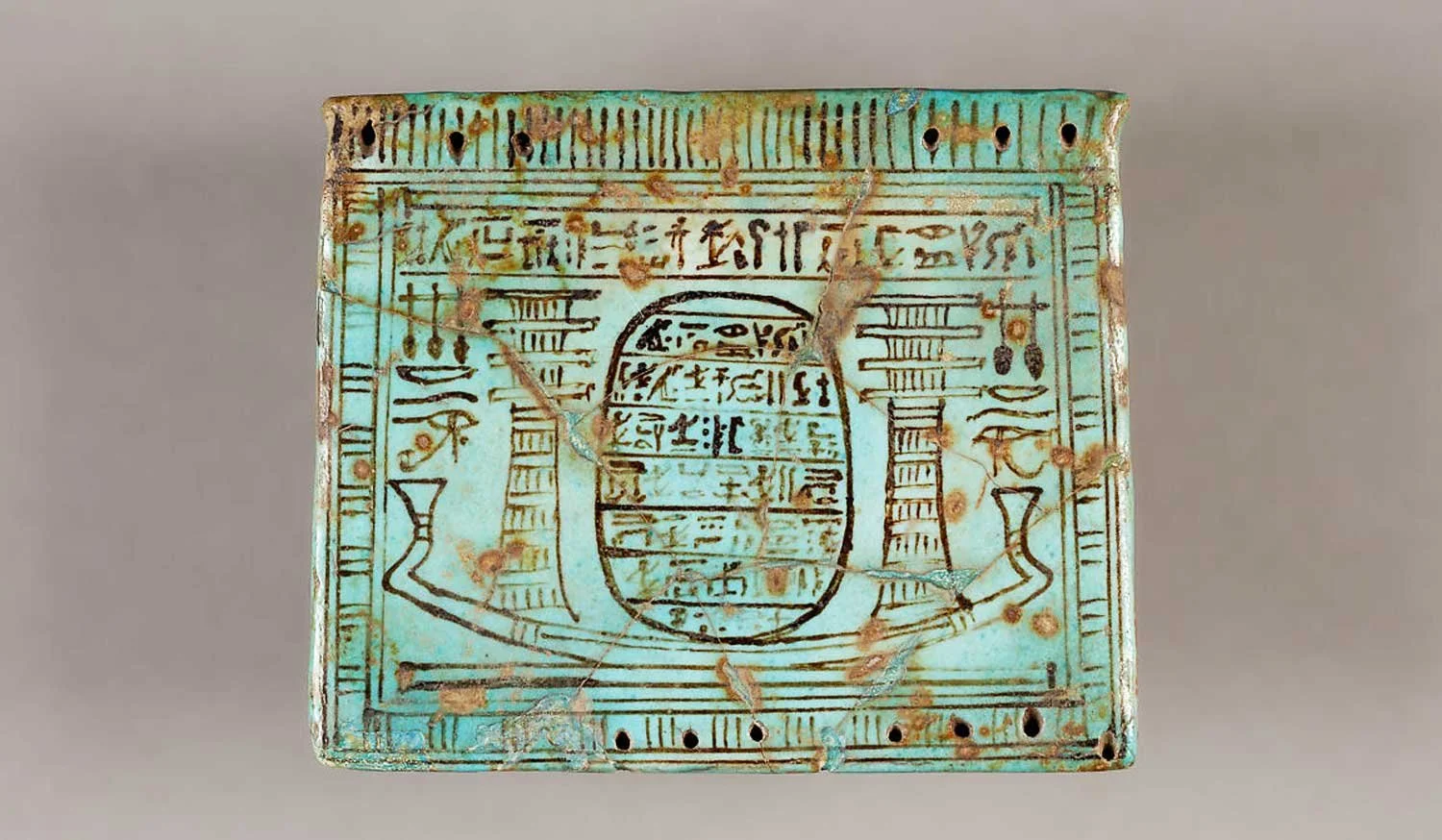
This image shows a pectoral found in a tomb, this is the backside. You can see a boat with twin Djed (pillars) on either side. The front side of this pectoral show a scarab, on this backside, a spell is inscribed on the scarab’s back. The spell is from the Book of the Dead and is in regard to the heart of the deceased. Made of faience, Met Museum, New Kingdom.
Were Pectorals Magical?
Yes, but “magic” in ancient Egypt did not necessarily mean illusion, secrecy or superstition. The Egyptians called magical power heka. It was understood as a genuine force woven into creation and used by gods and humans alike.
Words and images possessed power. To portray a protective deity was to invite that deity’s protection; to display the ankh was to invoke life; and to show the rising sun was to participate symbolically in its daily renewal.
A pectoral could therefore operate almost like a visual spell. Its effectiveness depended upon several elements working together:
The divine figures represented upon it
The hieroglyphic signs and royal names incorporated into its design
The religious significance of its materials and colors
Its placement over the chest or heart
Its association with prayers, rituals and funerary texts
Pectorals worn during life may have conferred protection, status and divine favor. Funerary pectorals were expected to continue working eternally, guarding the deceased and assisting in transformation into an akh, an effective, transfigured spirit.
Common Motifs and Their Meanings
The Ankh
The looped ankh was the hieroglyph for “life.” Gods are frequently shown holding ankhs or presenting them to the king. On a pectoral, the sign invoked life, vitality and the continuation of existence beyond death.
The Sun Disc
The sun disc represented the life-giving power of the sun god, especially Ra. Because the sun vanished in the west each evening and returned in the east every morning, it became one of Egypt’s most powerful images of regeneration.
A disc might appear above a falcon, between cow horns or surrounded by a protective cobra. The winged sun disc combined solar renewal with the protective power of outstretched wings.
The Falcon
The falcon was closely associated with Horus, god of the sky, kingship and royal protection. Its soaring flight and keen sight made it a natural emblem of the heavens.
Falcons on royal pectorals could represent Horus supporting the pharaoh and proclaiming his divinely sanctioned authority. They might also possess solar meaning, particularly when crowned with sun discs.
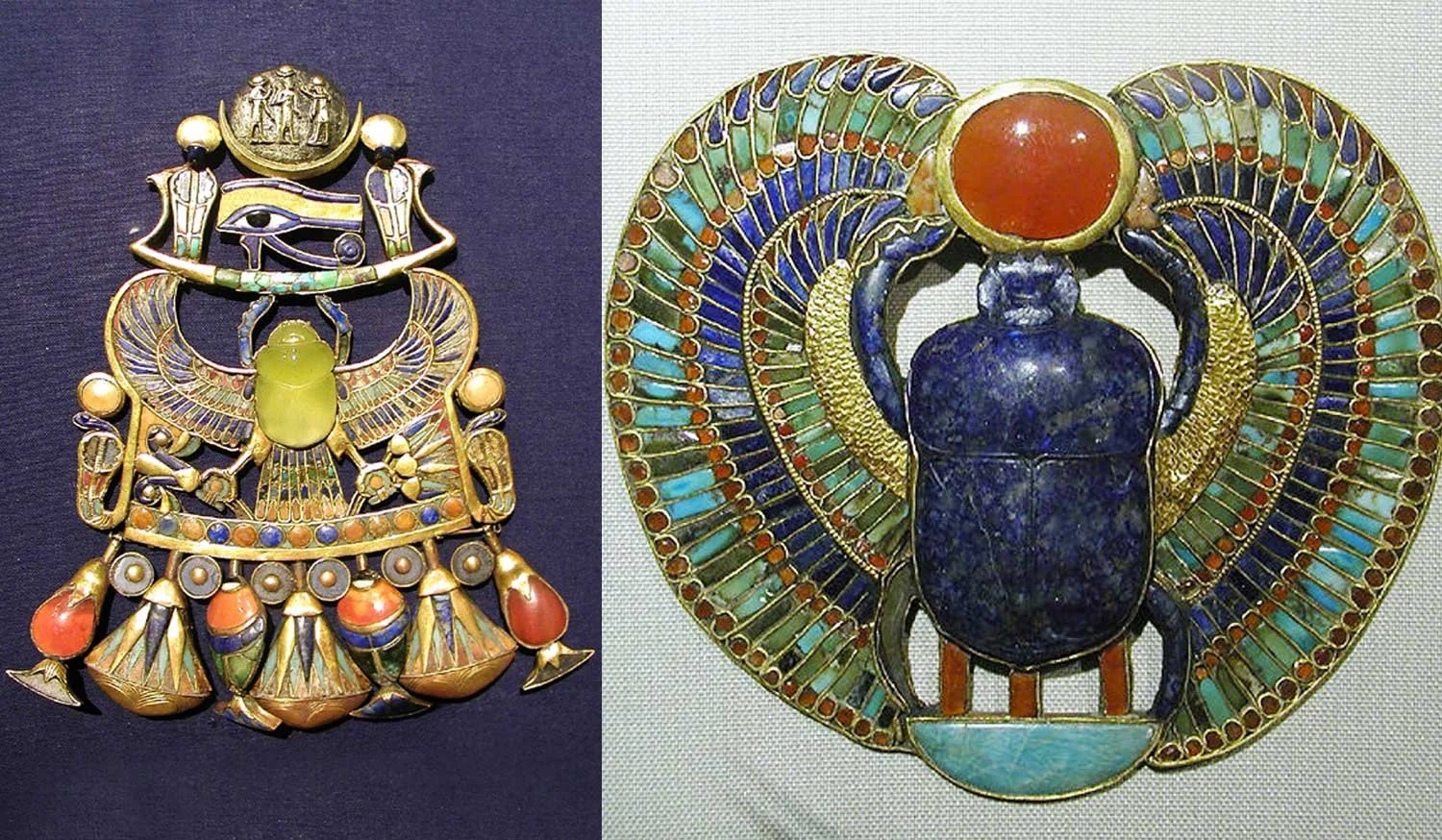
Two pectorals both belonging to King Tutankhamun, both at the Egyptian Museum in Cairo.
The piece on the left features a scarab carved from Libyan Desert glass.
The scarab represents Khepri and rebirth, the wadjet eye is topped by the gods Thoth and Ra-Horakhty (moon and sun) and they are crowning the King. (photos: wikipedia)
The Scarab Beetle
The scarab represented Khepri, the form of the sun god associated with sunrise. Just as a scarab beetle appeared to roll its ball across the earth, Khepri was imagined rolling the sun into the morning sky.
For this reason, the scarab became a symbol of transformation, renewal and self-generated life. Winged scarabs were frequently placed upon mummies, while some funerary pectorals were designed to hold a heart scarab at their center.
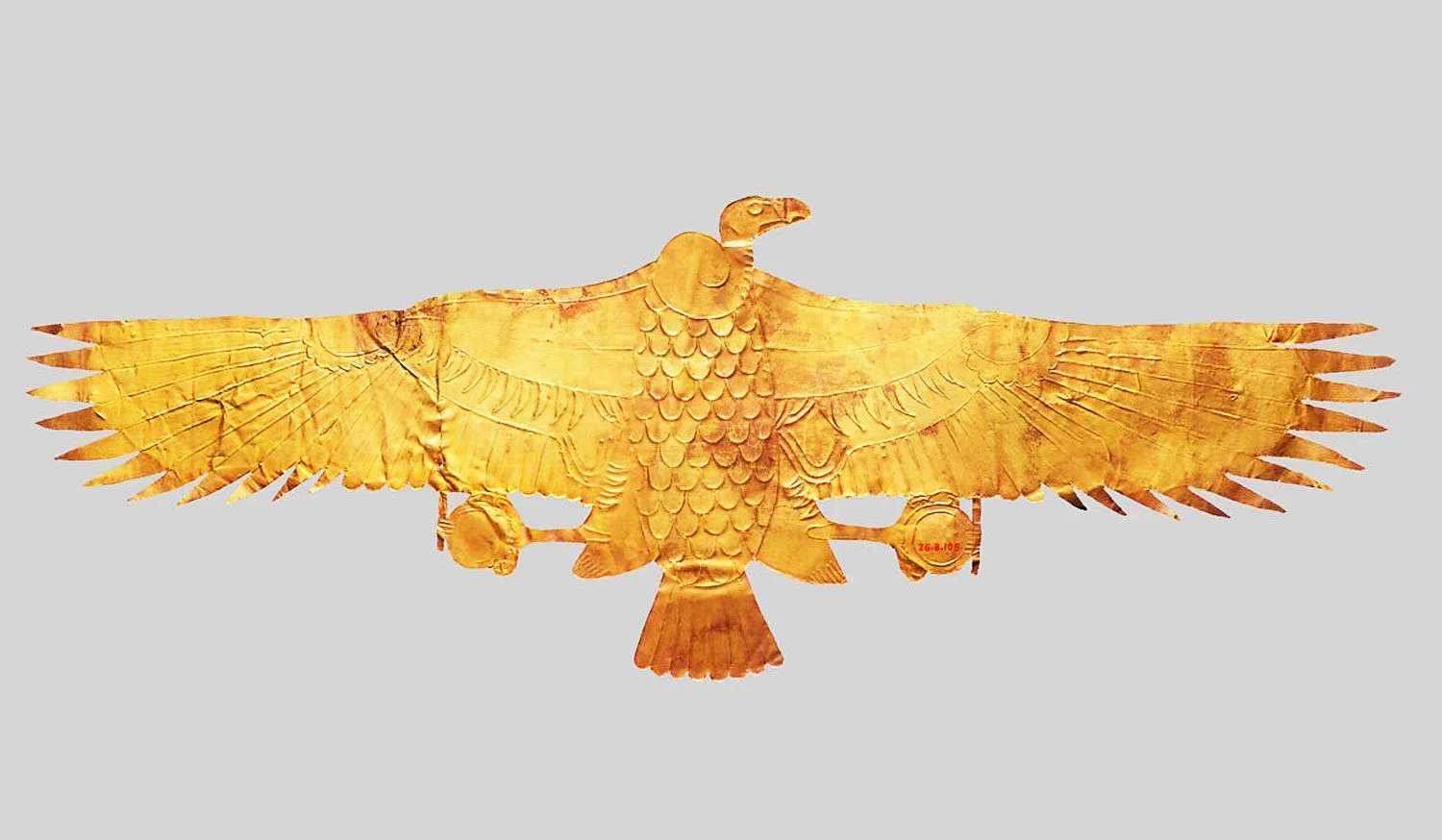
Vulture, probably Nekhbet, New Kingdom, gold sheet. Met Museum.
The Vulture
The vulture was associated with Nekhbet, the protective goddess of Upper Egypt. She was often shown with her wings spread around the king or another sacred figure. Together, Nekhbet and the cobra goddess Wadjet represented the united lands of Upper and Lower Egypt.
The Wedjat, or Eye of Horus
The wedjat eye symbolized protection, healing, completeness and the restoration of order. According to Egyptian mythology, the injured eye of Horus was healed and made whole. It consequently became one of the most widely used protective symbols in Egypt.
A pectoral in the British Museum combines a winged wedjat eye with the jackal god Anubis. Its blue and yellow coloring evokes both resurrection and the renewing power of the sun. British Museum
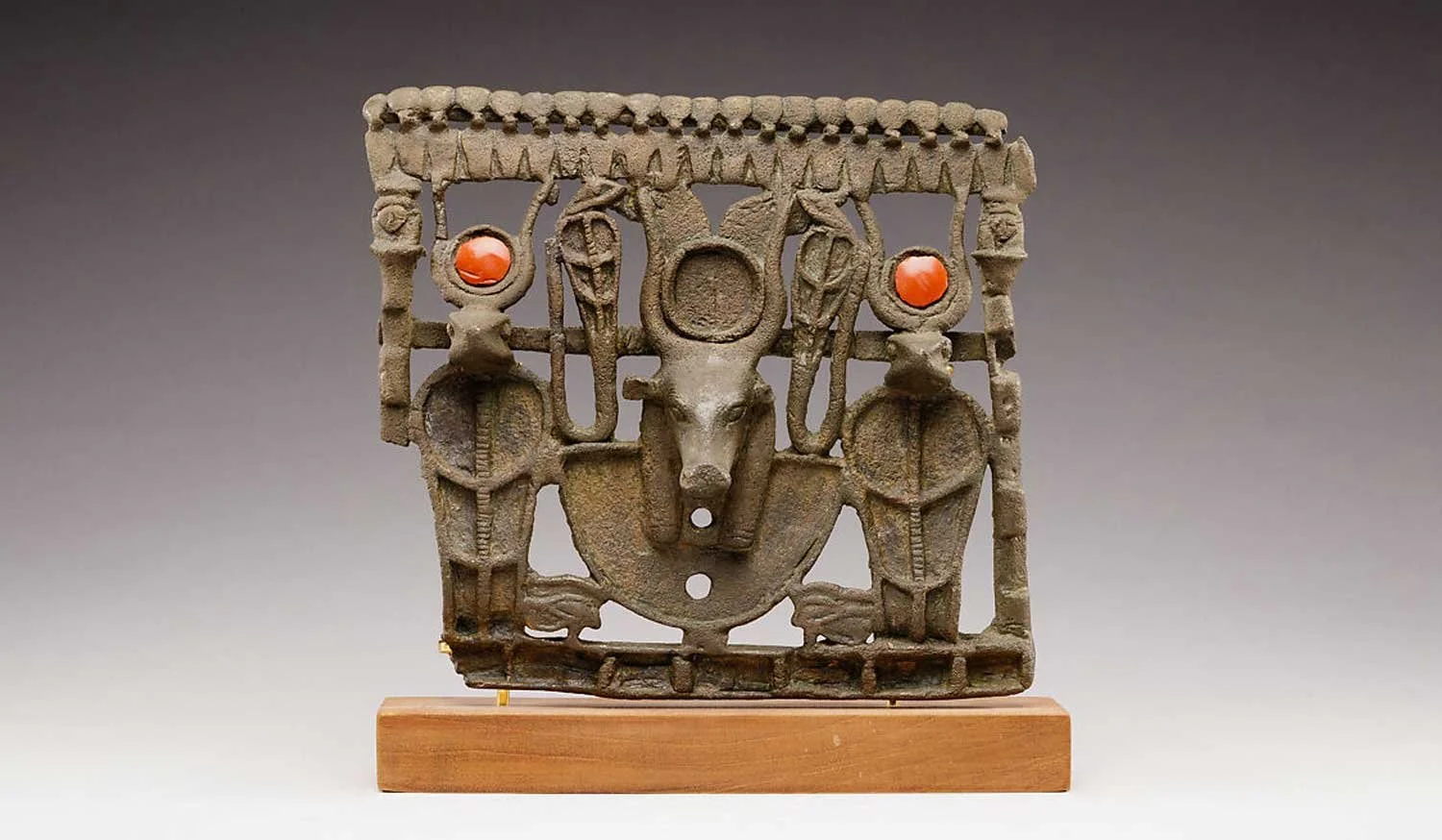
Pectoral with bovine, Hathor columns and cobras (uraei). Late Kingdom, metal and carnelian. Met Museum.
The Cobra or Uraeus
The rearing cobra represented divine and royal protection. Worn upon the pharaoh’s brow, the uraeus embodied the goddess Wadjet and was believed capable of destroying the king’s enemies with fiery breath.
On pectorals, cobras sometimes encircle sun discs or suspend ankhs, joining the ideas of solar power, protection and eternal life.
The Djed Pillar
The djed symbolized stability, endurance and permanence. Closely connected with Osiris, it was sometimes interpreted as the god’s backbone. In a funerary context, it promised that the deceased would be raised, restored and made enduring like Osiris.
Isis and Nephthys
The divine sisters Isis and Nephthys protected and mourned Osiris after his murder. Through devotion and magical skill, they helped restore him to life.
When shown on funerary pectorals, often kneeling or raising their wings and arms protectively. They guarded the deceased as they had once guarded Osiris.
Lotus and Papyrus
The lotus, which opened with the morning light, symbolized the sun, creation and rebirth. Papyrus represented life, fertility and the marshlands of Lower Egypt. When paired, plants associated with Upper and Lower Egypt could also express the unity of the Two Lands.
Royal Cartouches
A cartouche enclosed the hieroglyphs of a royal name within an elongated loop. Names were essential to identity and continued existence, so surrounding a name with a cartouche both distinguished and protected it.
On royal pectorals, the cartouche might be supported by gods, guarded by cobras or flanked by falcons, creating a miniature declaration that the king’s life and authority would endure forever.
The Magical Language of Color and Material
The substances used to create a pectoral were themselves significant.
Gold was associated with the sun and the imperishable flesh of the gods. Because it did not tarnish, it also suggested eternity.
Lapis lazuli evoked the deep blue heavens, divine hair and the mysterious realm of the gods.
Turquoise and green feldspar suggested vegetation, freshness, joy and renewed life.
Carnelian could represent warmth, sunlight, blood, vitality and protective energy.
Blue faience was associated with the Nile, the sky, fertility and resurrection.
Red could signify life and energy, although in other contexts it might also suggest danger or disorder.
Yellow recalled sunlight and gold and could therefore carry solar and eternal associations.
More Than an Ornament
Ancient Egyptian pectorals reveal a culture in which beauty, language and sacred power could not easily be separated. Every falcon, scarab, sun disc and carefully chosen stone contributed to the object’s purpose.
To modern eyes, these pieces are dazzling examples of the goldsmith’s art. To the Egyptians who commissioned and wore them, however, they were something greater: miniature sacred worlds resting over the heart. They protected life, preserved identity and promising that, like the sun, the wearer might rise again.