
Egyptian Art at the Met Museum
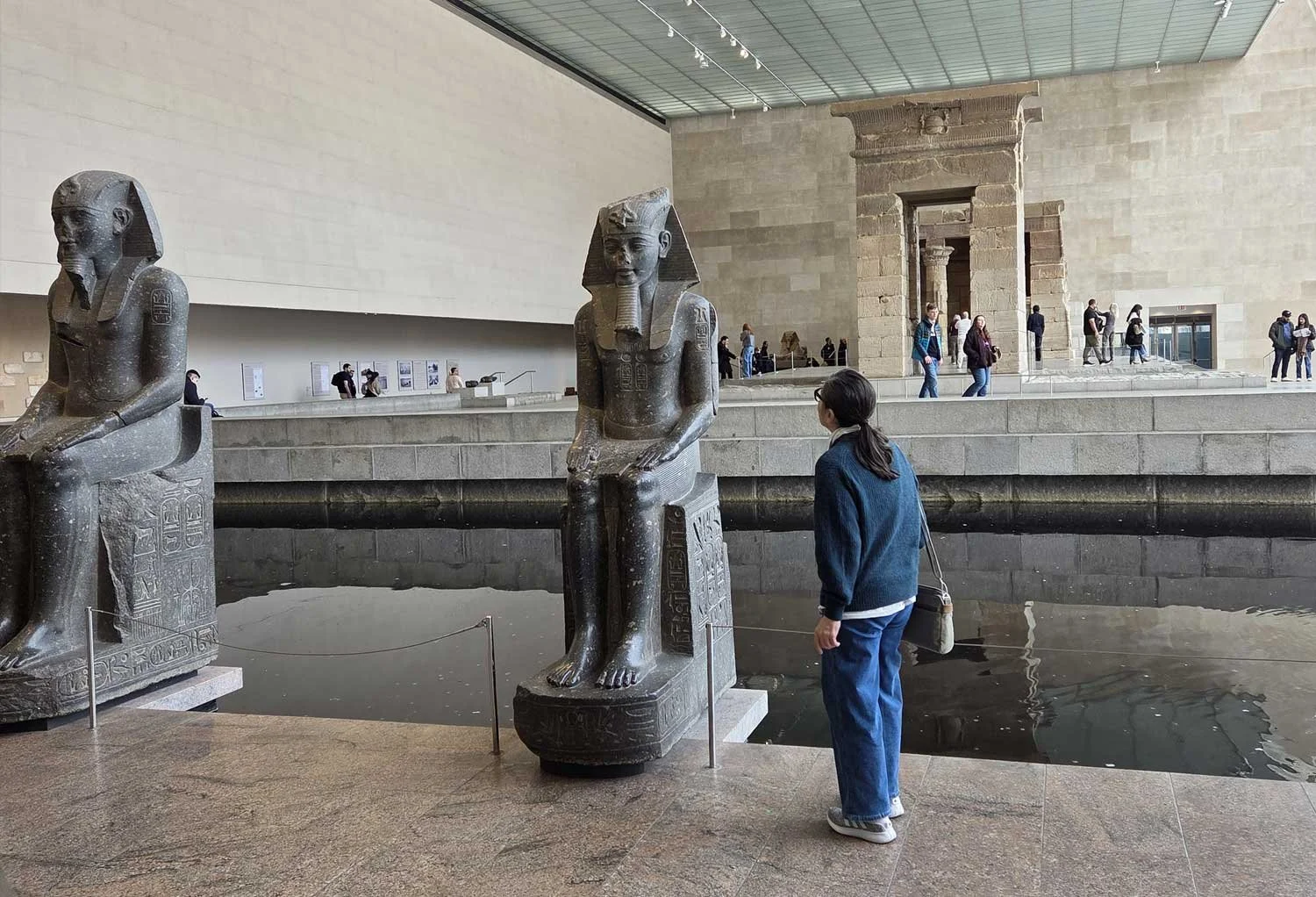
In the Temple of Dendur exhibit with two statues of two statues of Amenhotep III.
I’ve visited the Met Museum a number of times over the years and each time the visit was too short.
That being said, in this post I’m sharing some of the photos I took.
The Temple of Dendur
The Temple of Dendur was gifted to the US in the 1965 from Egypt in recognition of helping save it from flooding caused by the Aswan Dam.
It was given to The Met in 1967 and block by block it was put back together in the 1970s. It’s amazing to have something that stood in the sands of Egypt so many years ago, now be housed next to Central Park!
It is from the Roman period, 10CE and made of aeolian sandstone.
If you want to know more about the temple specifically, this LINK will take you to the Met’s article on it.
The first image is me, standing in front of the reflecting pool with the ancient Egyptian temple in the background. I’m standing by two large sculptures of Amenhotep III, in stone form.
The Temple of Dendur gallery is the most dramatic of the Egyptian rooms. It looks especially beautiful when it’s dark outside…but I was there bright and early, so I missed that this time.
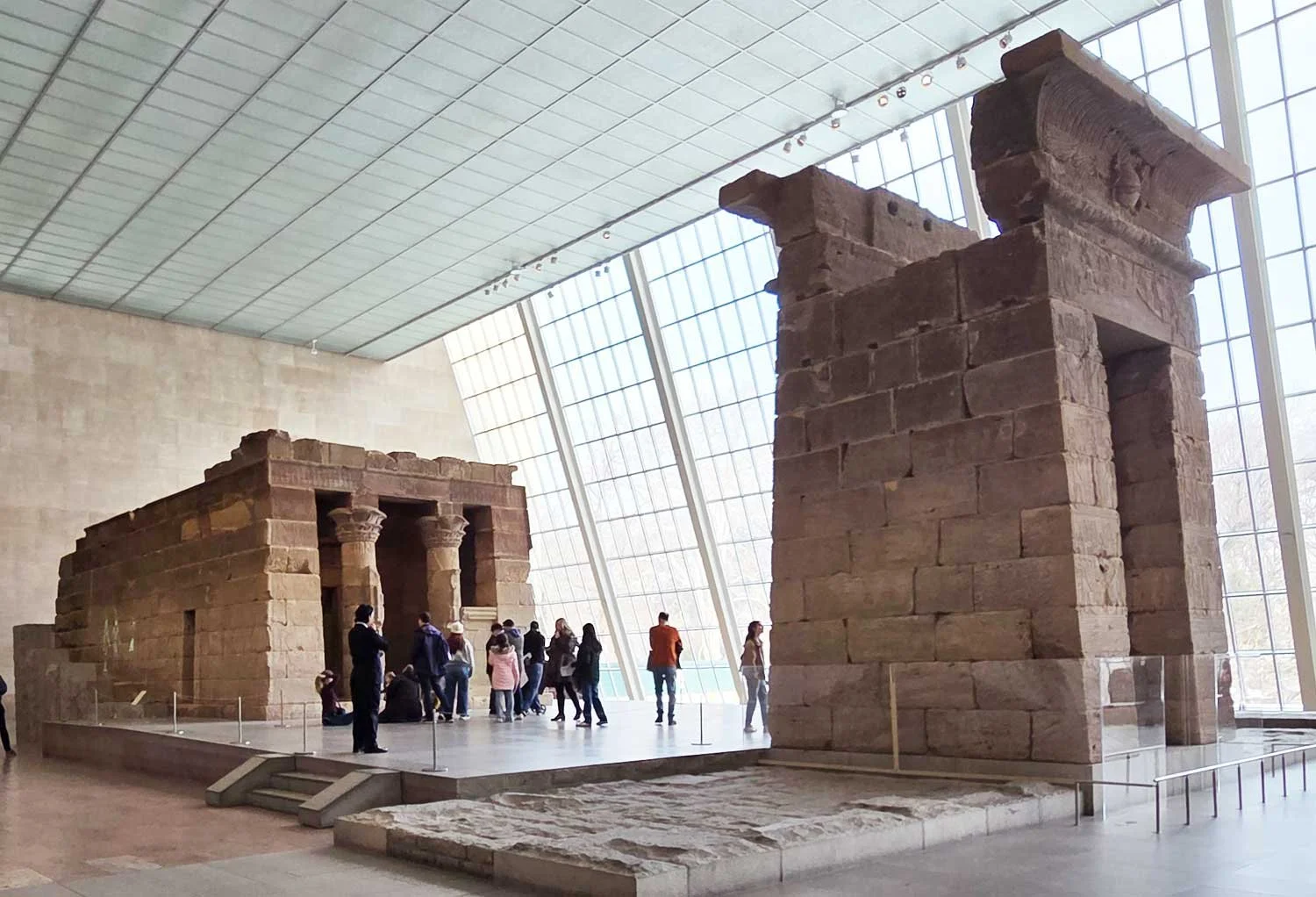
Temple of Dendur and Entrance Gate.
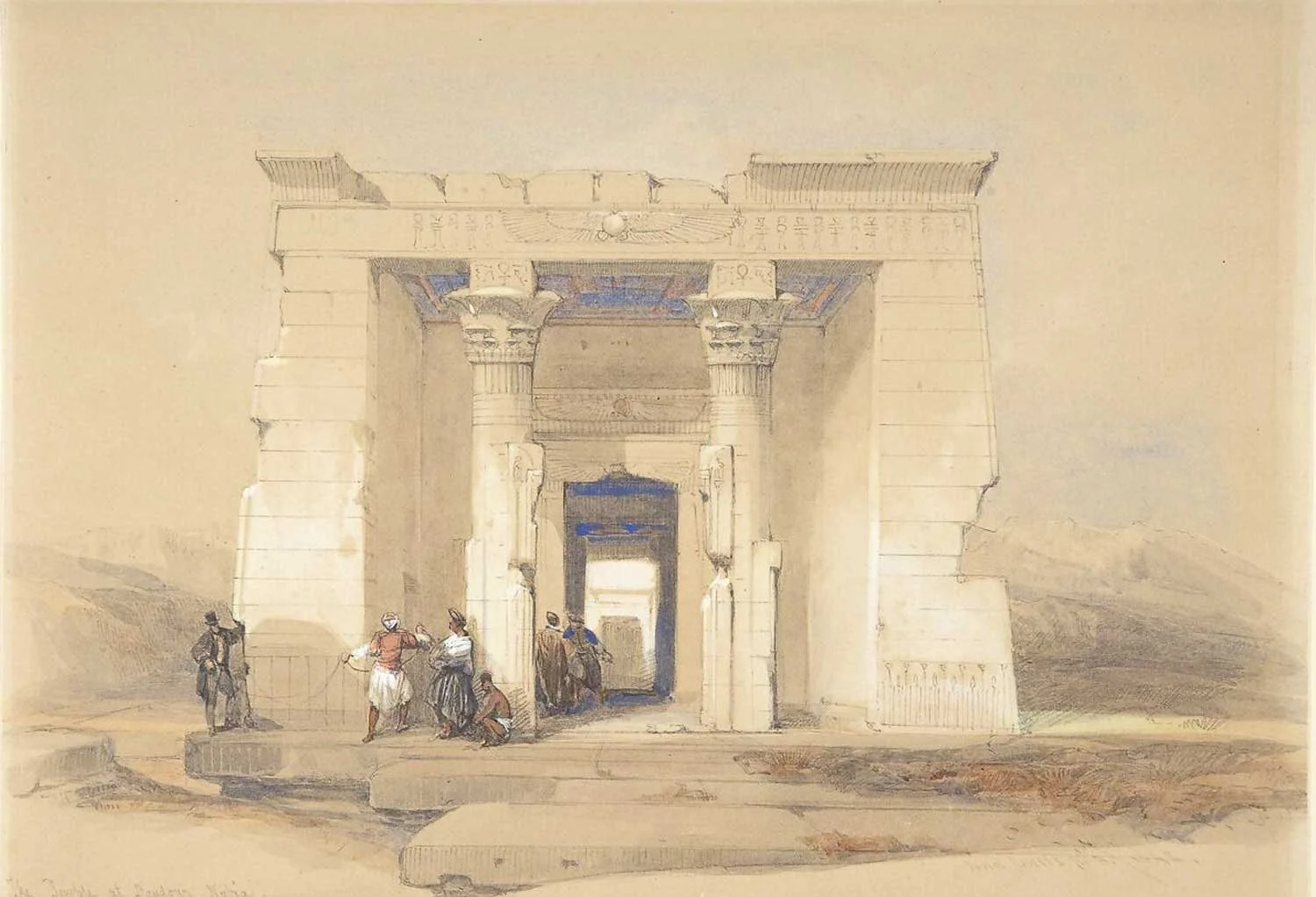
Temple of Dendur, by David Roberts, 1848.
This is an illustration by noted Scottish artist, David Roberts. He drew the temple during his visit to Abu Simbel inNubia when it was still in Egypt. Abu Simbel is in the southern area of Egypt, near the border of Sudan.
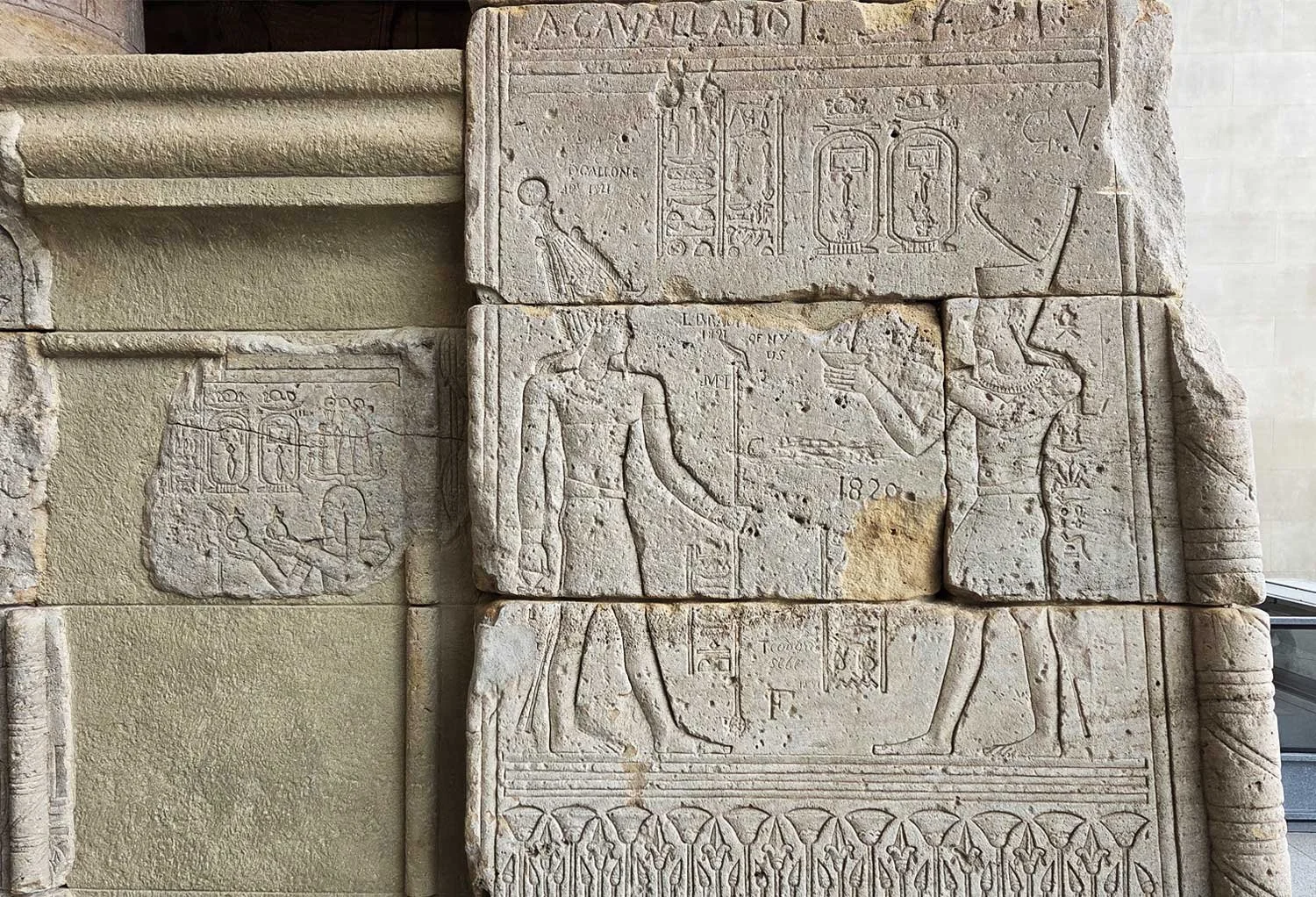
Detail of temple with 19th-century graffiti.
In this detail of the temple, you can see a modern name carved at the top and another just above the head of the god on the left, and ‘1820’ carved in between the two figures (Augustus to the right, offering wine to a god). This is 19th century graffiti that occurred while the temple was still in Egypt by travelers on their ‘grand tour.’ Tourists behaving badly isn’t a recent occurrance!
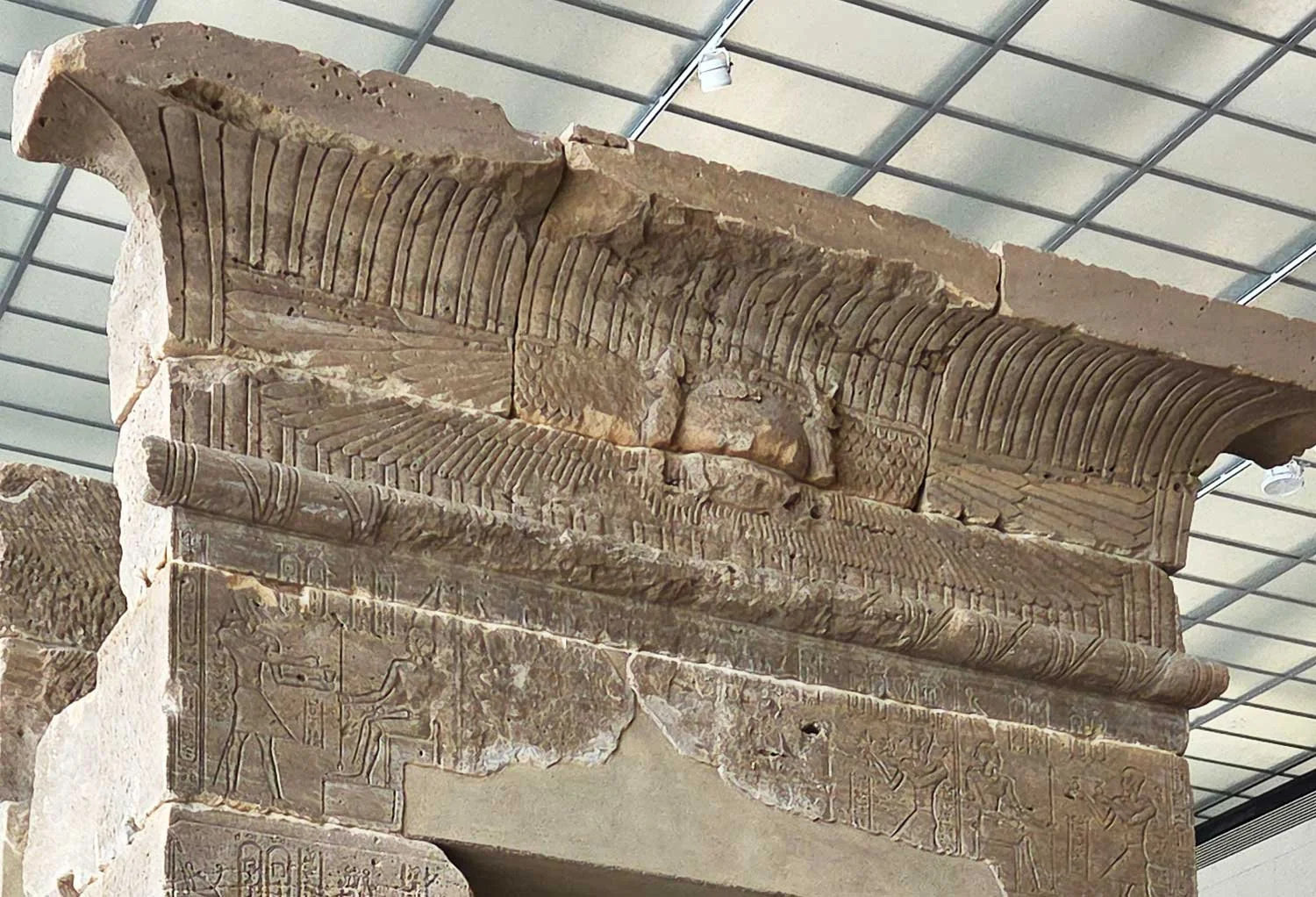
On both the gate and temple top entrance are stunning carved images of Horus the sky god, with wings spread and sun disk in the middle.
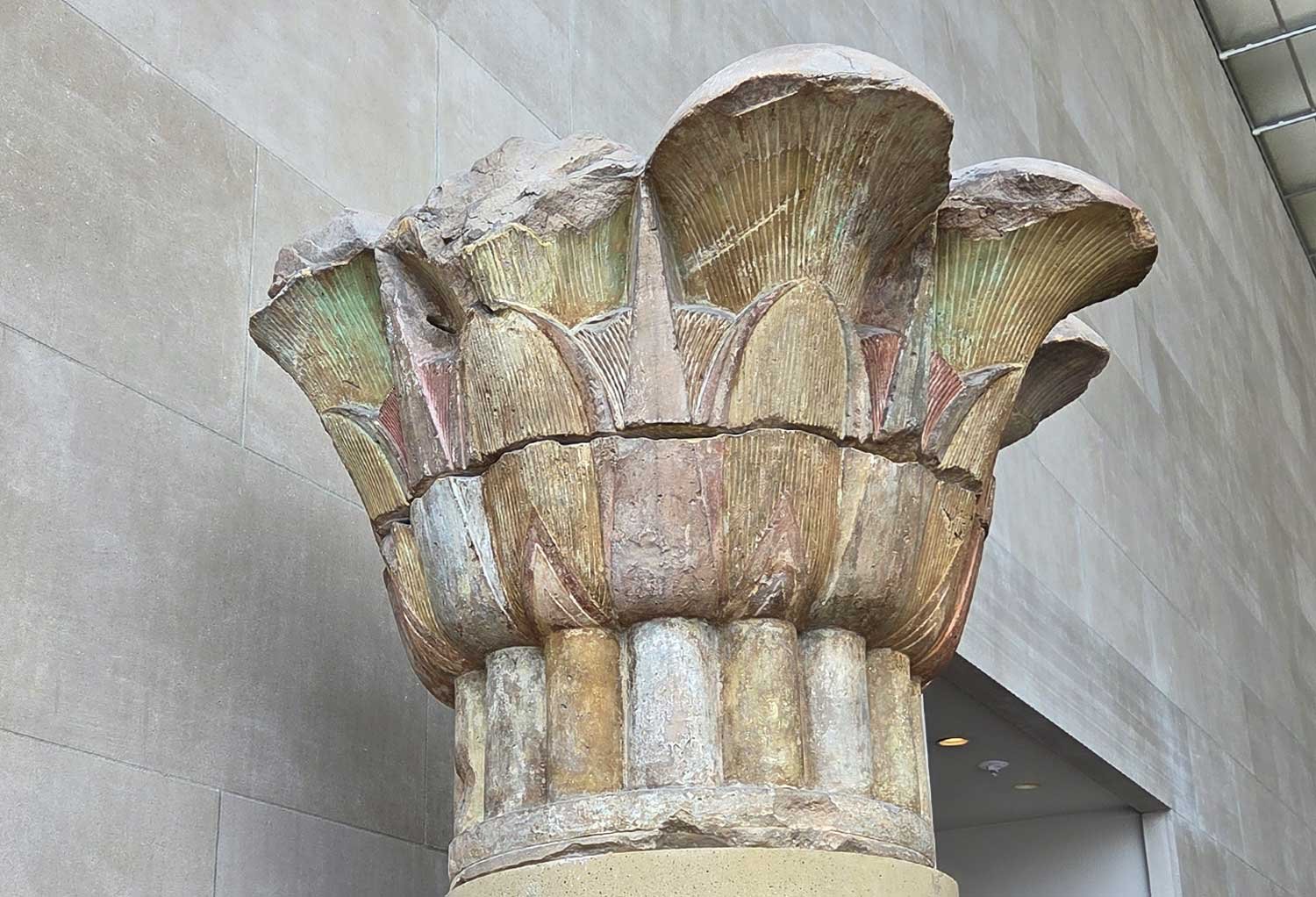
Composite Papyrus Capital, from the late period.
Beautiful Ancient Egyptian Craftsmanship…
This beautiful composite capital is part of a column which was in front of the temple of Amun at Hibis in Kharga Oasis. The plants incorporated into the design are the common papyrus and foxtail flatsedge.
Whenever I see this kind of detail, I remind myself it was created in a time without modern tools and devices. It makes them all the more impressive.
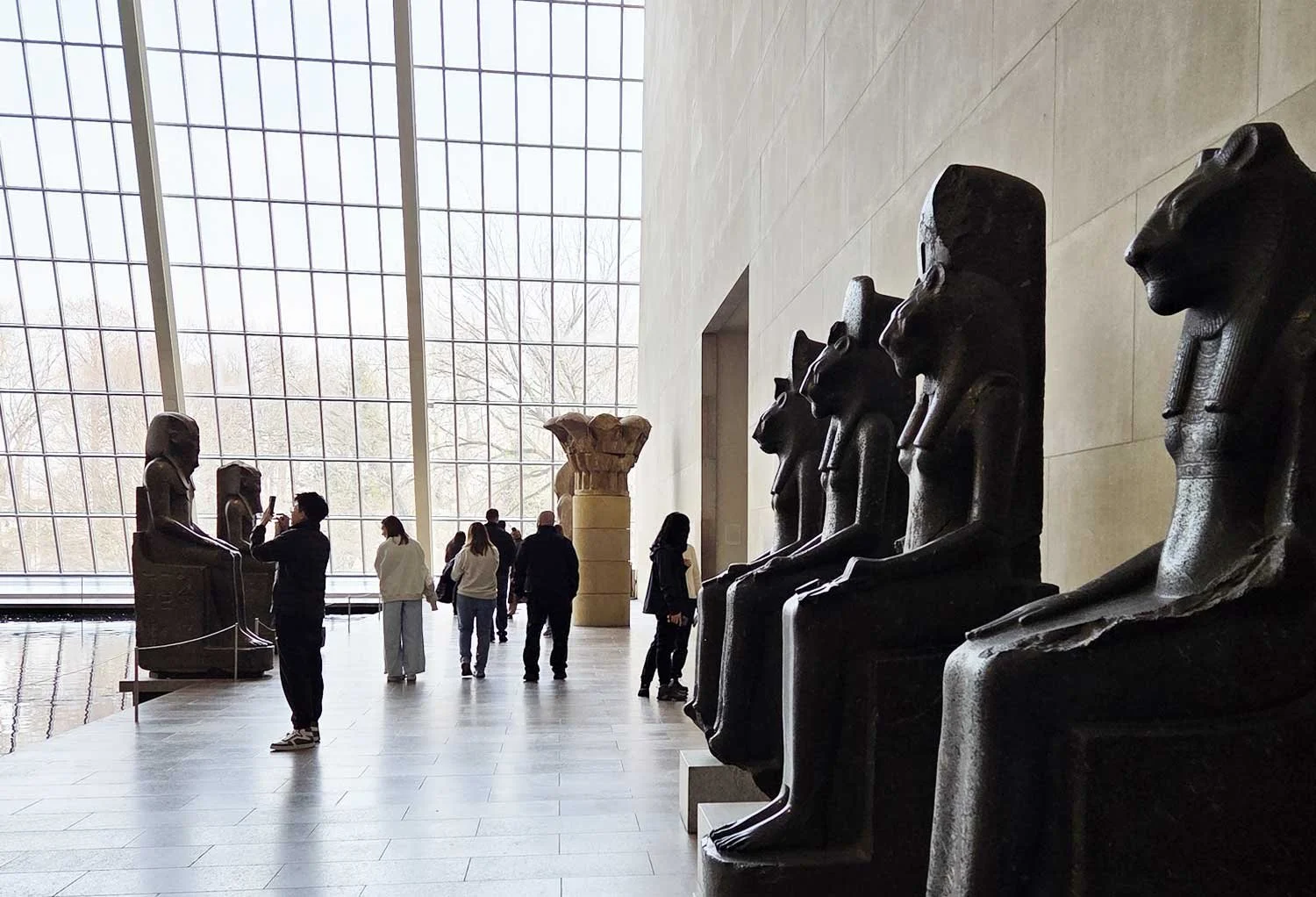
Row of Sekhmet statues, New Kingdom
Gods and Goddesses…
Still in the Temple of Dendur area, a row of seated Sekhmet statues. Made of granodiorite, Sekhmet is a goddess who represented unexpected disaster and violence. She has the head of a lion and the body of a woman.
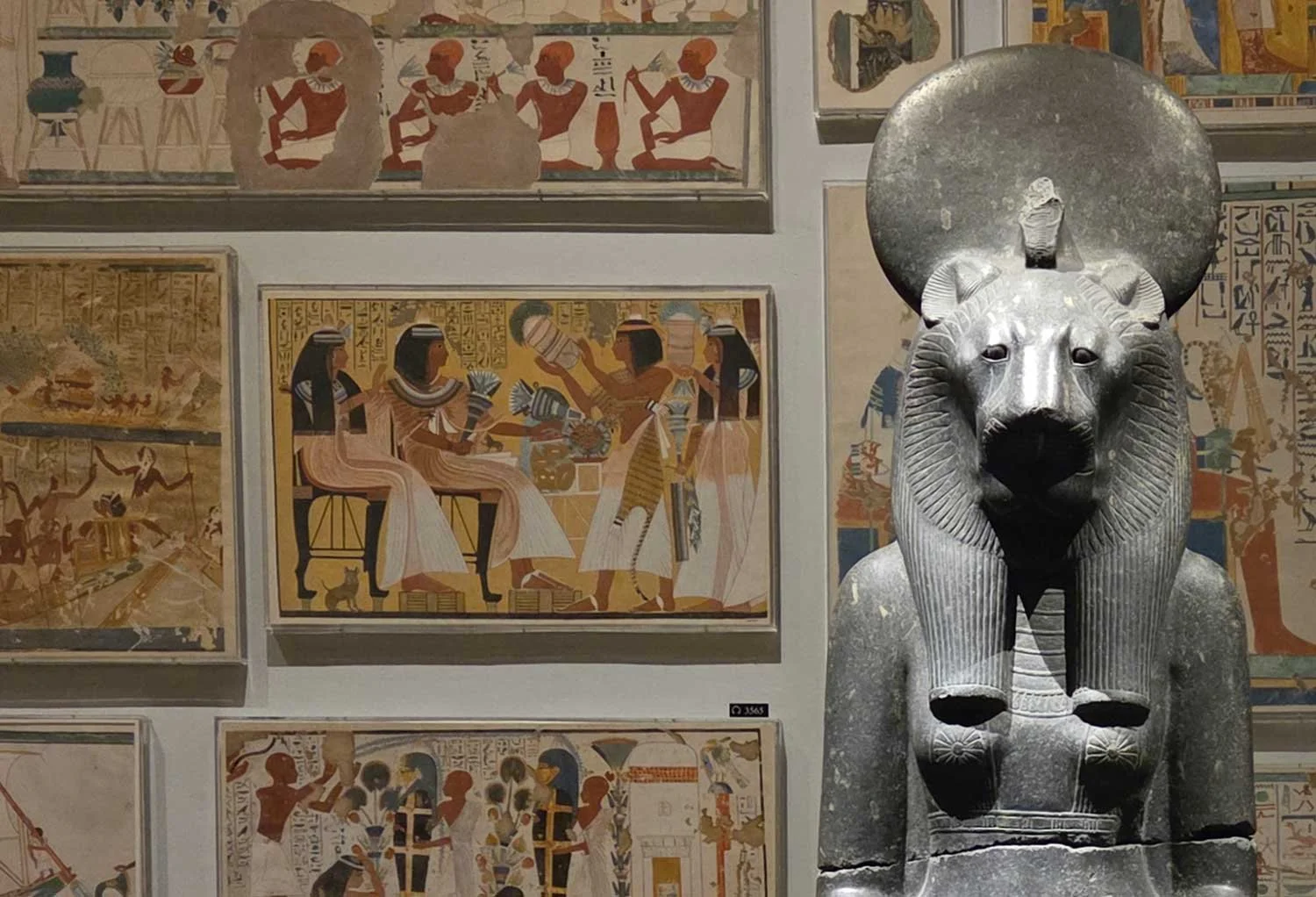
Sekhmet from the front, shown with the solar disc on her head, connecting her to the sun god, Ra.
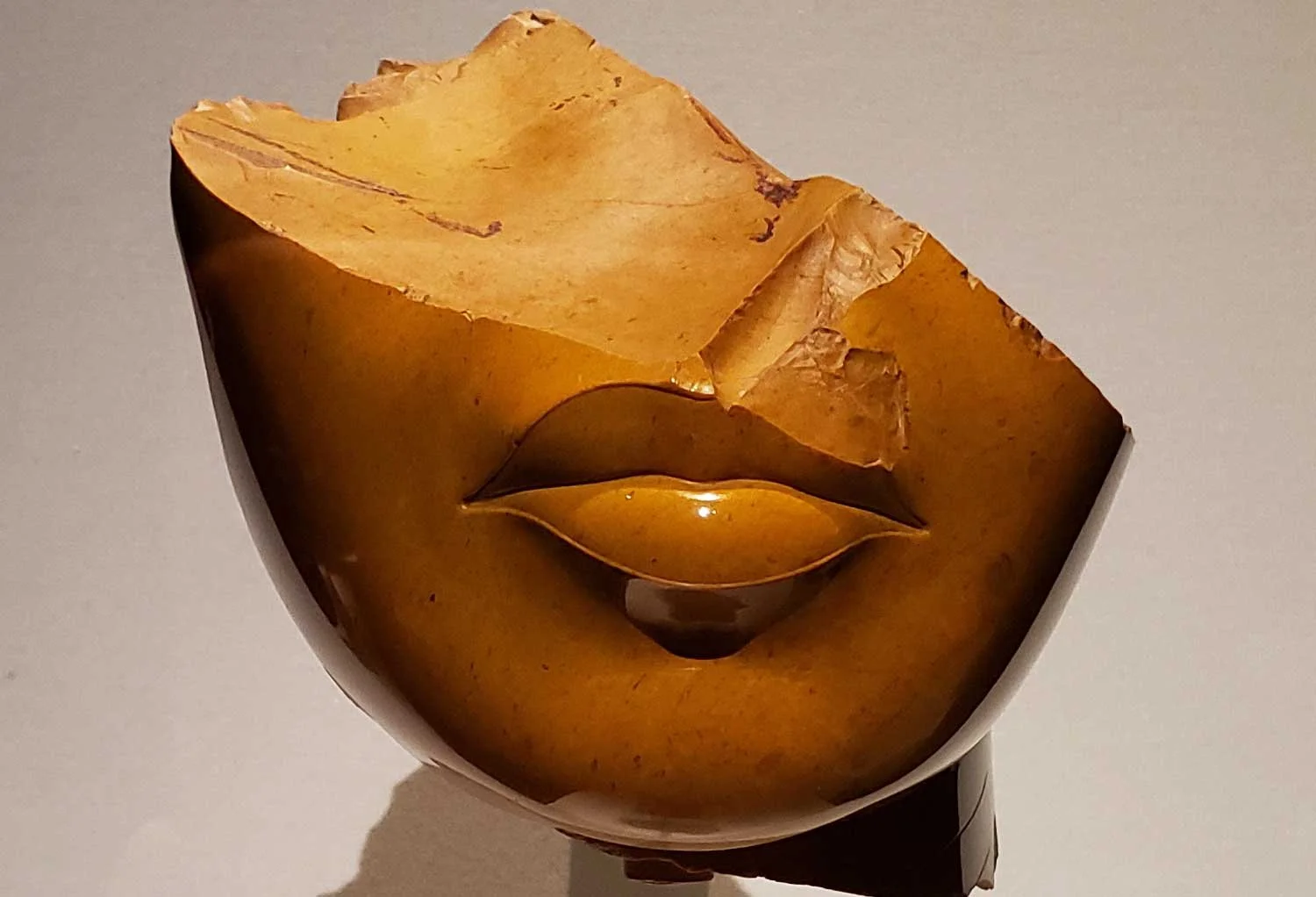
Fragment of Egyptian Queen’s face, New Kingdom.
I think this is one of the most beautiful pieces in the Egyptian collection. I saw it for the first time on a museum documentary and not in person until a number of years later.
In person, this was smaller than I thought, but still very striking. The perfectly carved, voluptuous lip line with its sharp delineation and glossy finish is quite different from the others pieces in the collection - it’s almost modern in look.
The color is also gorgeous; the fragment is made from yellow jasper.
A Room of Sarcophagi
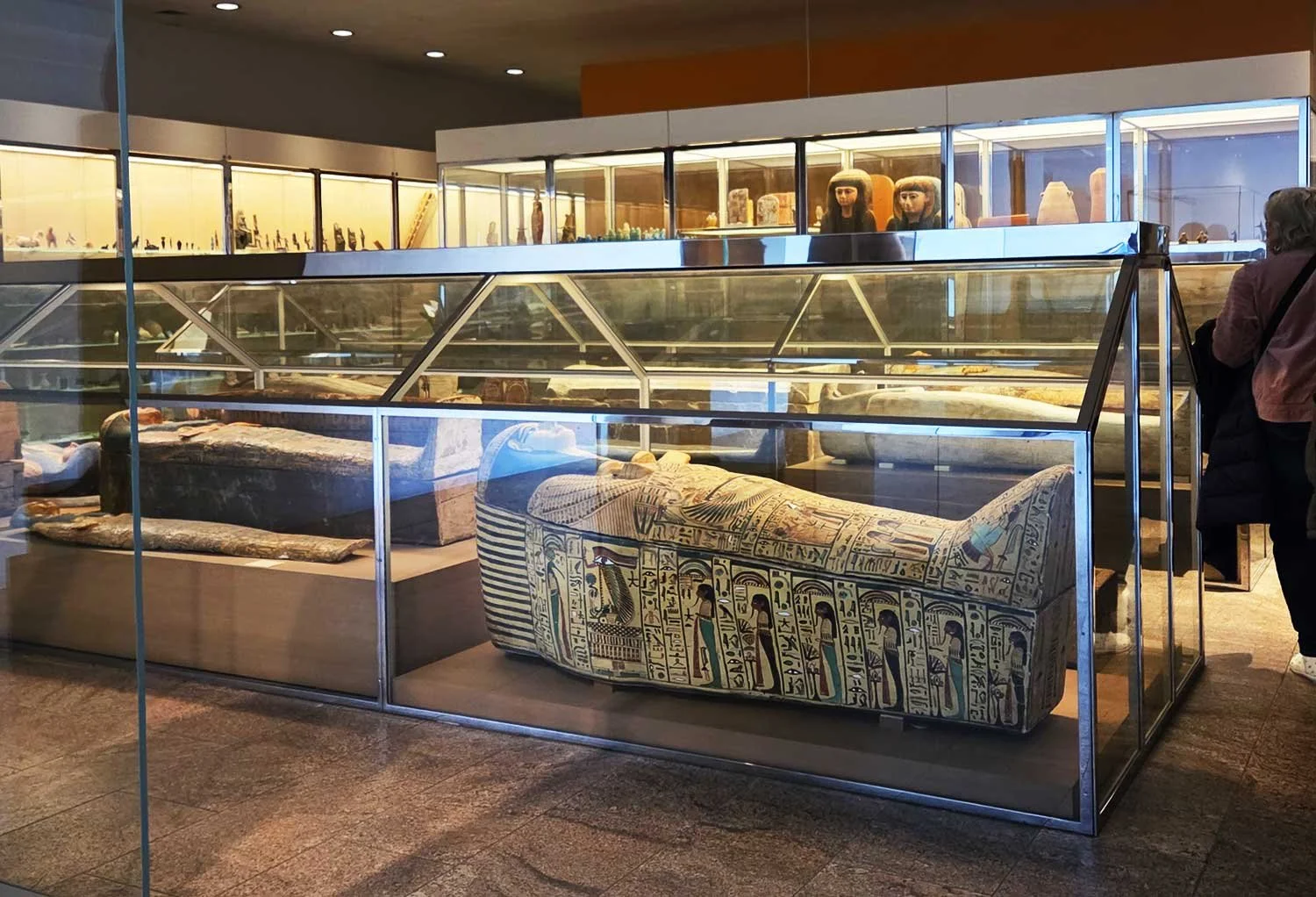
Just amazing….
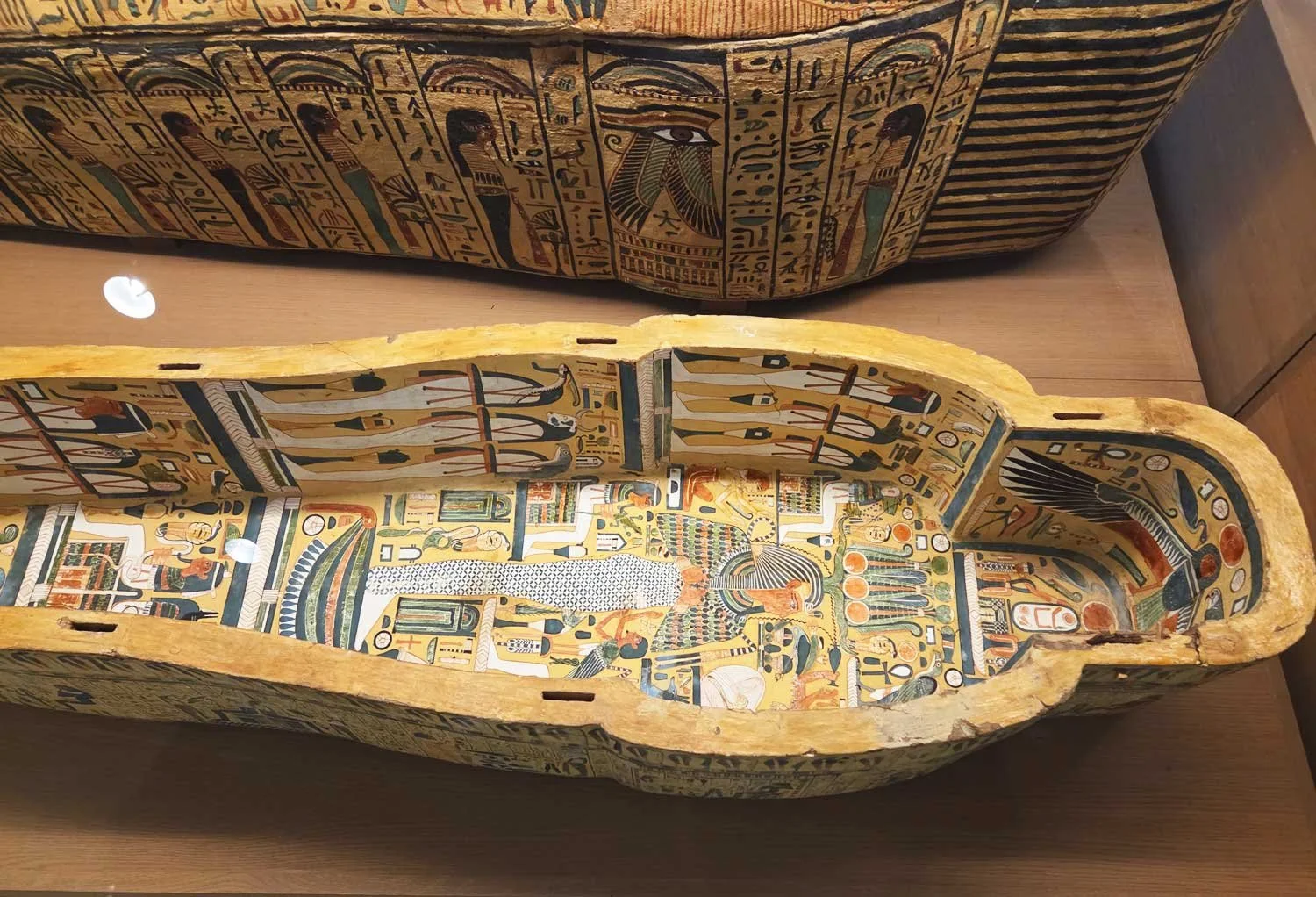
Wooden ‘stola’ coffin.
A Stola coffin refers to the red leather-like bands that crisscross figures and represent mummy braces. You can see them on the upper side of this piece on the figures in white, or larger, below.
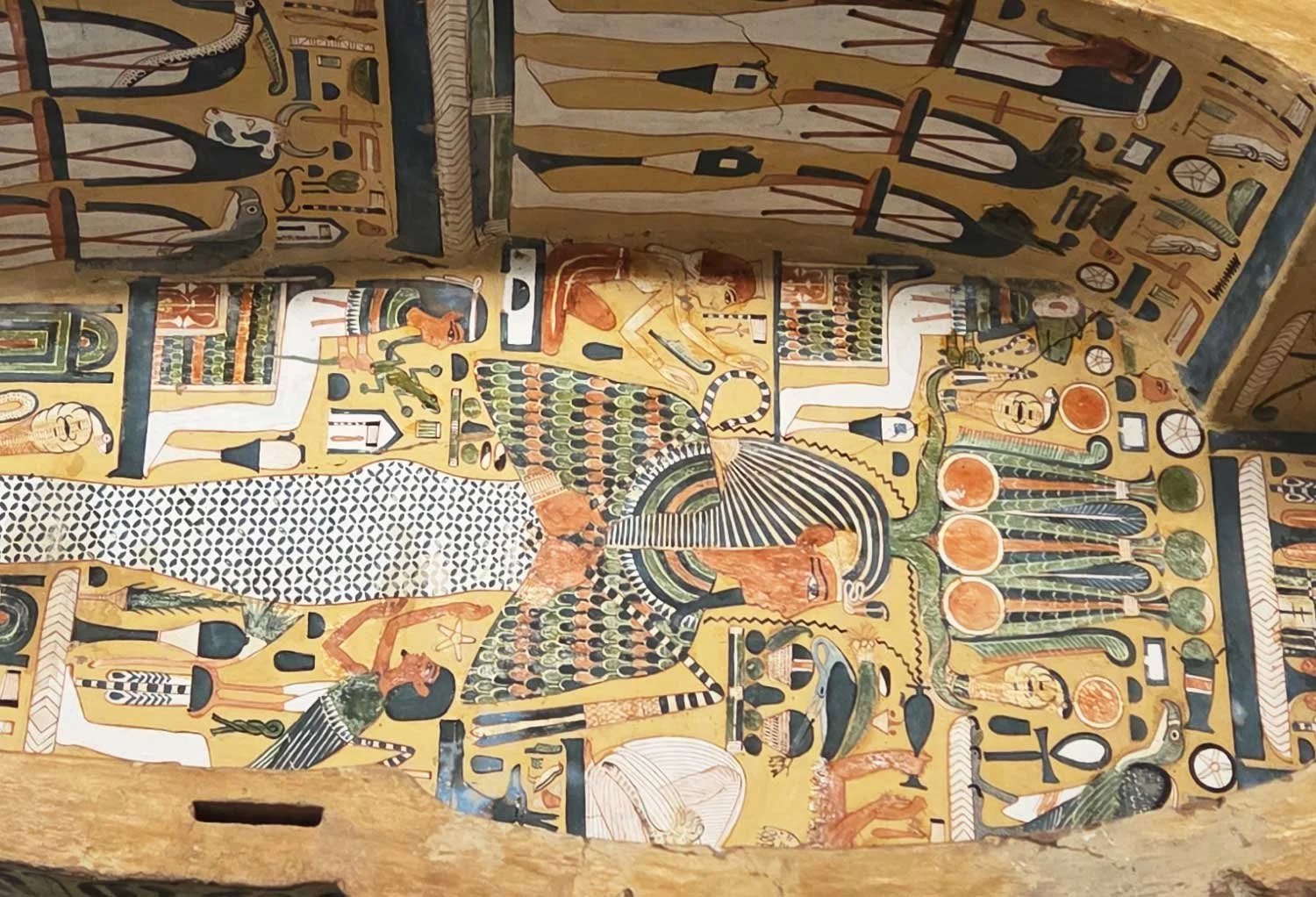
Amenhotep I shown.
This coffin is from the Third Intermediate Period and features a gorgeous - in color and detail - depiction of the deified King Amenhotep I. He is in mummiform and, according to The Met website, in the guise of Osiris, who was the ruler of the dead.
Look at all the beautiful pattern in this image!
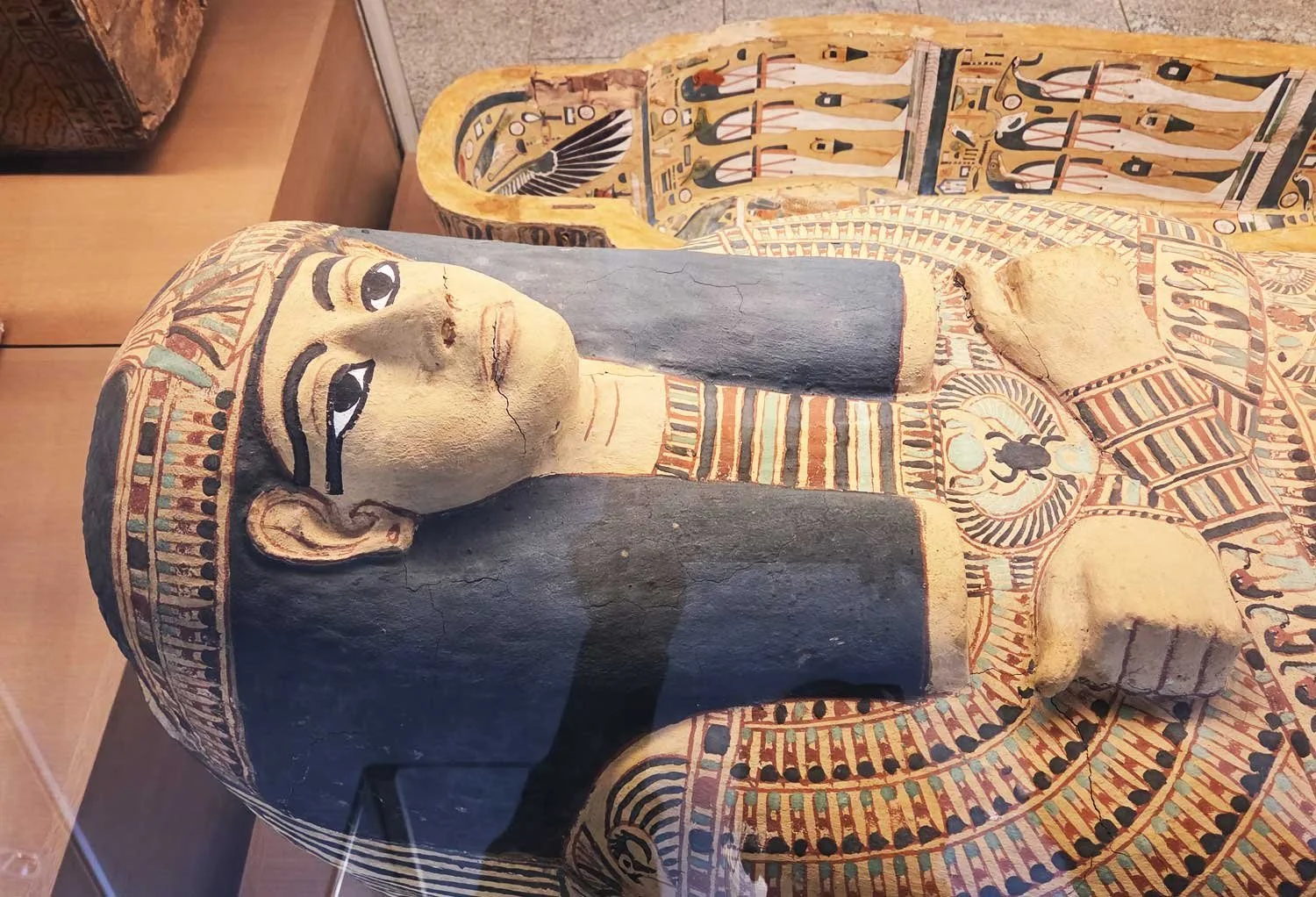
Detail of an outer coffin, 1150–1000 BCE.
This outer coffin is interesting because it almost looks like clay. In fact, I had to check on the Museum’s website to see what it was made of. Apparently, it’s wood and paste, along with paint. It also kind of looks like a woman, but it’s not. It was for Itamun, a charioteer. I will say that on the Met’s website, it shows several views of this piece, one standing up, where the face looks a little more masculine from that angle.
Whimsical Imagery…
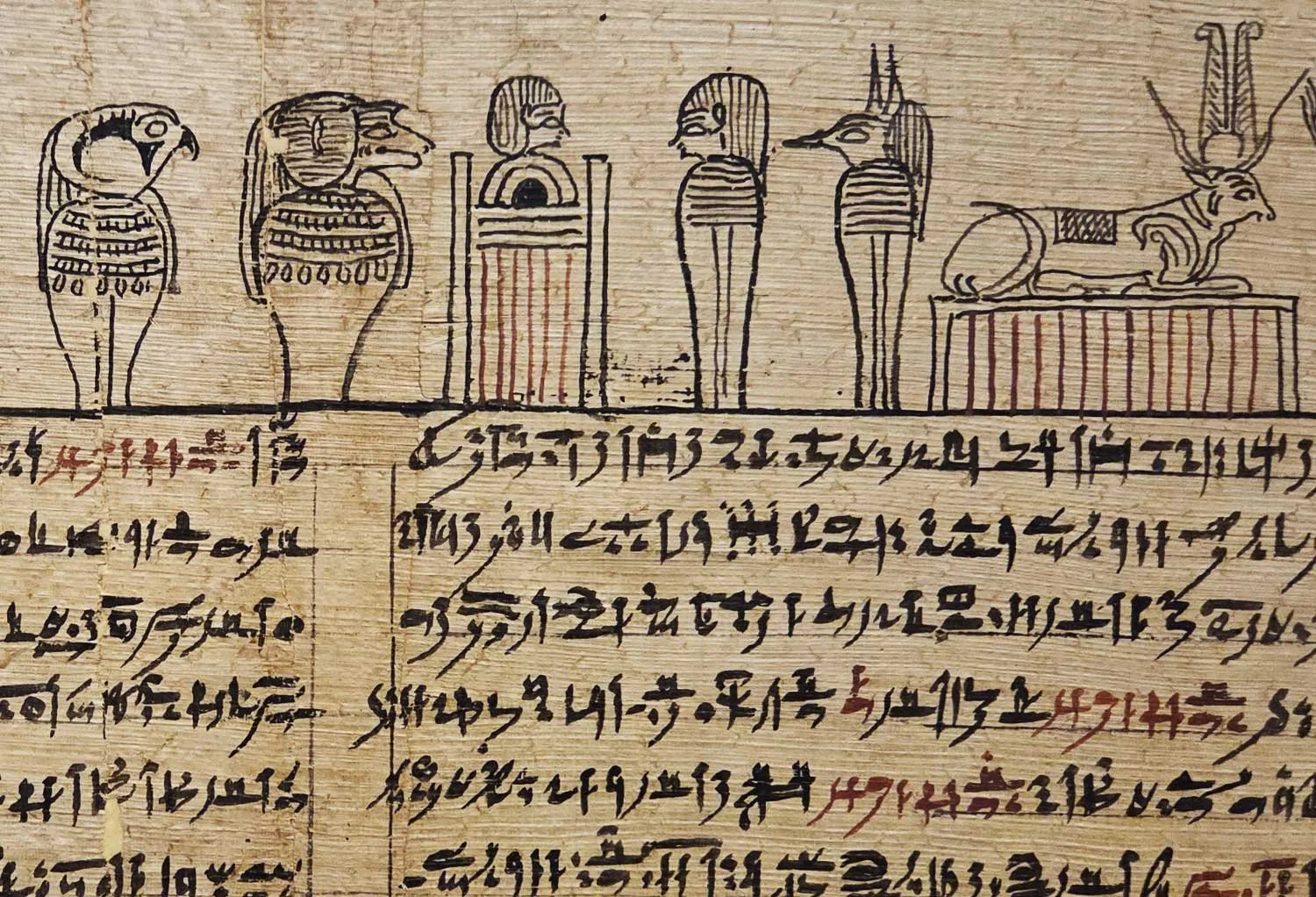
Drawing on papyrus texts.
There are many examples of text written on papyri. Some of the images are quite whimsical, even if the text is more serious. I don’t remember what this one is about, but it’s clear from the collection, they were very fond of imagery and what they represented.
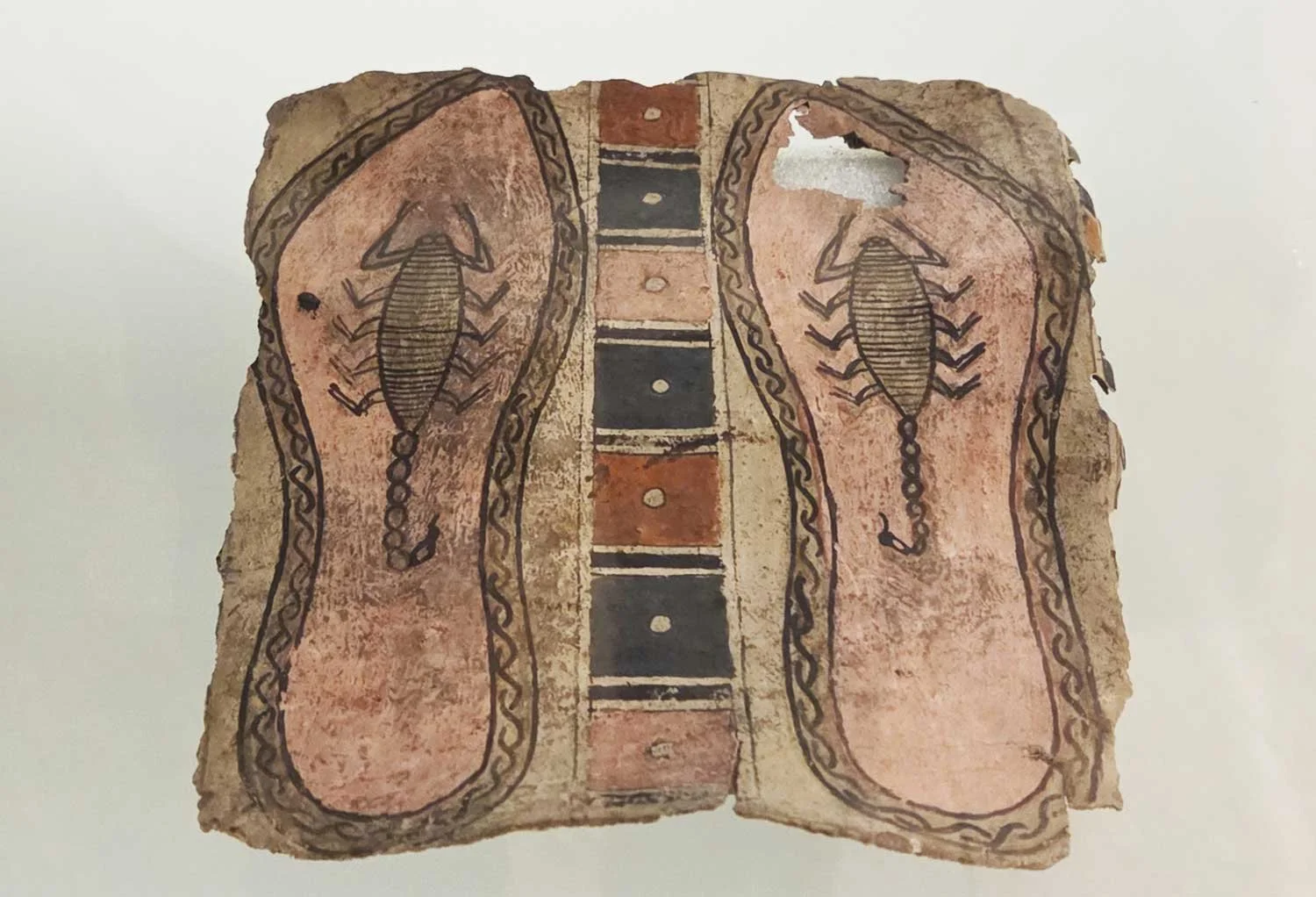
Panel from what was once the foot end part of a mummy wrapping. Ptolemaic Period–Roman Period, 3rd -1st century BCE.
The image above shows a panel that once decorated the foot end of a mummy. The panel is from the cartonnage - layers of papyrus mixed with plaster that were used to sculpt light-weight masks, breastplates and sometimes full-body cases.
Having the image of scorpions beneath the deceased feet represents the deadly critters being crushed. This was as important in the afterlife as it was in the present. These were painted on the mummy to give the deceased the power to tread safely during his journey to the netherworld and toward rebirth.
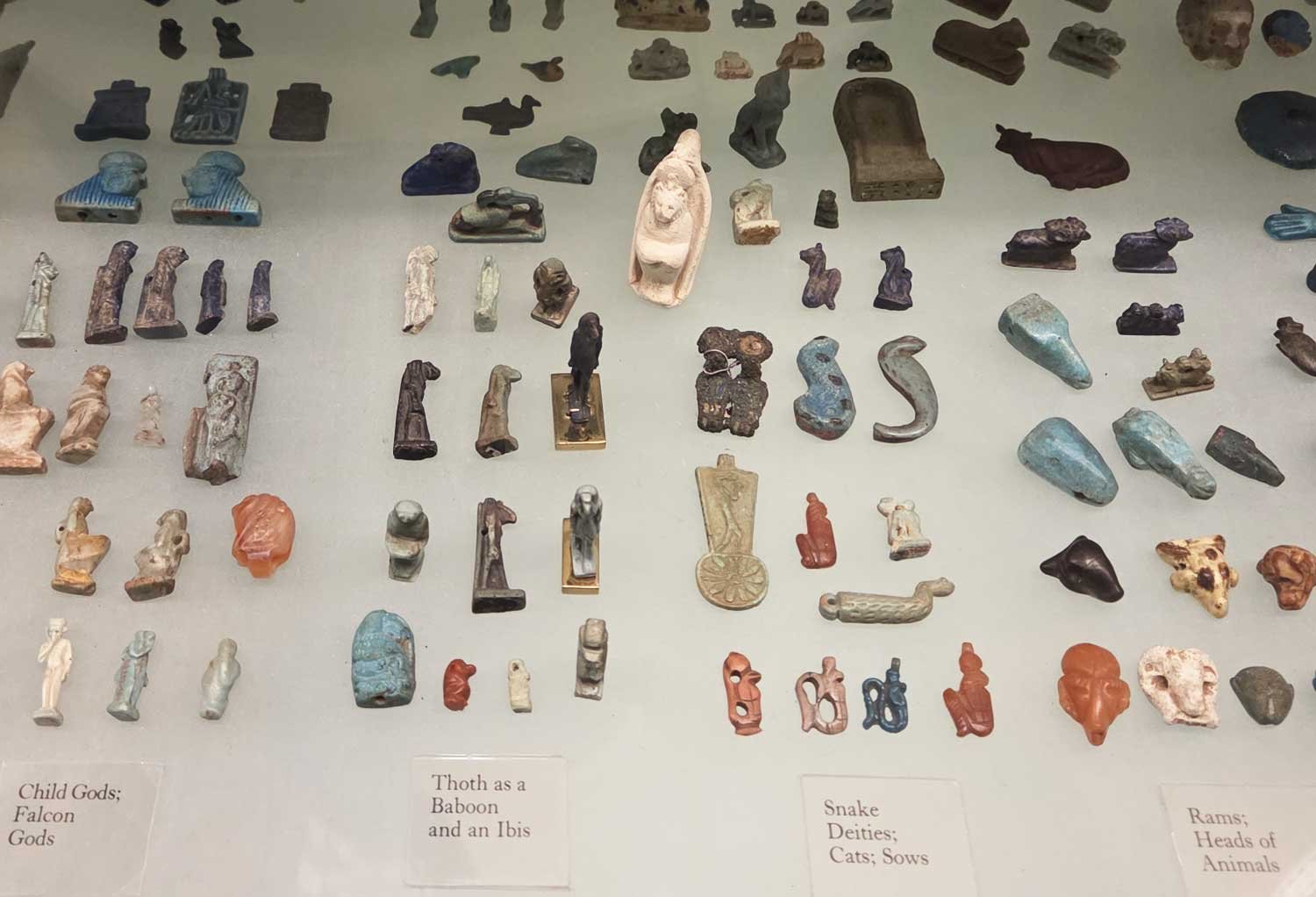
A collection of ancient amulets.
Protective and Magical Egyptian Amulets…
Used for protection, magic and having overall beneficial properties, what the amulet stood for, was believed to transfer to its owner or wearer.
The power or magic the amulet possessed could depend upon its shape, its color, what it was made from, inscriptions, its decoration or the words spoken or acts performed over it or with it.
Some of the amulets have small holes that allow them to be worn as a necklace, or they might be incorporated into a ring. Mummies often had them tucked into the folds of their wrappings.
More Colossal Statues…
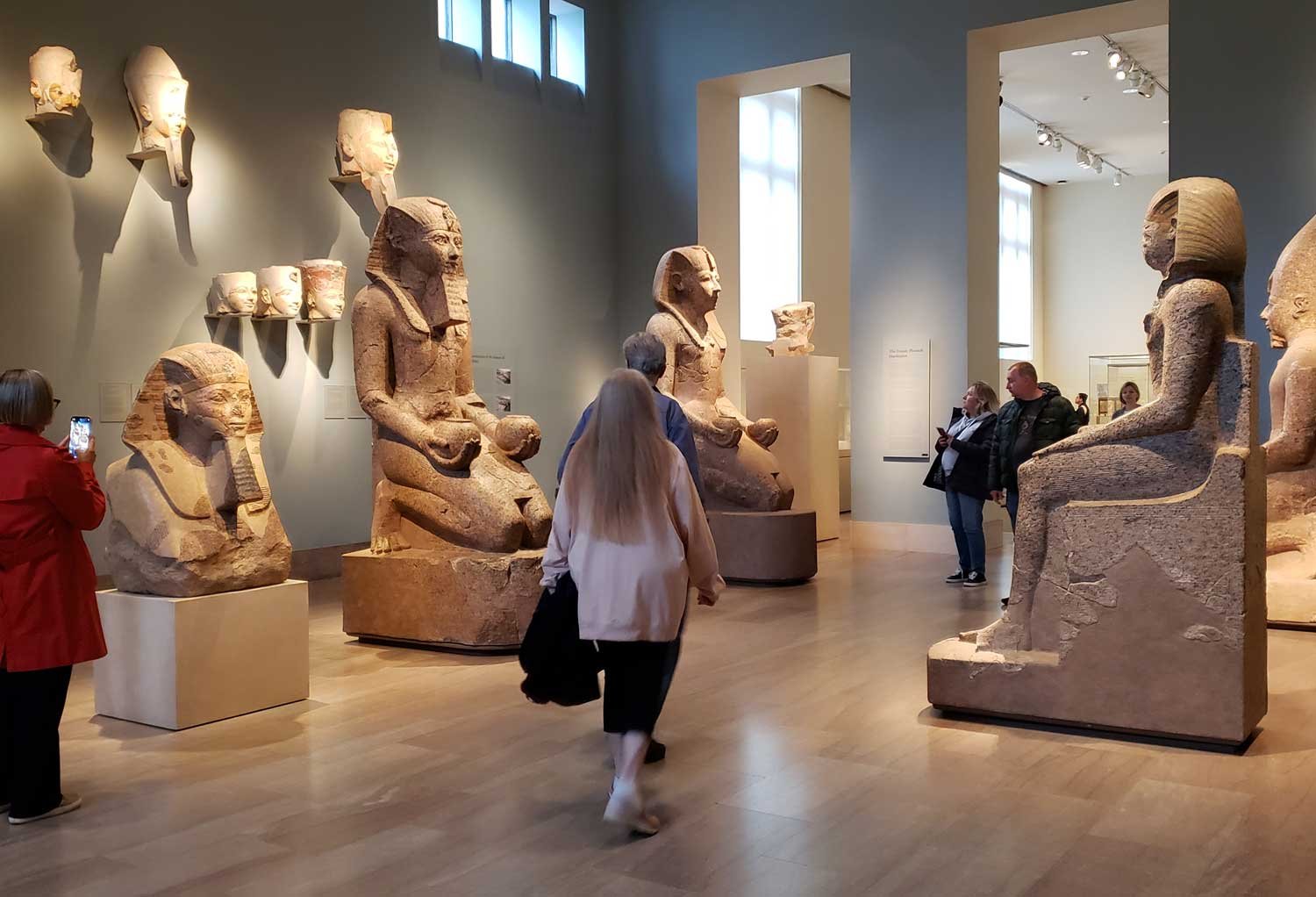
Collection of large statues…kneeling Hatshepsut, center left.
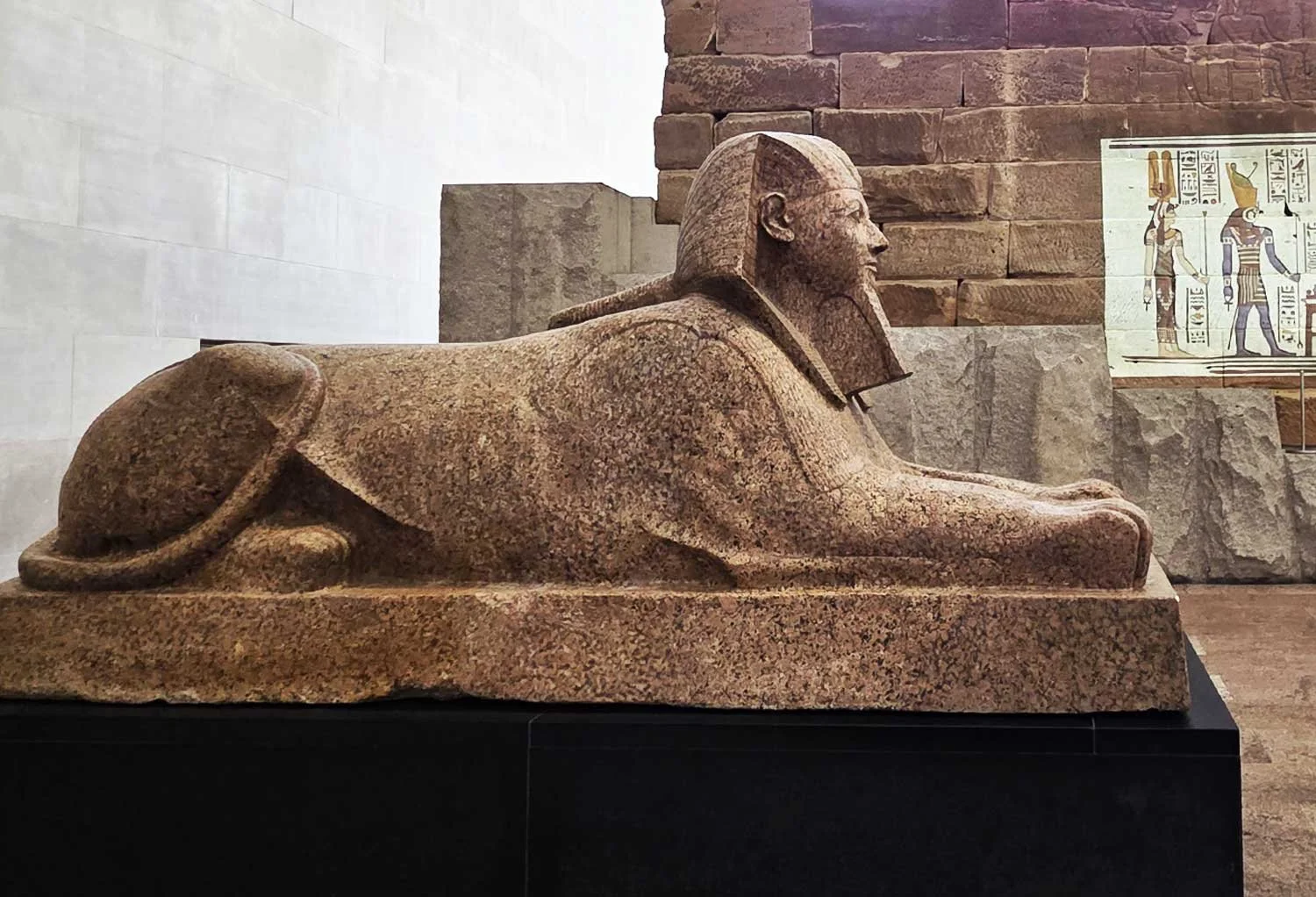
Hatshepsut again, this time in Sphinx form. 15th c BCE, made of granite.
I have to admit; I love sculpted and carved stonework. Whether it’s in a Medieval cathedral as a decorative balustrade, a country estate as garden ornament or, as above, from ancient Egypt representing a ruler as a sphinx.
These large, and sometimes colossal, pieces just have a presence about them that is hard to describe.
Hatshepsut, shown above, was a female Egyptian Pharaoh who ruled for almost 20 years during the time of the New Kingdom.
This statue was one of six or more such sphinxes that stood in her mortuary temple at Deir el-Bahri.
Canopic Jars…
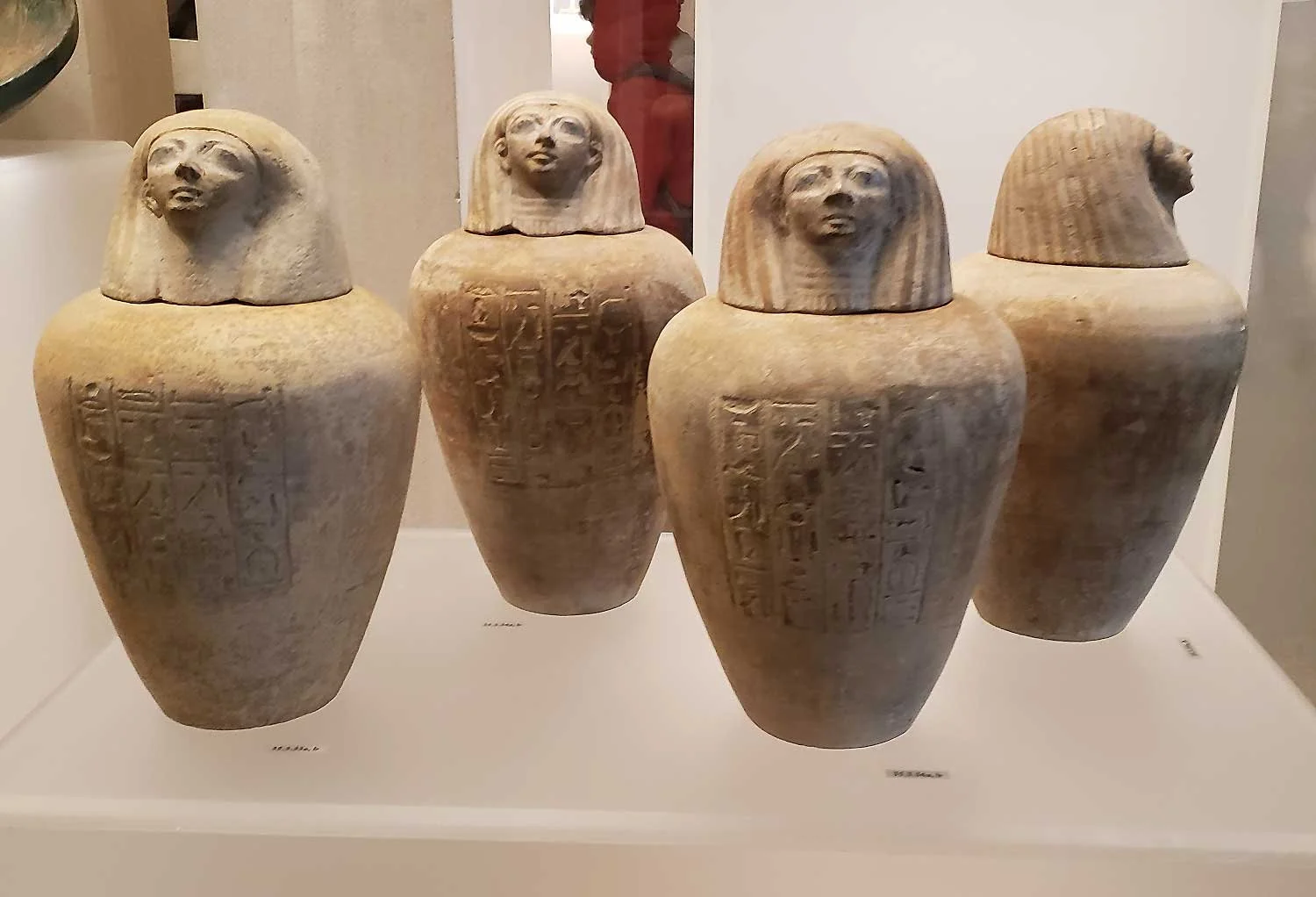
Human-headed Canopic Jars.
Canopic jars were common in Ancient Egypt tombs or graves. Holding the internal organs of the deceased, they’re often depicted with human heads or with animal heads that were reserved for specific organs. I’m not going to go into them here but I’ll soon have a post just on canopic jars.
Wrapping It Up…
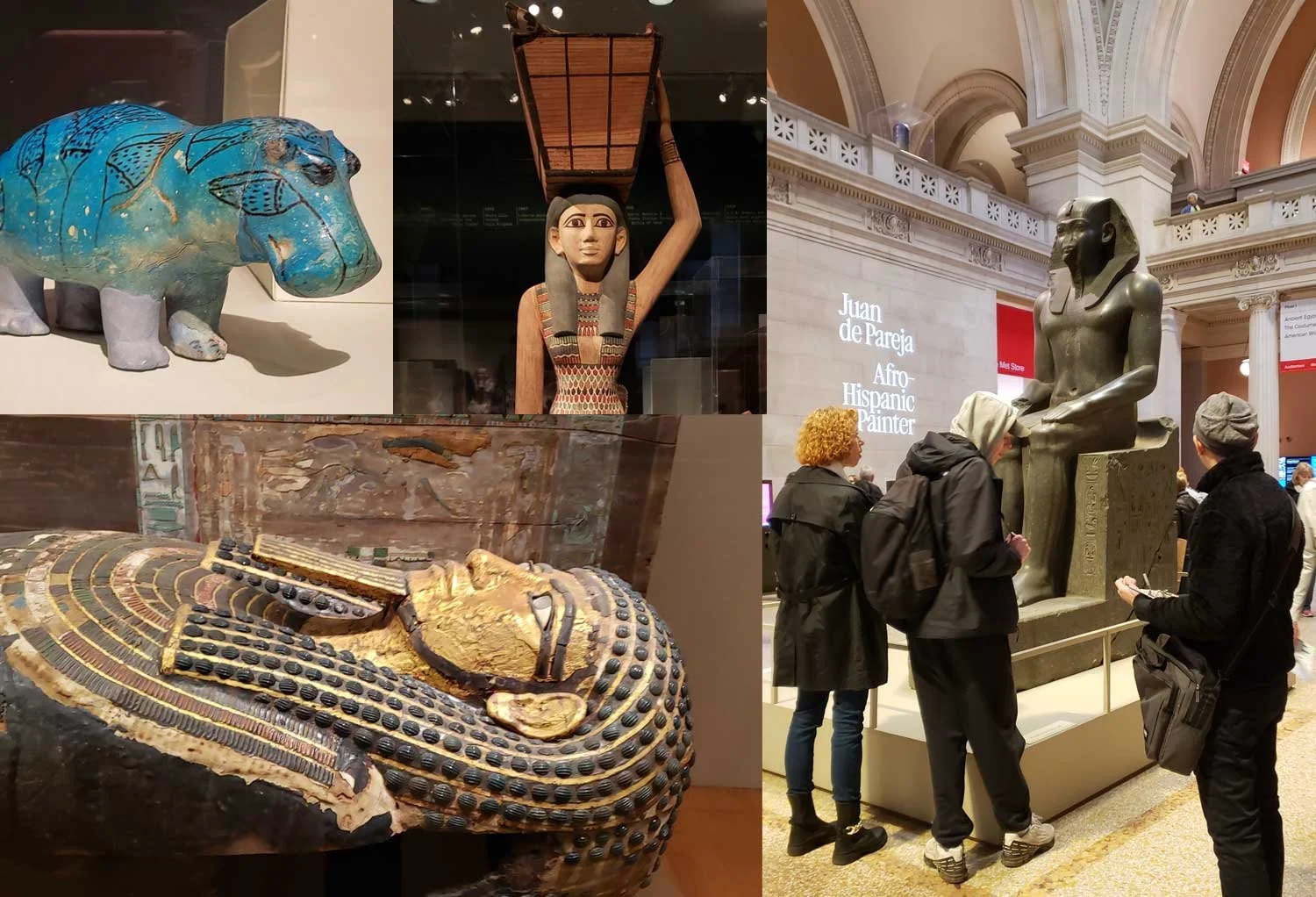
A few other images…
And this where my photo tour ends…with ‘William’ the popular name for the bright turquoise, faience hippo from the Middle Kingdom. Hippos were considered extremely dangerous by the ancient Egyptians. Beneath his glaze, lotuses are painted, they symbolize rebirth, this was found in a tomb shaft.
Other photos: an offering bearer statue, another sarcophagus with gold face, a seated colossal statue of a Pharaoh, this one is on loan from the Staatliche Museen zu Berlin, Ägyptisches Museum und Papyrussammlung.
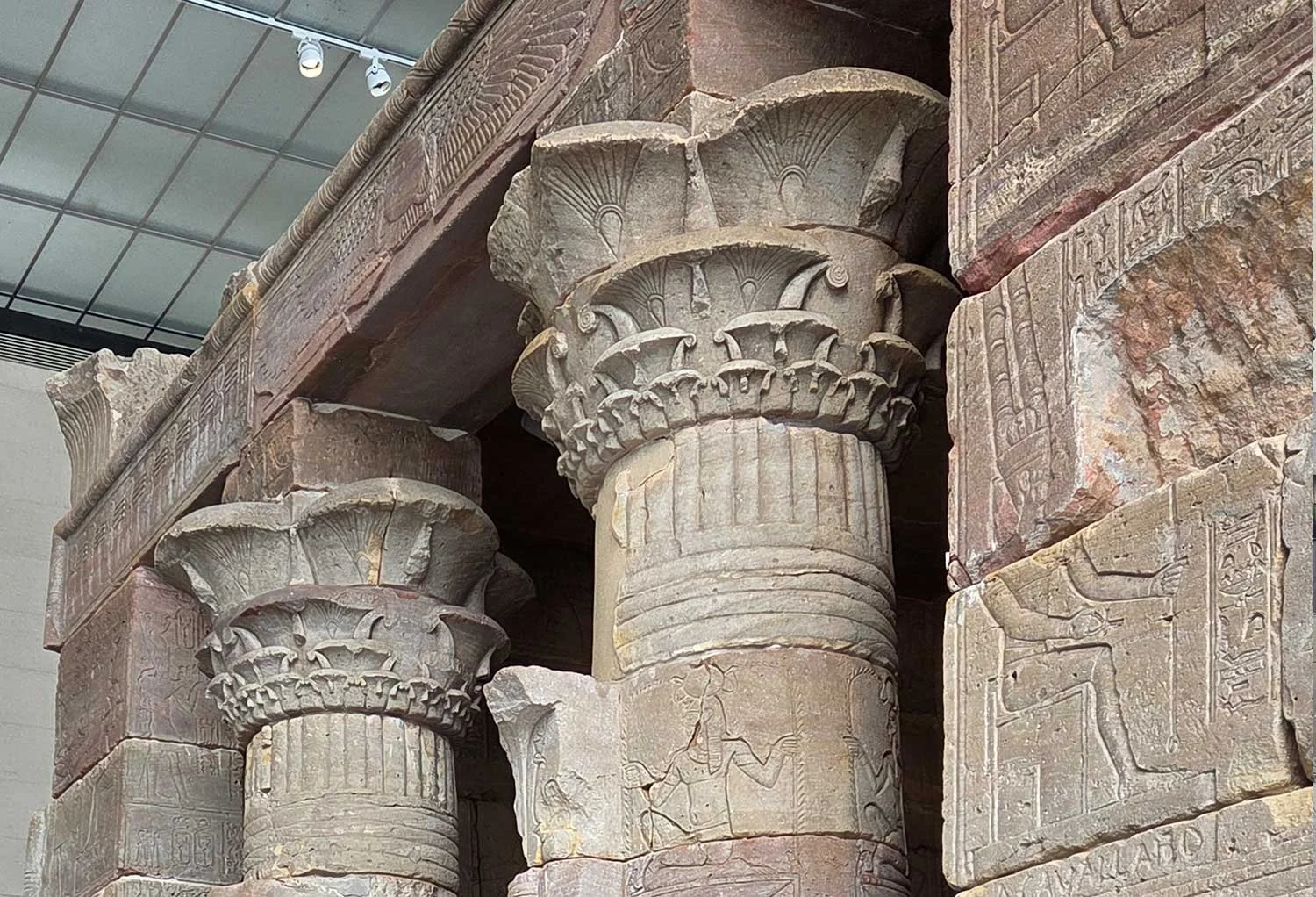
One last image of the Temple of Dendur and a detail photo showing the elaborate carving.
As I mentioned earlier, I never feel like I have enough time at the Met. Usually because I’m with my husband, who likes art but gets itchy feet after a few hours wandering galleries. He also tends to like paintings vs antiquities, which are my preference.
But I’ll be back, hopefully many times.
Visit the Met HERE