
Enchanting Ba-birds of Ancient Egypt
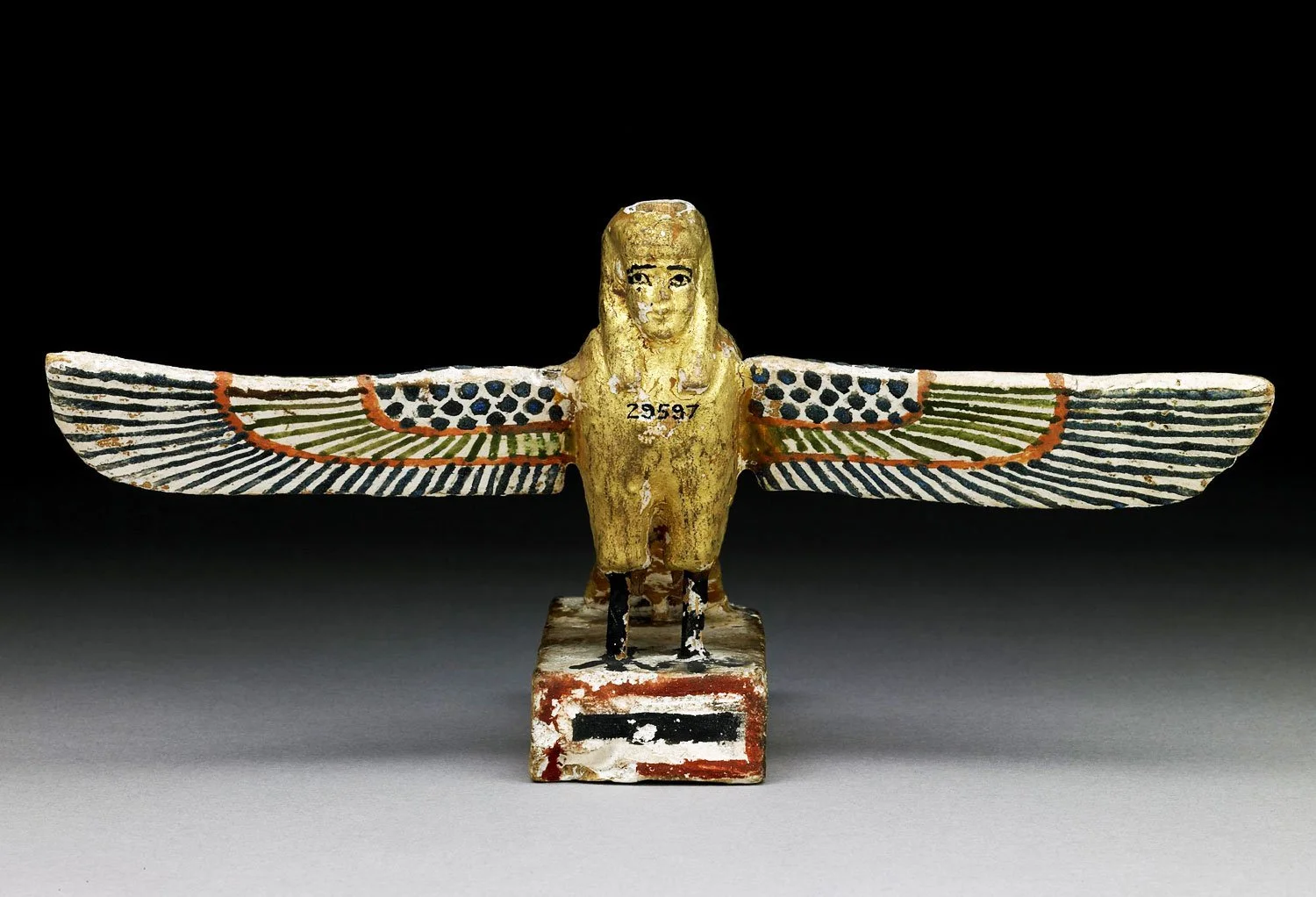
Ba-bird with gilding and paint on wood. Late Period, Egypt. At the British Museum.
© The Trustees of the British Museum, shared under creative commons license.
The Ba-Bird: A Winged Spirit of Ancient Egypt
Among the most enchanting figures in ancient Egyptian art is the ba-bird: a creature with the body of a bird and the head of a human being. It appears in brilliantly painted papyri, on coffins and sarcophagi, and as small figures and precious amulets placed within the tomb. Although the ba is often described as the ‘soul,’ that familiar translation does not fully express its meaning. It was better understood as a person’s individual identity or living manifestation, the aspect of a human being that retained personality, movement, and vitality after death.
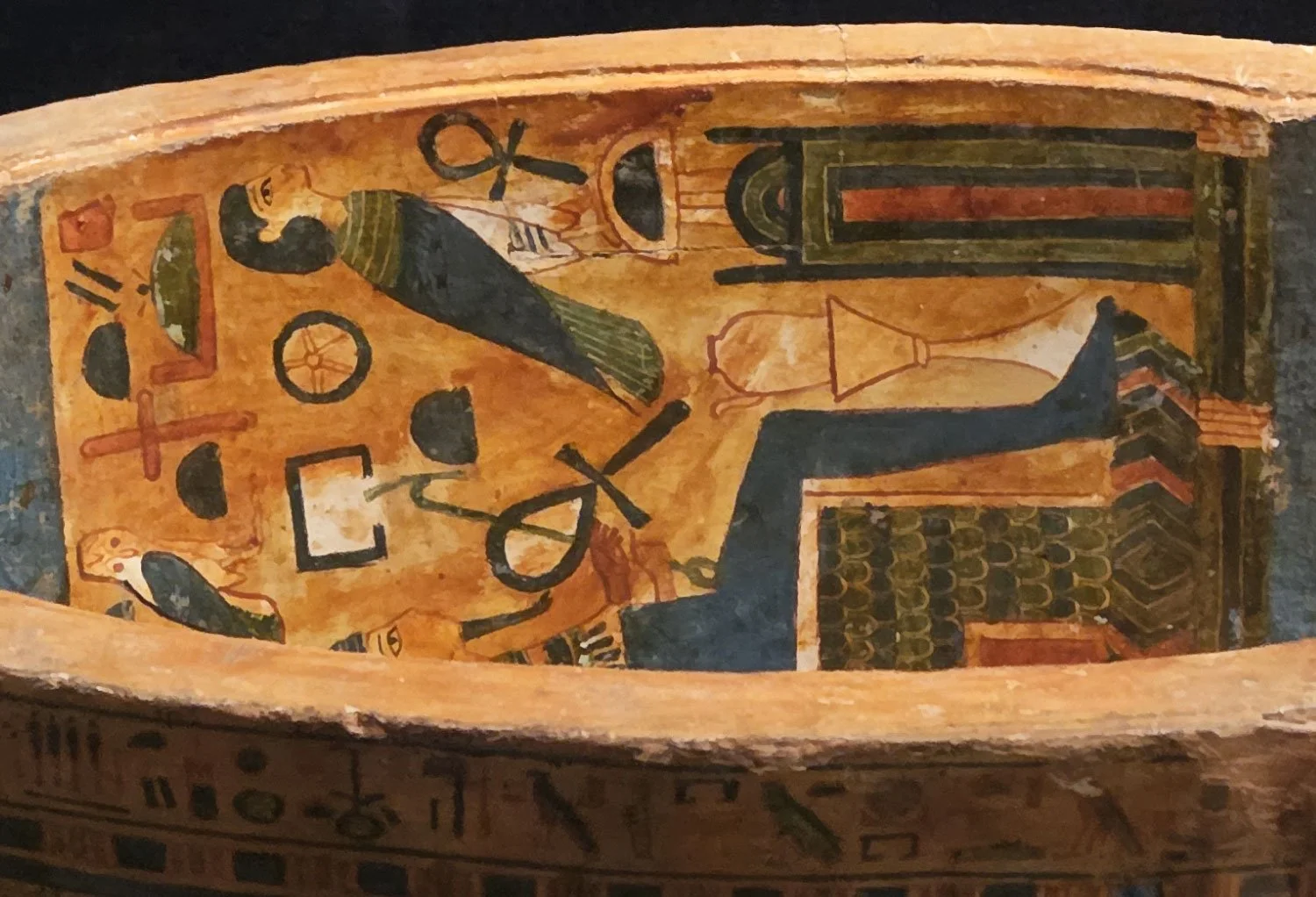
Showing a beautiful little Ba-bird on this detail photo of inner wood coffin, 1065-945 BCE.
This piece is at the Art Institute of Chicago.
What Did the Ba Symbolize?
The ancient Egyptians understood a person as being composed of several interconnected elements, including the physical body, the heart, the name, the shadow, the ka, and the ba. These did not correspond neatly to the modern division between body and soul. Together, they were necessary for a complete and enduring existence.
The ba represented the distinctive qualities of an individual, the animated expression of who that person was. While the deceased’s preserved body remained within the tomb, the ba possessed freedom of movement. It could leave the burial chamber, travel through the earthly world and the realm of the gods, and join the sun god in his celestial journey. However, it was expected to return in the evening and reunite with the mummy. This reunion was essential to the deceased’s continued existence and transformation in the afterlife.
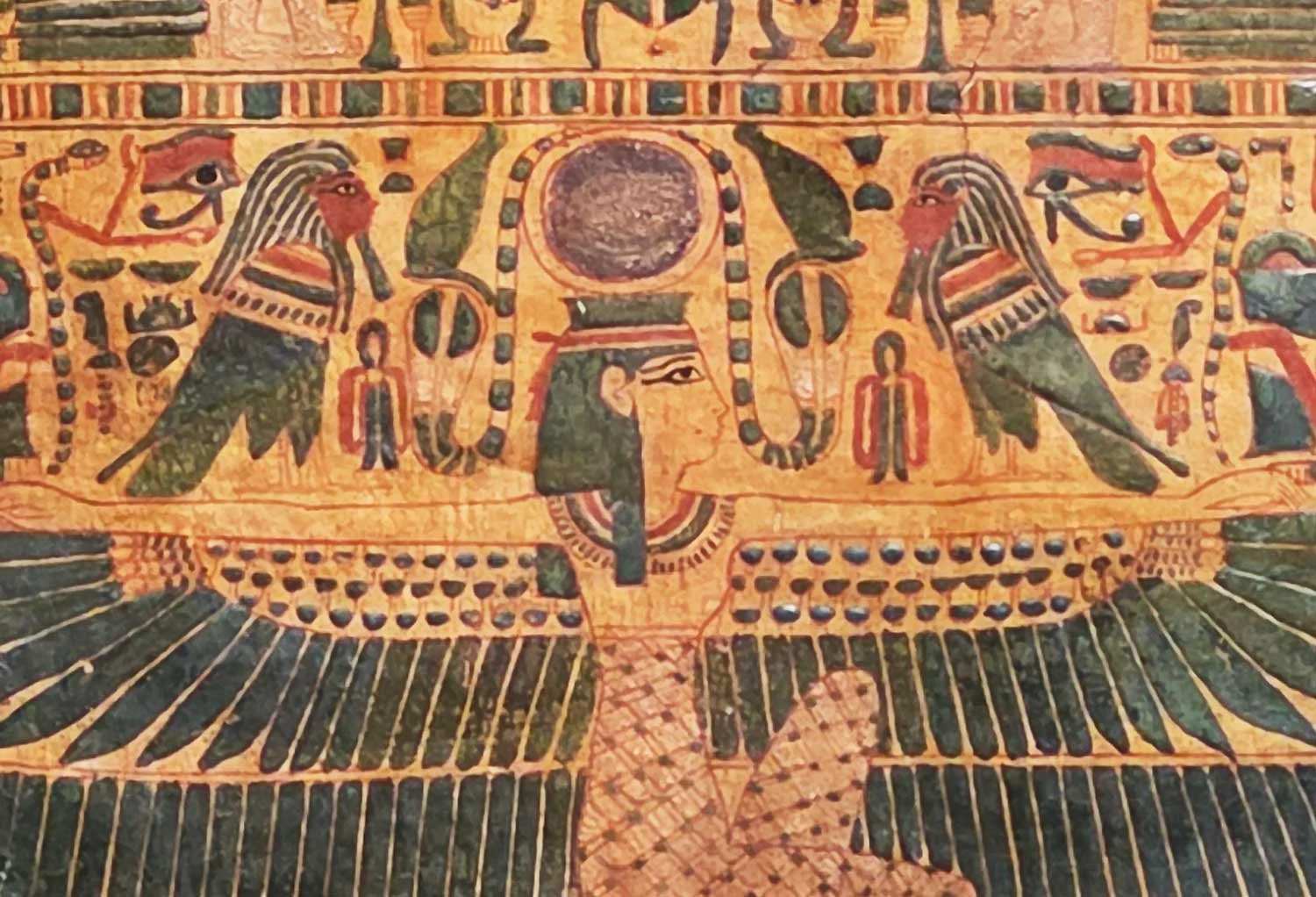
A detail from the front of a coffin at the British Museum showing the Goddess Nut flanked by Ba-birds.
The bird’s ability to move between earth and sky made it a natural image for this mobile, liberated aspect of the person. Artists generally portrayed it with the body of a falcon or similar bird of prey and a human head bearing the features, or at least the identity, of the deceased. Some examples also have human arms, allowing the ba to receive offerings, raise its hands in worship, or drink the reviving water offered by a goddess.
The ba was not associated exclusively with ordinary human beings. Gods possessed bas, and a king’s ba could represent the divine power inherent in kingship. In funerary art, however, the human-headed bird most commonly represents the deceased’s ability to remain active beyond the limitations of the body.
Where Was the Ba-Bird Found?
Images and objects representing the ba have been found primarily in funerary settings throughout Egypt, including burials at Thebes and Deir el-Bahri in Upper Egypt, Saqqara near Memphis, and other cemeteries and temple regions.
Ba-birds appear in tomb paintings and painted reliefs, sometimes shown hovering protectively above a mummy or descending a tomb shaft to rejoin the body. They also occur on funerary papyri. In the British Museum’s famous Book of the Dead of Ani, Ani’s human-headed ba perches upon a small shrine or tomb structure, ready to pass freely between the tomb and the outside world. A papyrus belonging to a woman named Tiye, now at The Metropolitan Museum of Art, shows her ba raising its human arms to receive water, a scene connected with nourishment, renewal, and eternal life.
The image was also painted or carved on coffins, mummy boards, funerary masks, wooden stelae, and stone sarcophagi. On the Late Period sarcophagus of Wennefer at The Met, the ba appears on the lid beside protective funerary texts intended to help Wennefer become an effective and enduring spirit.
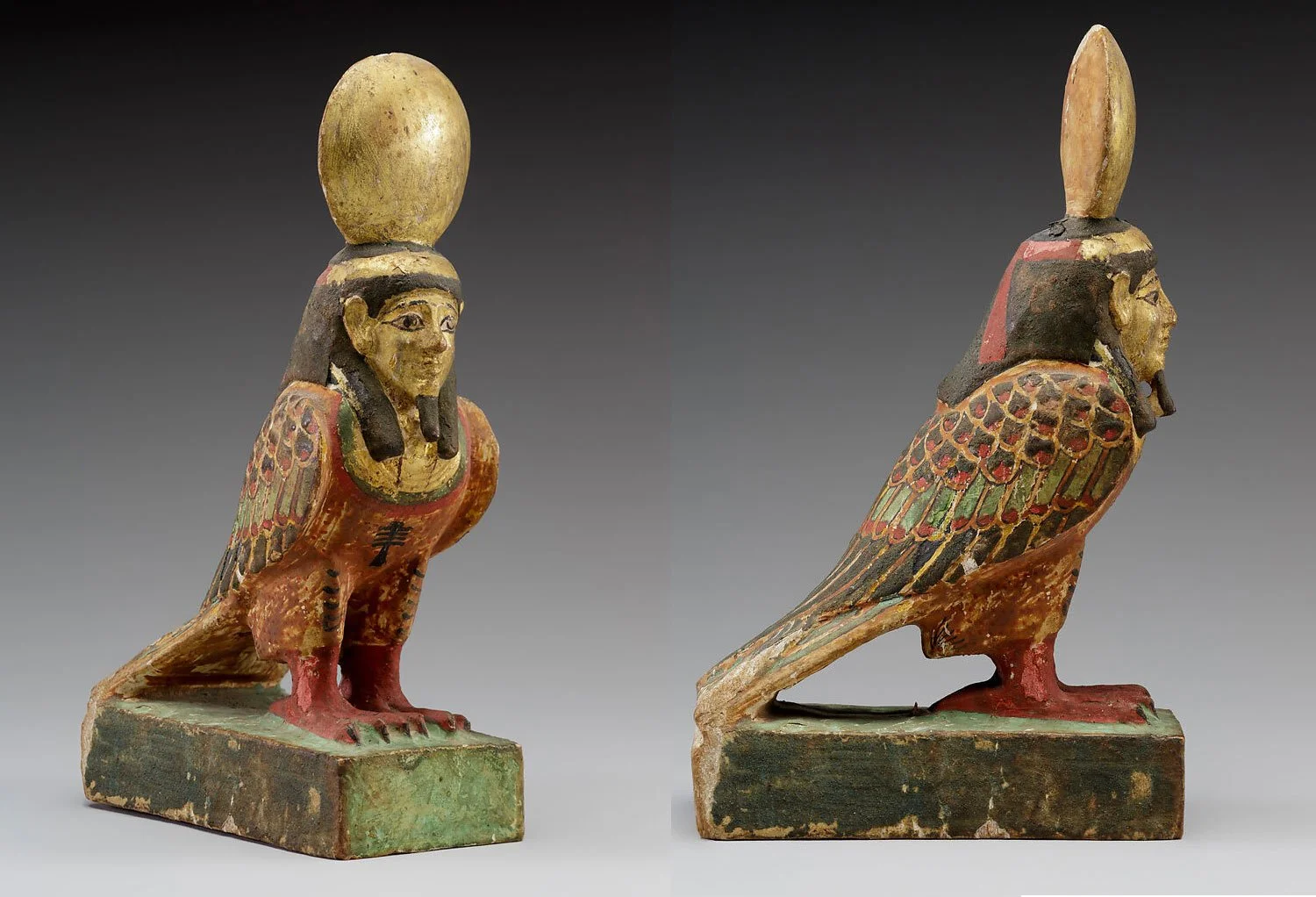
Ptolemaic Ba-bird, 332-30 BCE. Metropolitan Museum of Art.
Was the Ba-Bird a Stand-Alone Object?
The ba-bird could indeed be made as a separate three-dimensional figure. Painted wooden examples became particularly common during the Late and Ptolemaic periods. Some stood on small rectangular bases, while others were provided with pegs or attachment points so they could be mounted on a coffin, funerary stela, shrine, or the outer wooden structure surrounding a coffin.
These figures may have represented the bird alighting near the deceased after one of its journeys. Like other Egyptian funerary images, they were not regarded as merely decorative. Through ritual and magical belief, the representation could participate in the reality it depicted, helping the deceased’s own ba remain active and free.
A beautifully preserved Ptolemaic example at The Metropolitan Museum of Art is carved from wood, brightly painted, and embellished with gold leaf. It wears a sun disk, a gold diadem, a broad collar, and a small djed-pillar amulet—an emblem associated with stability, endurance, and the resurrected god Osiris (see above photo, showing two views).
Smaller ba-bird amulets were placed among the wrappings of a mummy, often over or near the chest. These could act as magical substitutes or protections for the deceased’s ba, ensuring that it would not be restrained or separated permanently from the body.
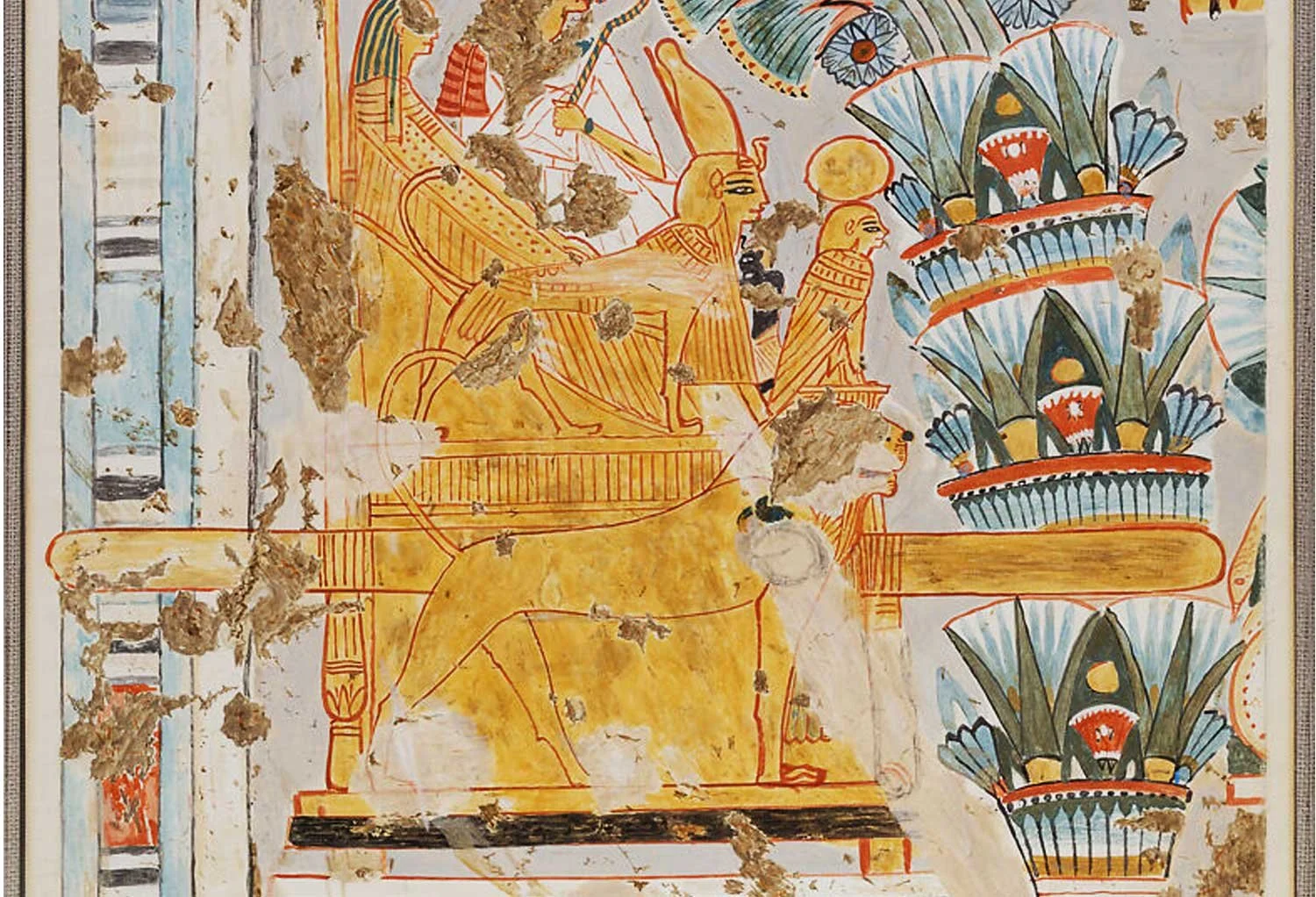
A Ba-bird depicted on a palanquin (portable chair-like transport), next to striding lion. This image was drawn as a faithful reproduction from a tomb wall by Nina de Garis Davies in 1922. She worked with the Metropolitan Museum’s archaeological team to copy imagery, along with her husband, Norman de Garis Davies.
The original tomb painting is from 1290–1224 BCE.
Materials Used to Make Ba-Birds
The material depended upon the size, purpose, date, and wealth of the burial. Stand-alone figures were commonly carved from wood, coated with a thin layer of gesso, and painted. Some were further decorated with gilding.
Ba-bird amulets and pendants were produced in a much wider range of materials, including:
Egyptian faience, usually glazed blue or blue-green
Molded glass
Carved stone
Gold sheet or solid gold
Lapis lazuli and other colored stones
Composite jewelry combining gold, faience, and stone inlays
One Late Period amulet at The Met combines gold, lapis lazuli, and faience, while another is fashioned from thin gold sheet. Glass examples were made in molds and placed within mummy wrappings.
The Colors of the Ba-Bird
Egyptian artists loved strong, clearly separated colors, and surviving ba-birds can be remarkably vivid. Their wings might be patterned in blue, green, red, yellow, white, and black, with carefully drawn lines suggesting individual feathers. The human face was usually painted in a conventional skin tone, while the wig was frequently black or blue. Gilded faces, collars, sun disks, and headdresses added brilliance and sacred importance.
Many Egyptian pigments came from minerals. Red, yellow, and brown were commonly obtained from ochres; green could be made from malachite; white from gypsum; and black from carbon. “Egyptian blue,” a manufactured copper-based pigment, was one of the ancient world’s earliest synthetic colors.
Color was never simply ornamental. Blue and green evoked water, vegetation, freshness, and regeneration. Yellow and gold carried solar associations, while red could express vitality, power, blood, or the dangerous desert. Black could suggest both the darkness of the night and the fertile soil from which new life emerged. The exact meaning always depended upon context, but on a funerary figure such as the ba-bird, brilliant color reinforced the promise of renewed life and eternal movement.
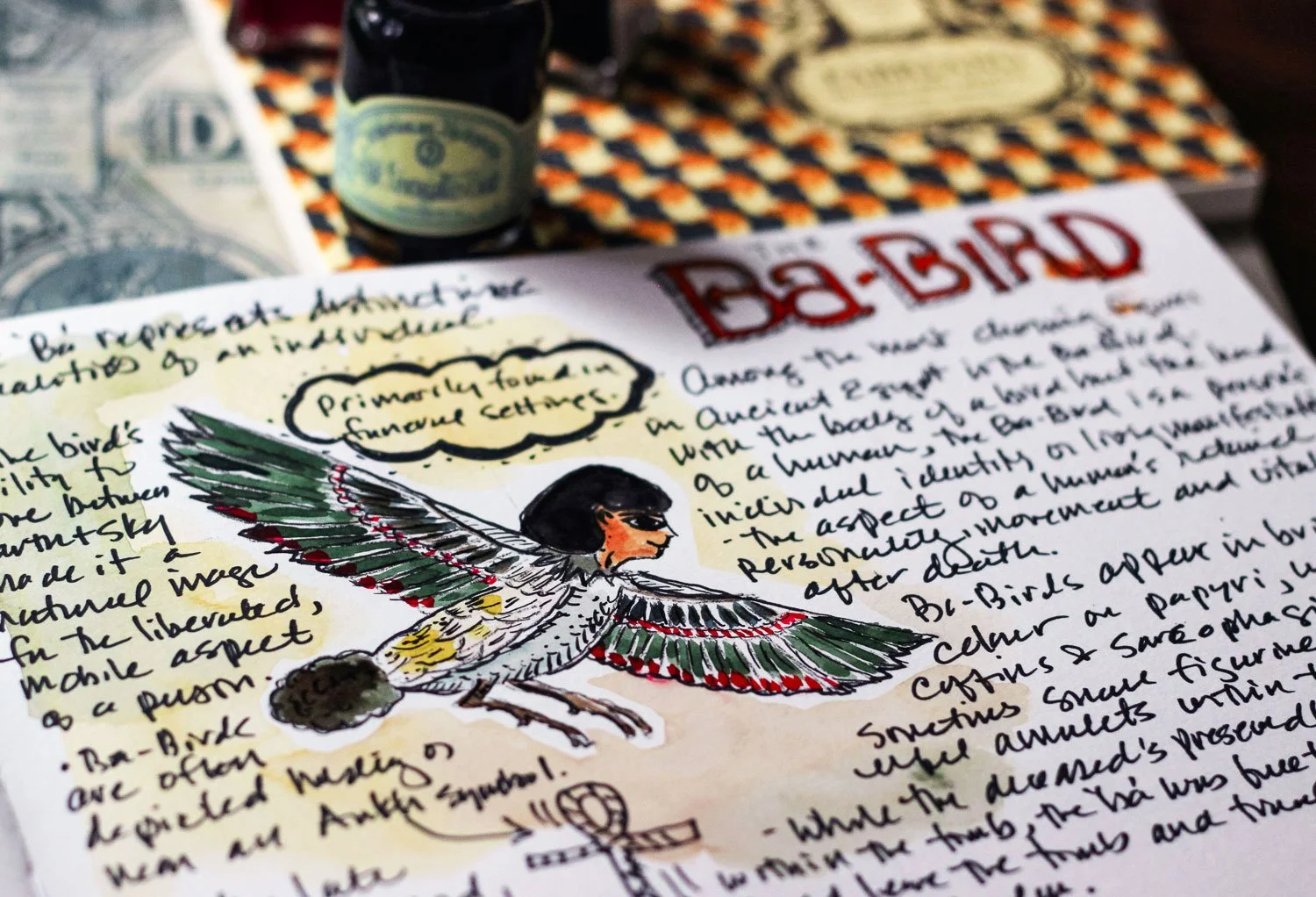
From my sketch journal. I painted this copy from the tomb of Irynefer, Book of the Dead.
A Spirit Free to Fly
The ba-bird expresses one of ancient Egypt’s most beautiful ideas about death: the deceased was not expected to remain silent and motionless within the tomb. The body rested, but an essential manifestation of the person could still travel, receive nourishment, visit the world of the living, accompany the gods, and return safely home.
With its human face and feathered body, the ba-bird joined identity with freedom. It was both portrait and promise, a vision of the individual continuing to move between earth, tomb, and sky.