
Ancient Egyptian Faience
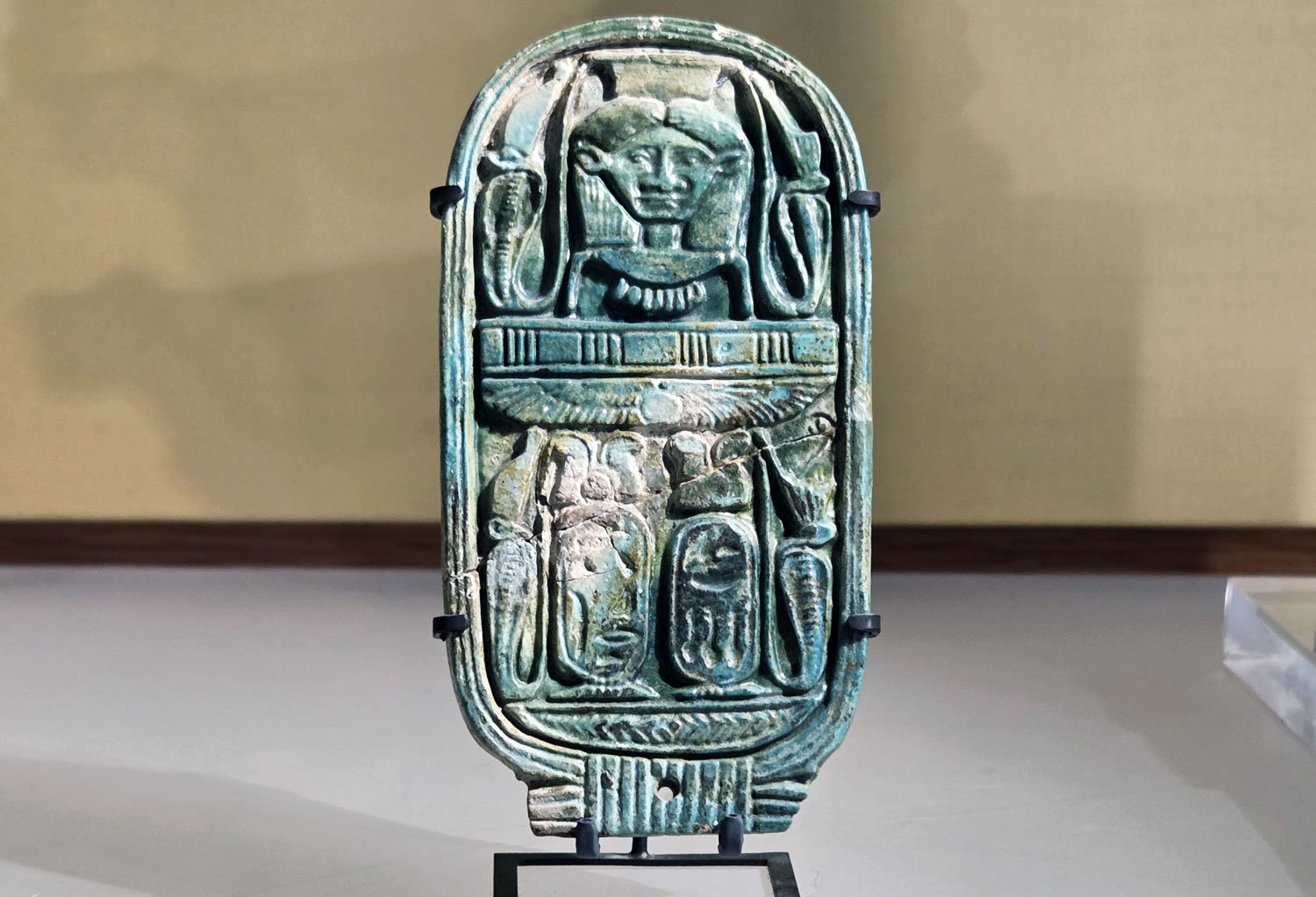
I found this faience piece at the Louvre Museum. The plaque says (via google translate, it was in French) ‘Box lid bearing the name of the Divine Adoratrice of Amun, Nitocris.’ 664-640 BCE.
Egyptian Faience, Quartz Brilliance…
When I was at the Louvre recently, I came across some gorgeous examples of Egyptian faience, the photo above is one of them. Faience is among the most distinctive materials of ancient Egyptian art. Most commonly recognized by a luminous blue-green or bright turquoise surface (though it consists of a range of color), its glassy appearance looks similar to glazed clay. But faience did, for the most part, not contain potter’s clay, its main component is quartz (silica). It was used to create everything from tiny beads and protective amulets to vessels, funerary figures, animal sculptures, architectural tiles, and elaborate jewelry. Although made from relatively ordinary ingredients, faience possessed the brilliance of a precious stone and carried powerful associations with life, protection, and rebirth.
In addition to the Louvre, almost any museum that has an Ancient Egyptian collection is sure to have faience pieces. The Met Museum has some wonderful examples.
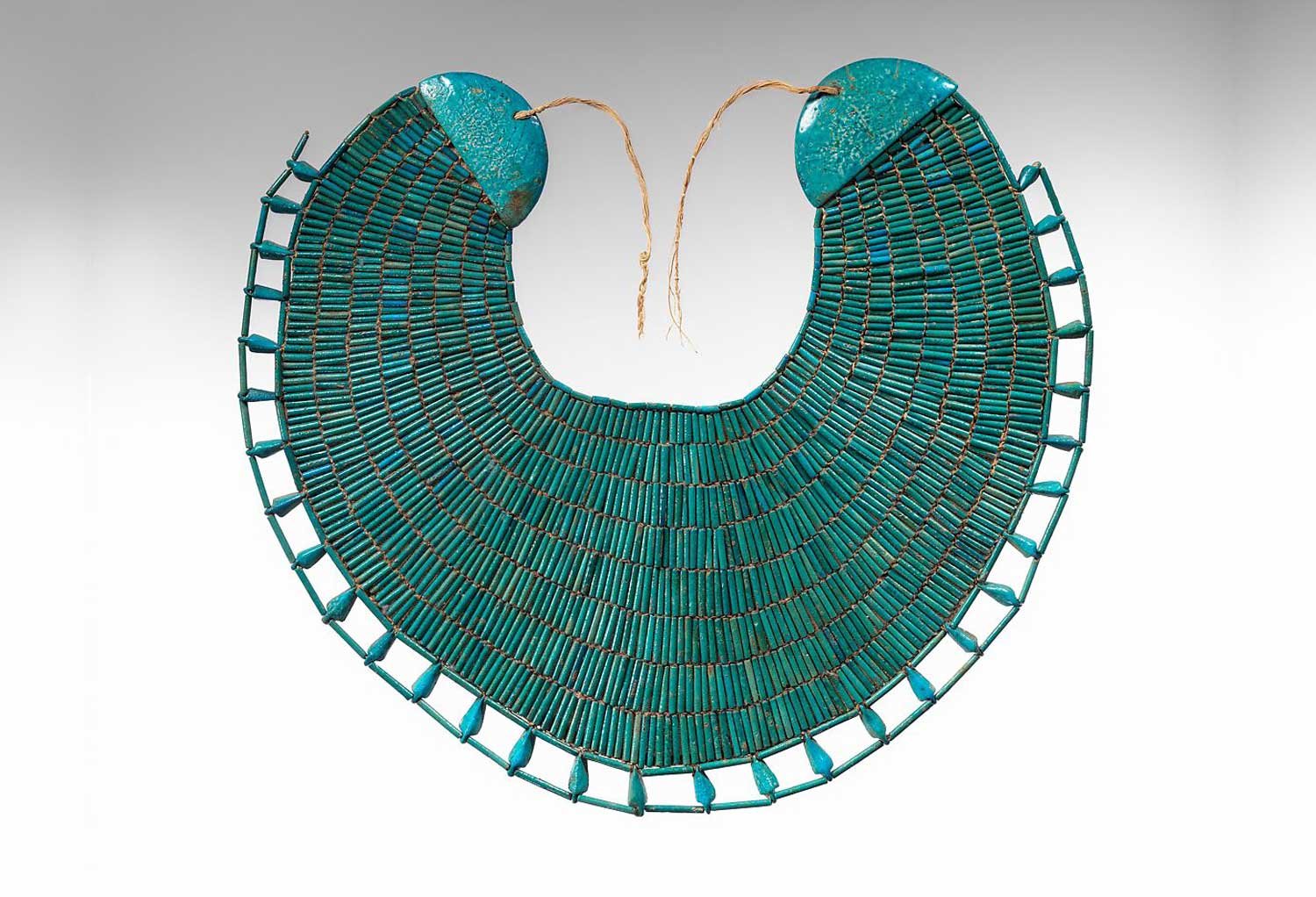
Ancient Egyptian Broad Collar made of Faience beads and Linen. 1981-1975 BCE, Met Museum.
An Ancient Egyptian Innovation..
Egyptian faience first appeared near the end of the fifth millennium BCE, before the unification of Egypt and the age of the pharaohs. The technology may have had connections with other early experiments in the ancient Near East, but Egyptian artisans developed it into a remarkably sophisticated and enduring art form. Some of the earliest surviving examples are beads, followed by small votive objects and decorations made for temples and royal tombs.
Despite its name, Egyptian faience is not the same material as the later tin-glazed pottery produced in the Italian town of Faenza. Nor is it ordinary pottery or true glass. Its body contains little or no clay and is composed primarily of crushed quartz or silica, mixed with alkaline salts, lime, water, and a mineral colorant. When fired, these ingredients form a thin, glasslike glaze over a pale, slightly porous core.
The material was difficult to handle. Unlike clay, wet faience paste could not easily be bent or thrown on a potter’s wheel because it tended to crack or slump. Artisans shaped it by hand, pressed it into molds, formed it into slabs for tiles and inlays, or modeled it around a temporary organic core that burned away during firing. Small molds were especially useful for producing large quantities of beads, scarabs, amulets, and divine figures.
One of the most ingenious methods was known as efflorescence, or “self-glazing.” Soluble salts and colorants were mixed directly into the faience paste. As the object dried, the salts moved toward its surface and formed a fine crust. During firing, usually at temperatures between approximately 1598°F or 870°C and 1688°F or 920°C, the crust reacted with the silica and lime to become a brilliant glaze. Other objects were coated with a liquid glaze or buried in a special glazing powder before firing.
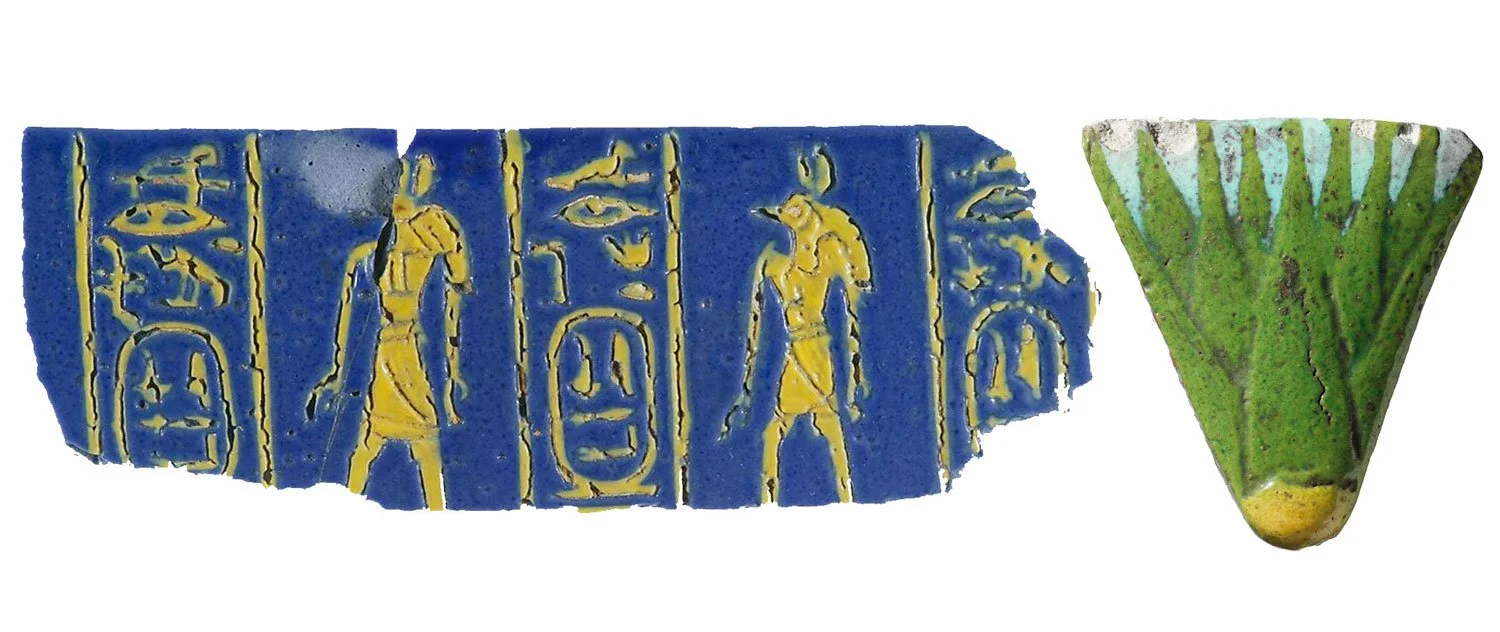
An example of blue and yellow faience on a coffin fragment for Queen TIaa, 1396–1386 BCE. Lotus inlay showing green faience, 1400-1300 BCE.
Egyptian Faience and Symbolism of Color…
Turquoise blue was the color most closely associated with Egyptian faience. Copper minerals, including malachite or copper-bearing metal fragments, produced the characteristic blue-green glaze. Variations in the ingredients and firing conditions could create colors ranging from pale watery blue to deep turquoise and vivid green. Manganese and other minerals were sometimes used to create black, purple, red, yellow, or white details.
Blue and green carried important symbolic meanings in ancient Egypt. Blue recalled the heavens, the Nile, the primeval waters of creation, and the shimmering hair of the gods. Green represented vegetation, fertility, health, and regeneration. Faience may originally have been developed partly as an imitation of valued stones such as turquoise and green feldspar, but it became a magical material in its own right. Its gleaming surface suggested sunlight, divine radiance, and the promise of renewed life.
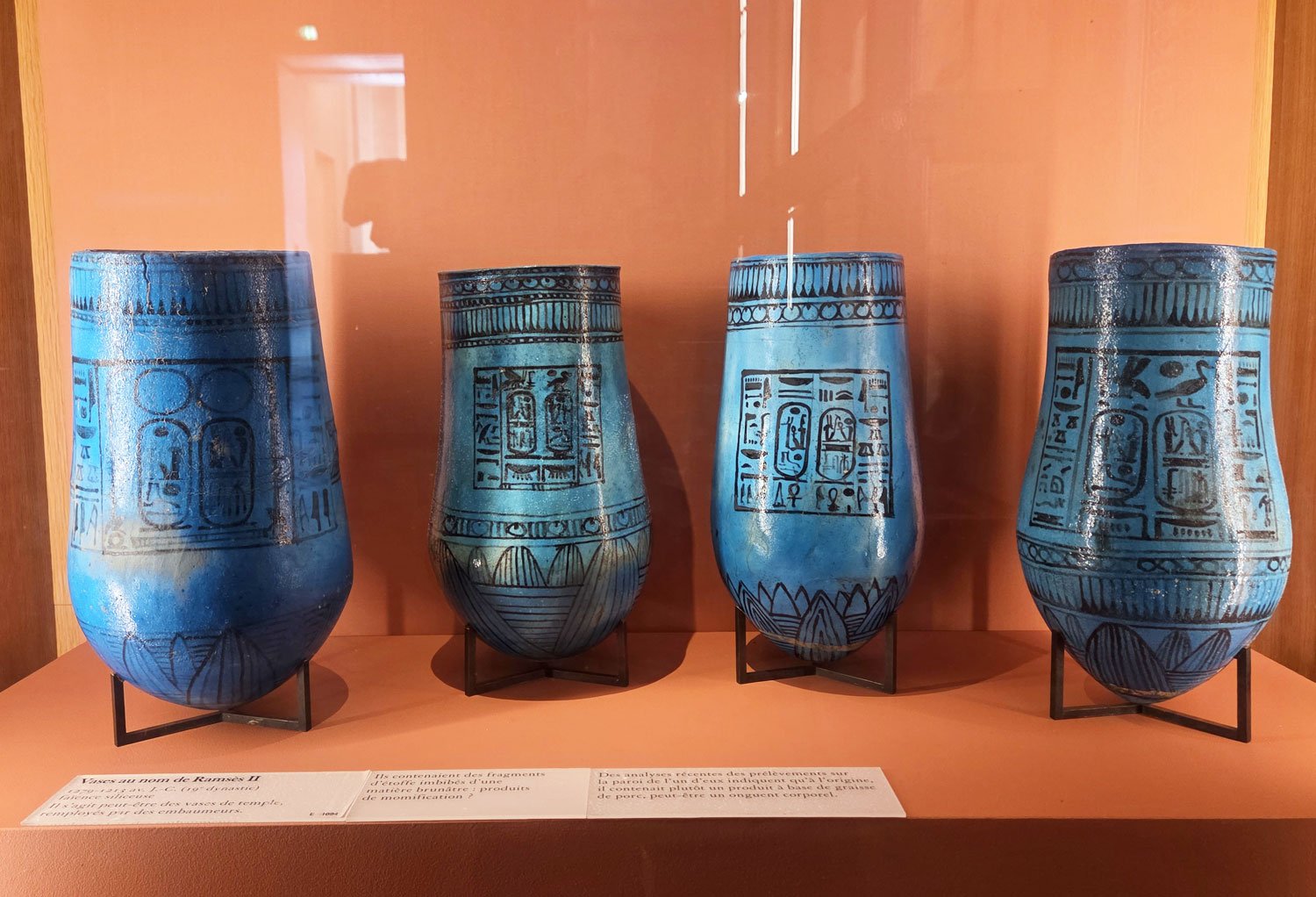
Faience vases with the name Rameses II. When found, they contained cloths that had been soaked in a brown substance, perhaps for mummification. Found taken at the Louvre Museum.
What was Faience Used For?
Jewelry was among its most widespread uses. Faience beads were strung into necklaces, bracelets, girdles, broad collars, and decorative nets placed over mummies. Scarabs, wedjat eyes, djed pillars, ankhs, animals, flowers, and miniature gods were fashioned into amulets for both the living and the dead. Because blue and green were associated with life and regeneration, faience became the most popular manufactured material for Egyptian amulets.
Faience was also used for shabtis, the small human-shaped figures placed in tombs to perform tasks such as agricultural labor for the deceased in the afterlife. Other funerary objects included pectorals, mummy ornaments, rings, divine figures, and inlays for coffins and furnishings.
Artisans created bowls, cups, jars, perfume containers, and elegant chalices shaped like lotus flowers. The lotus, which opened each morning with the rising sun, was itself a symbol of creation and rebirth. Animal figures were another specialty. The most famous examples are the blue faience hippopotami of the Middle Kingdom, decorated with painted lotus flowers and marsh plants. These objects evoked the fertile Nile landscape while also magically controlling the dangerous strength of the hippopotamus. See last photo in post.
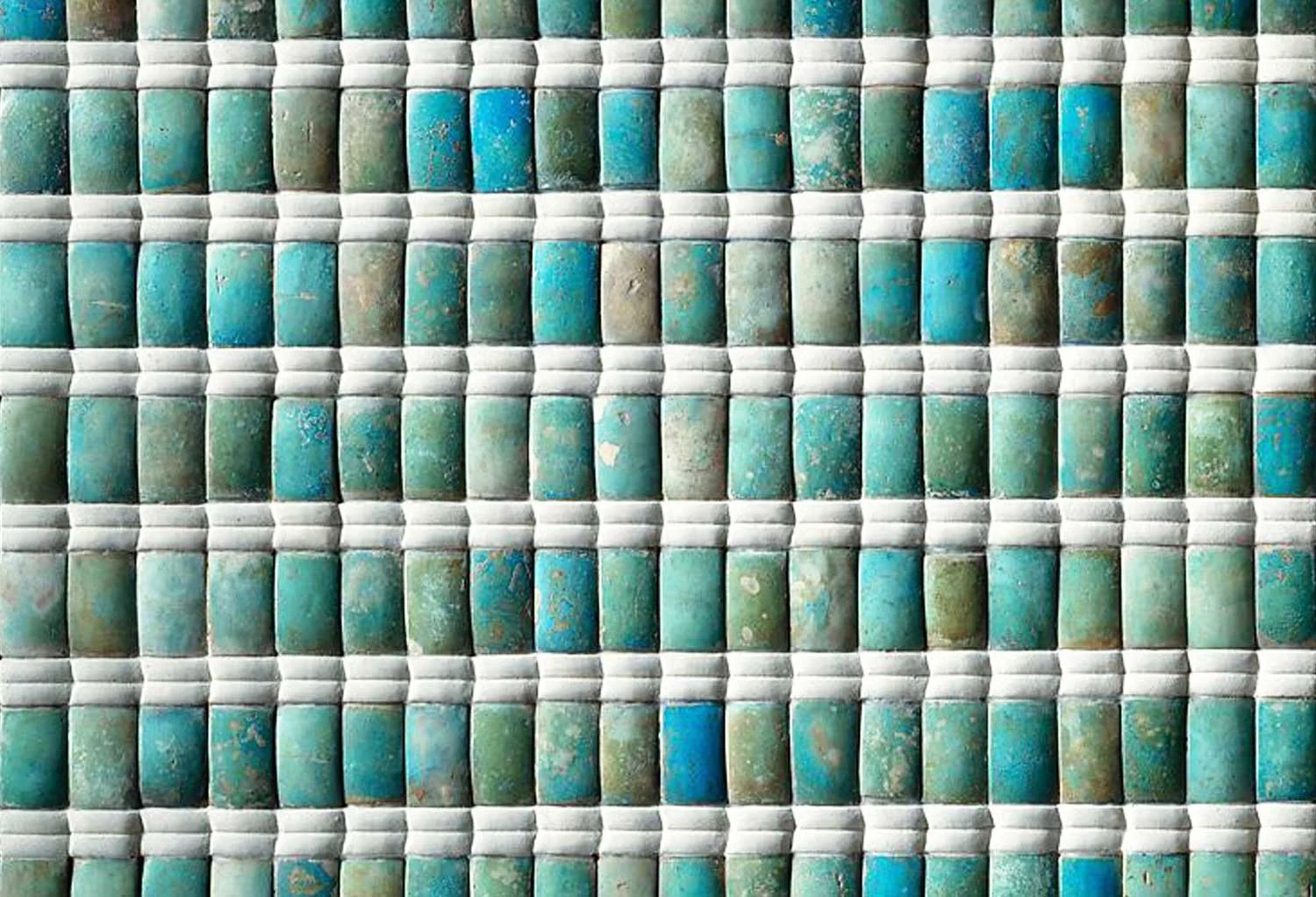
Detail from the faience tiles used on the funerary walls of King Djoser.
Faience could even become part of architecture. Thousands of blue-green tiles decorated chambers beneath the Step Pyramid of King Djoser at Saqqara. Their shimmering surfaces may have imitated reed matting or the cool, life-giving surroundings of a royal palace. Faience tiles and inlays continued to ornament temples, palaces, furniture, and ceremonial objects throughout Egyptian history.
Interesting Facts About Egyptian Faience
It was not true pottery. Egyptian faience was made principally from quartz rather than clay, giving it a structure closer to a glazed stone-like ceramic.
Some faience glazed itself. In the efflorescence method, salts naturally traveled to the surface as the object dried and transformed into glaze during firing.
Its color appeared in the kiln. Before firing, a faience object could look dull and pale. Heat produced the brilliant blue-green surface for which it is famous.
It combined humble and precious qualities. Faience was made from readily available materials, yet its color and brilliance allowed it to imitate costly stones such as turquoise.
It was available to many levels of society. Mold production allowed beads and amulets to be made in quantity, although especially large or finely modeled objects required considerable skill.
Actual fruit could be used as a mold. Some hollow faience fruits were made by coating real fruit with faience paste. The organic center burned away in the kiln, leaving a hollow form behind.
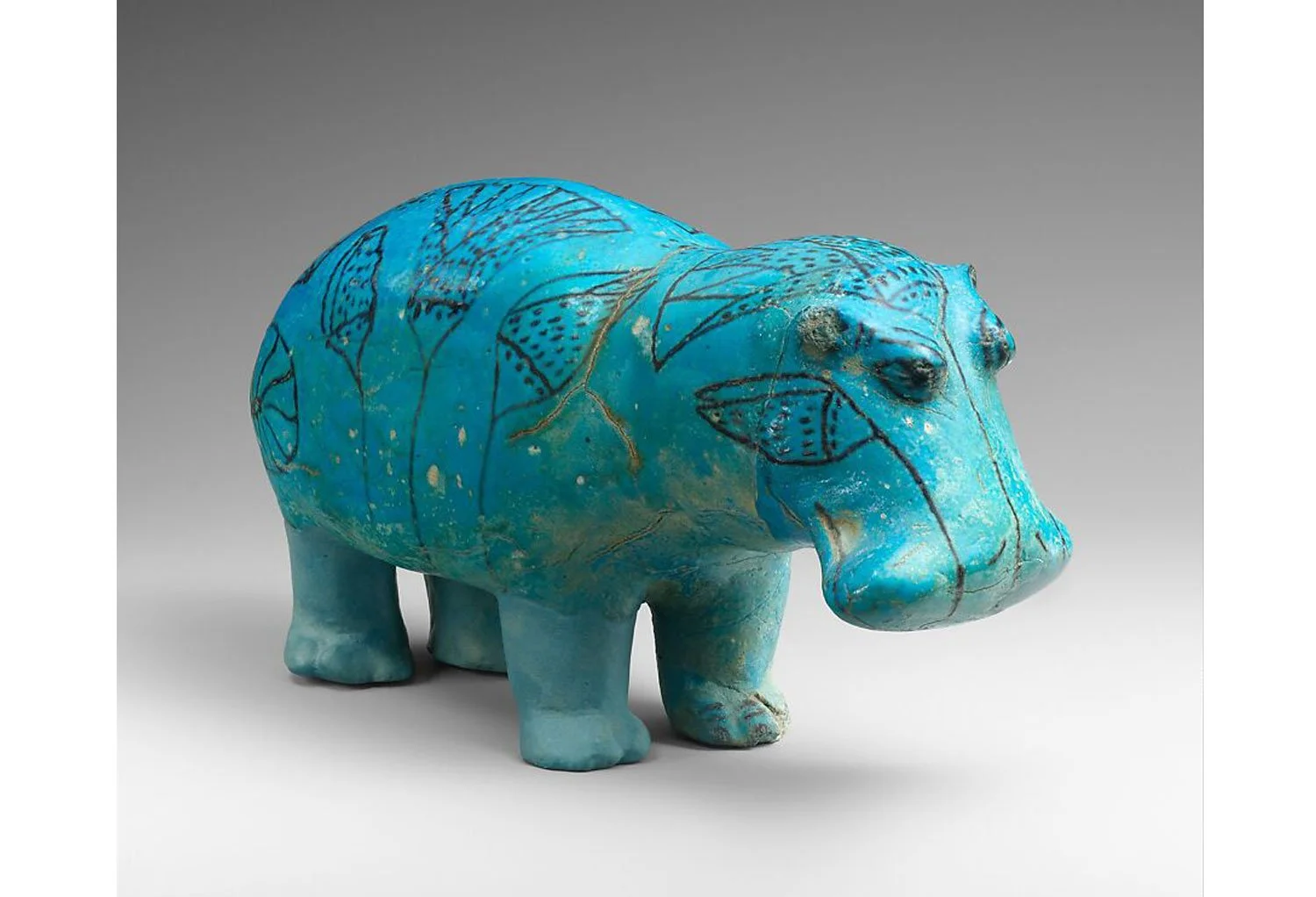
One of the more famous faience pieces at The Met Museum. ‘William’ the hippo was found in a tomb chapel associated with an Egyptian elite, a steward by the name of Senbi II at Meir. William was part of a pair. According to the Met, three of his legs were found broken, likely due to the practice of ‘disabling’ creatures who could possibly harm the deceased in the afterlife. Yet, his body is covered with images of the Lotus, symbolizing regeneration and rebirth and the hippo was also seen as offering magical protection. Middle Kingdom, 1961–1878 B.C.
For nearly four thousand years, Egyptian artisans continued to work with faience. Its appeal was more than decorative: the material brought together color, light, transformation, and religious meaning. To the ancient Egyptians, a blue faience amulet or vessel did not simply resemble the waters, vegetation, or sky, it carried something of their life-giving power.
For more information on Faience and examples, The Met Museum has numerous artworks in their collection along with an article that contains more techincal information at the links below:
Met Art
Met Article on Faience Production