
All About The Ancient Egyptian Scarab
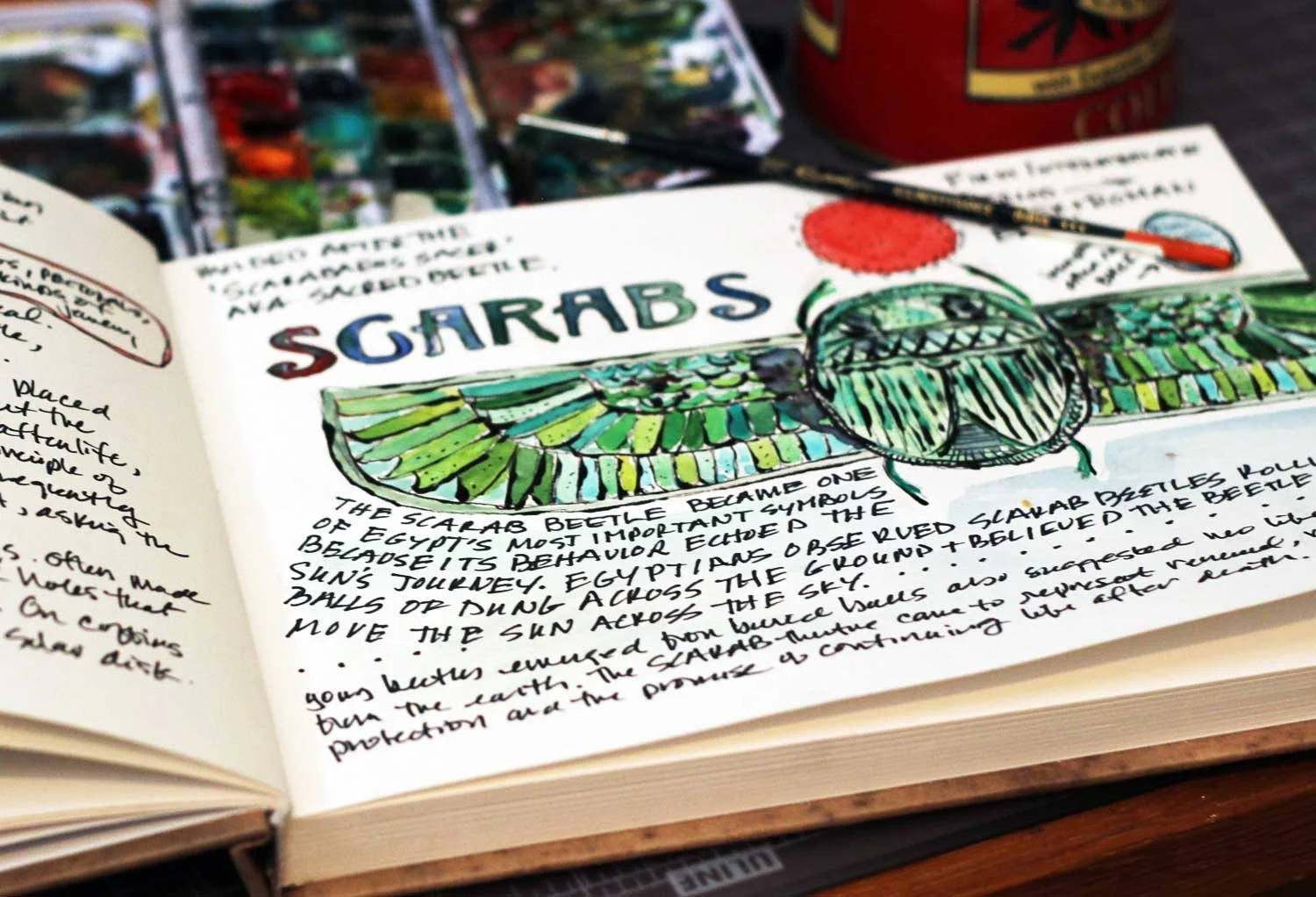
The Ancient Egyptian Scarab
Scarabs were ubiquitous in the ancient land of the Nile. Today, they’re still shorthand for Ancient Egypt. Is there any movie, set in that time period or place, that doesn’t have a scarab show up at some point? They usually appear in swarms in a scene that has something to do with a person either being put in a coffin thousands of years ago or arising from one, thousands of years later!
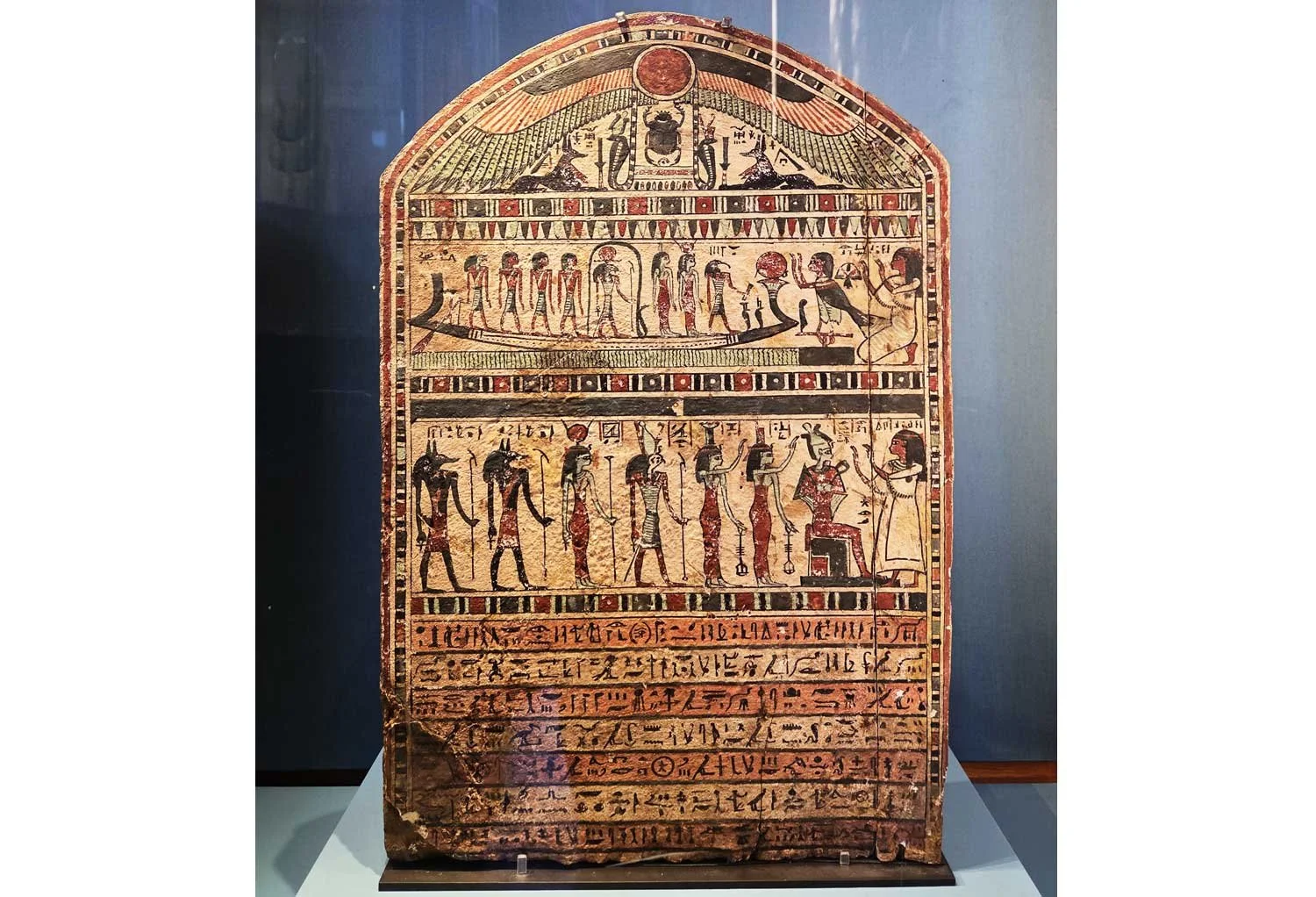
From the Louvre Egyptian galleries, a funerary stele with Khepri (winged scarab pushing solar disk) at top. Ptolemaic period.
Of course, there is a reason for that. Scarabs are woven into the history of Egypt. Literally, in the cases of amulets that were attached to mummy wrappings. Scarabs are beautiful in a mysterious sort of way - evoking ancient rites and travel to the afterlife. Portrayed on tomb walls, on coffins and as mentioned, as protective amulets within funerary linens, they represented resurrection, rebirth and safe-passage protection.
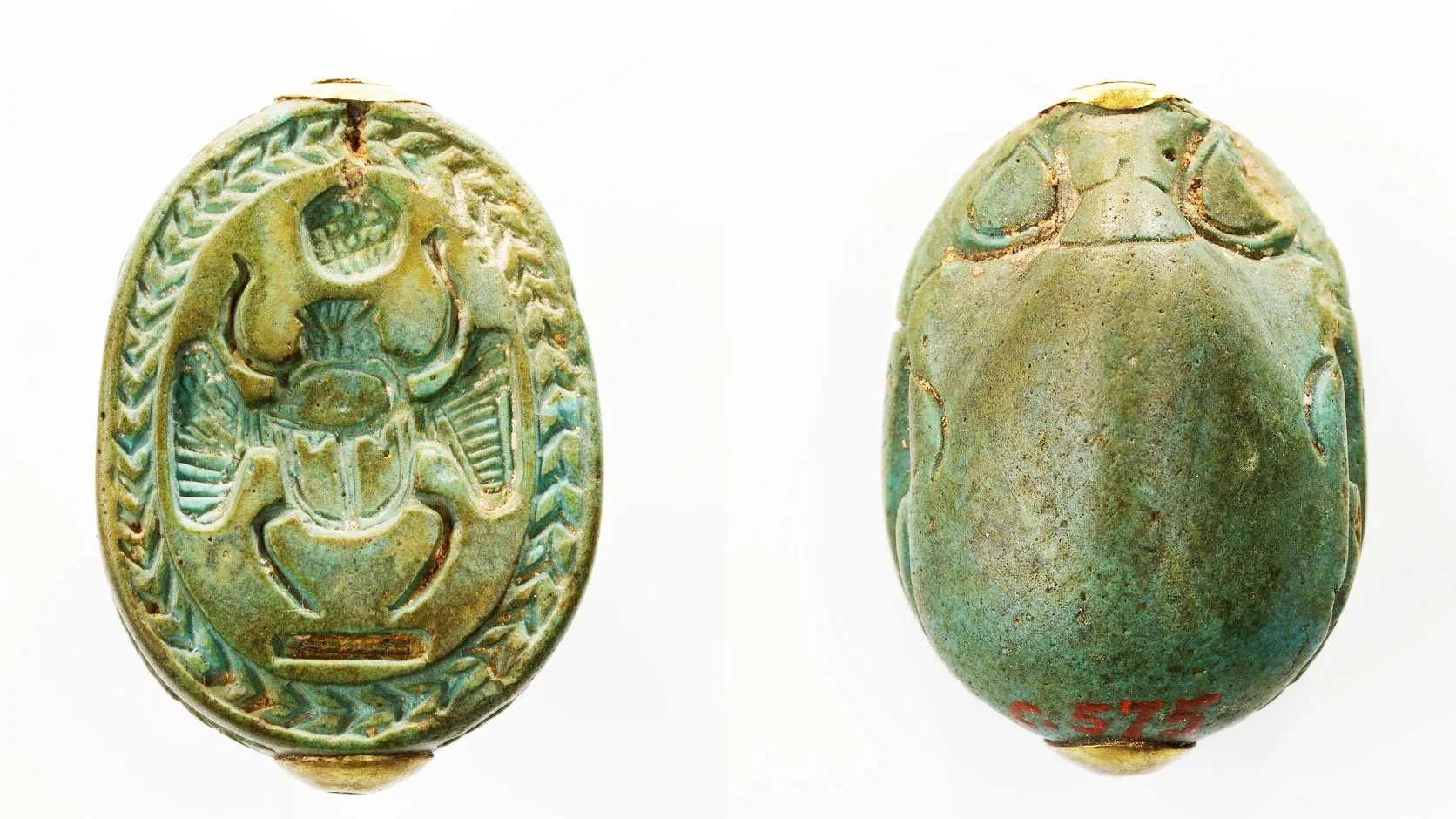
This blue-green and gold scarab carving comes from the Metropolitan Museum of Art, and shows a border pattern of rope that was used from the Middle Kingdom through to the 18th dynasty, from which this piece comes.
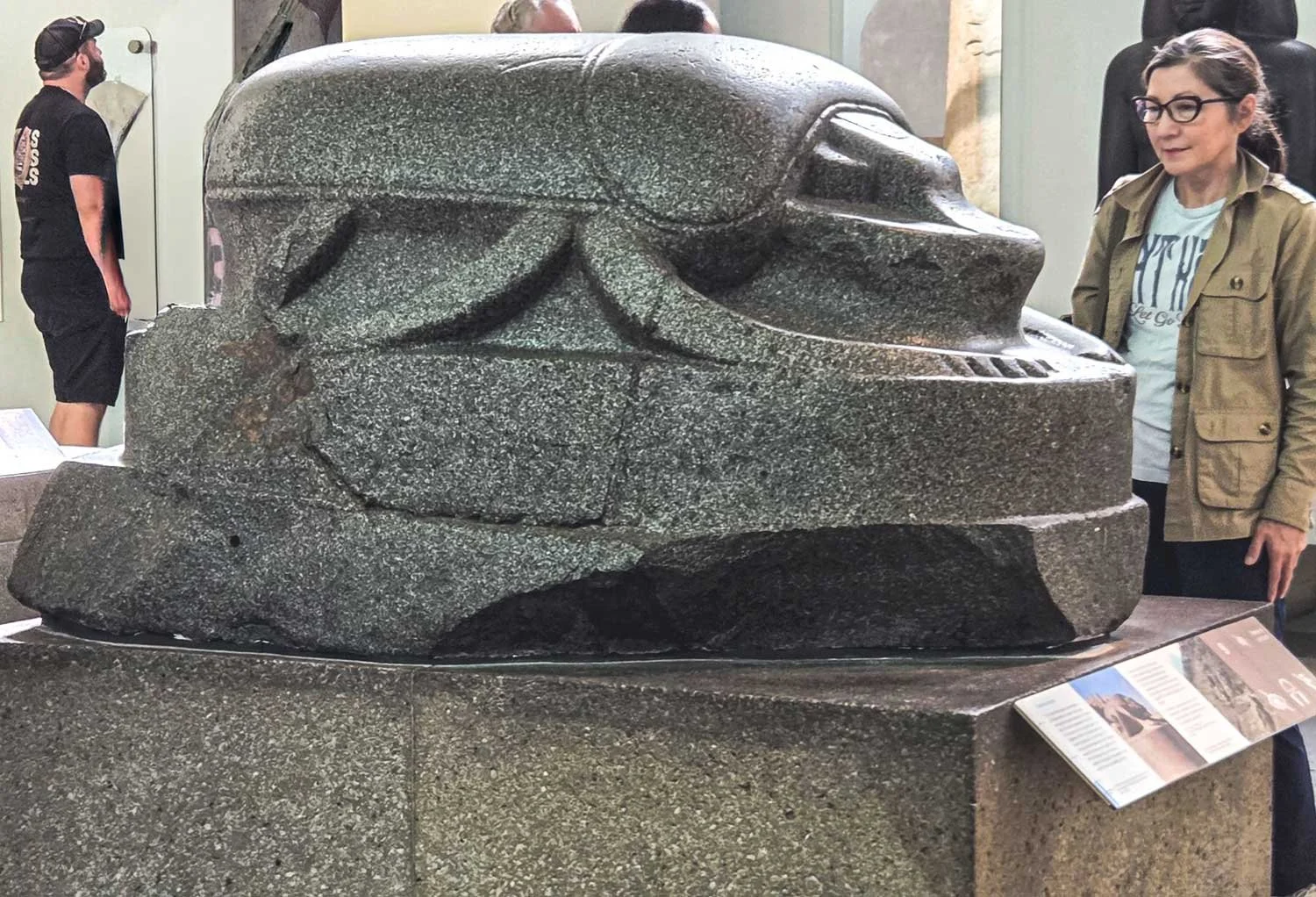
When you think of an Ancient Egyptian scarab, you usually think of something small, like the little amulets that are in almost any museum featuring antiquities. This one, however, is quite large. It’s a colossal, stone statue made of diorite. Recently, it was on loan to the Met Museum for their ‘Divine Egypt’ exhibition. Luckily for me, it was back in The British Museum when I visited last month. Thought to be from around the 4th c BCE and representing the god, Khepri.
Scarab Seals & Amulets
Egyptian scarabs were made from a range of materials, including steatite, other stones, faience, and sometimes metal. Museum examples include blue faience scarabs, green stone heart scarabs, and pieces made from amethyst, copper or serpentinite. Blue and green are especially familiar in surviving examples, but there was no single required color. The material and glaze varied with an object’s date, purpose and maker.
The amulets were carved in the shape of a beetle on one side and inscribed with names, prayers, or protective formulas on the flat underside.
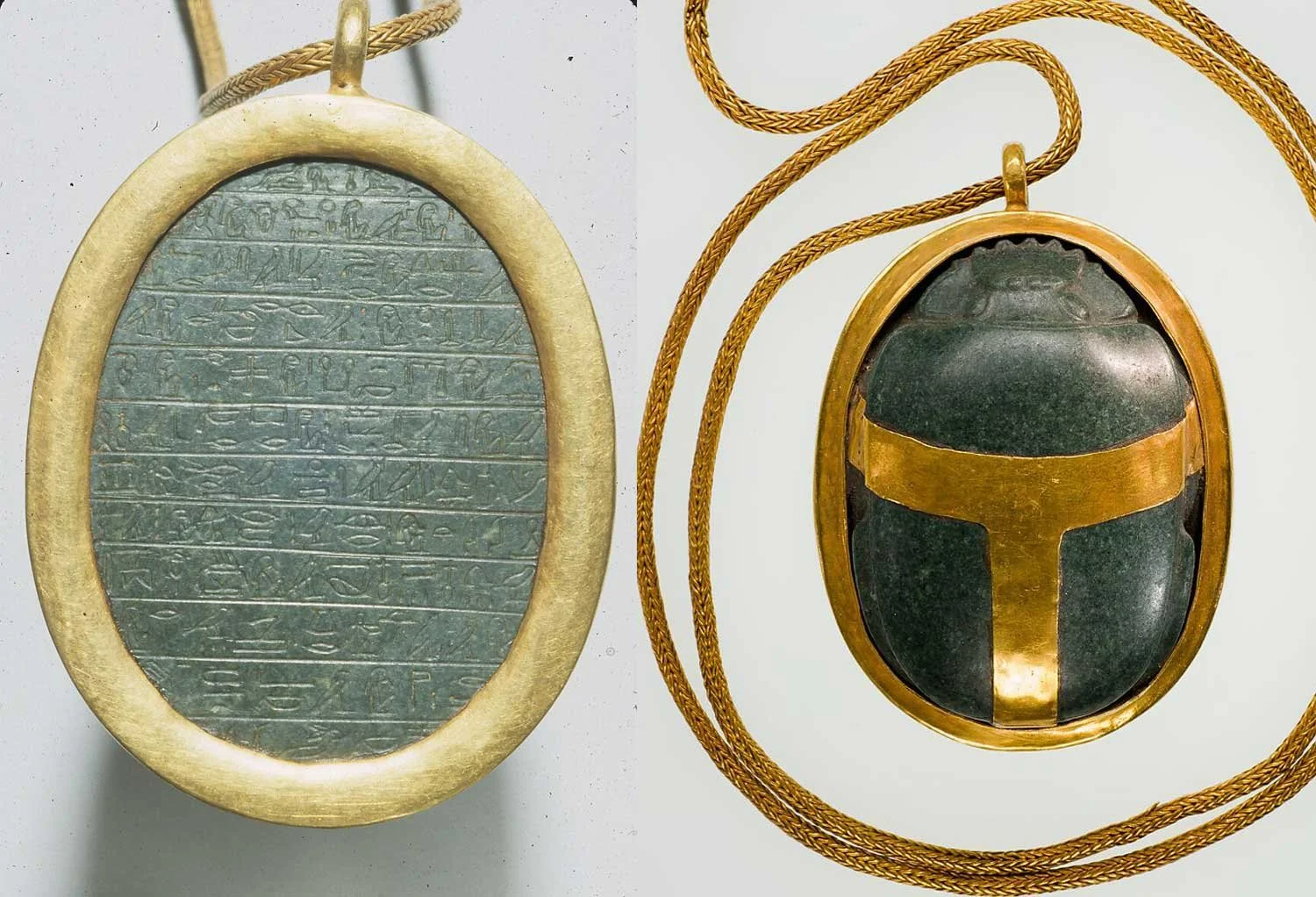
The above images are from the Heart Scarab of Hatnefer. The backside has text from The Book of the Dead, Chapter 30A.
This is another piece from the Met Museum NYC. New Kingdom ca. 1491–1473 BCE
The so-called “heart scarab” was especially important, inscribed with spells from the Book of the Dead to ensure the deceased’s heart did not testify against them in the judgment of Osiris.
Their small size and practical shape made them useful objects as well as powerful symbols: many had a carved beetle on top and a flat underside that could be inscribed and pressed into clay.
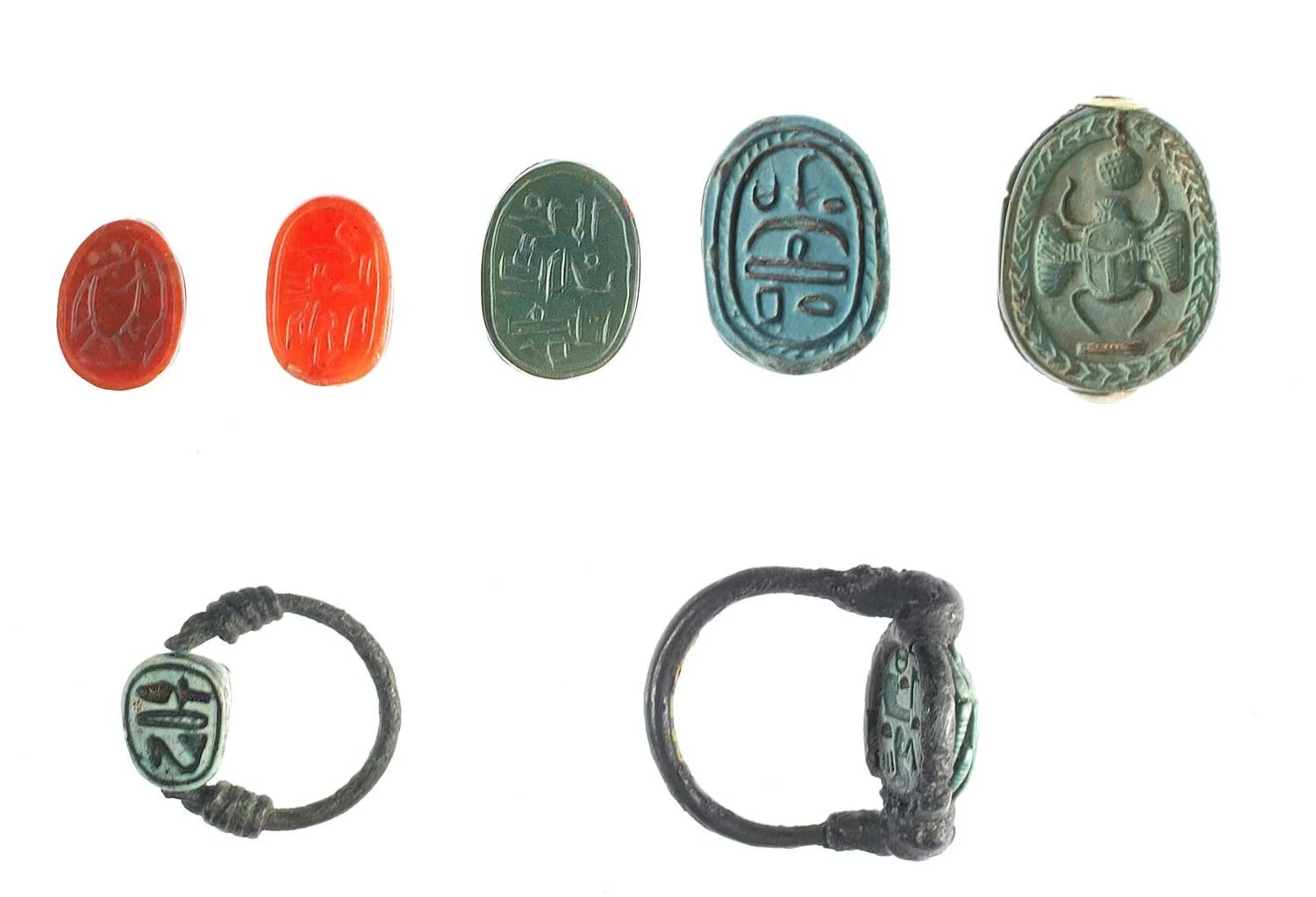
Scarab rings were popular and used in the same way signet rings were used in the Middle Ages to seal documents.
Symbolism
The scarab beetle became one of ancient Egypt’s most important symbols because its behavior seemed to echo the sun’s journey. Egyptians observed scarab beetles rolling balls of dung across the ground and believed the beetle helped move the sun across the sky. Young beetles emerging from buried balls also suggested new life appearing from the earth. The Egyptian word for scarab, kheper, was associated with coming into being. The scarab therefore came to represent renewal, protection and the promise of life continuing after death. It was linked especially with Khepri, the god associated with the rising sun and the morning’s renewal.
Ancient Egyptian Scarabs: Symbols of Life and Renewal
The scarab amulets were modeled on the Scarabaeus sacer, a type of dung beetle found along the Nile.
Though not all featured the actual beetle. Some had alternate imagery such as an animal heart, human heads, imagers of Gods etc., on the ovoid shape. These hybrids are generally called scaraboids, they don’t have the beetle with all its anatomical delineations.
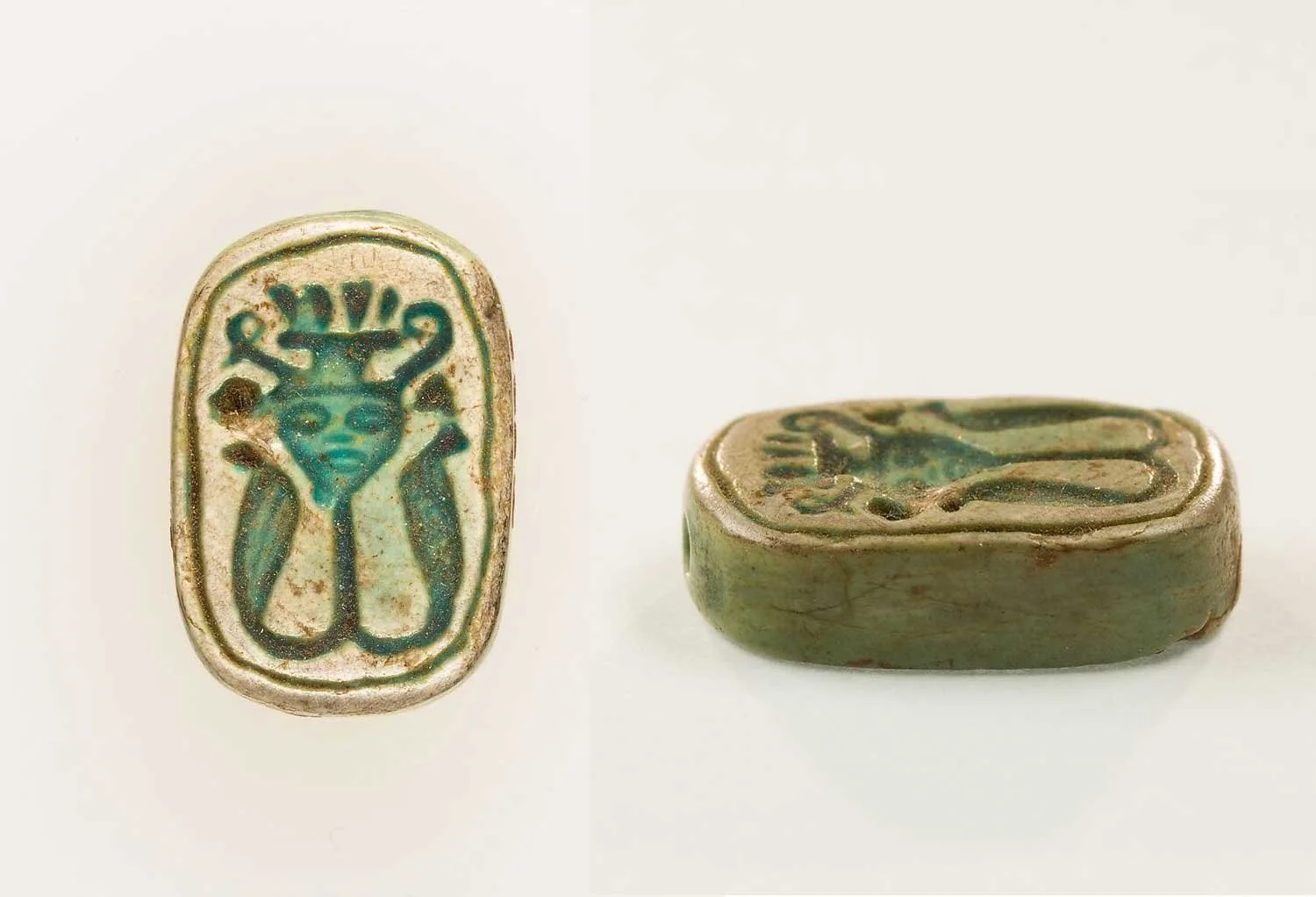
Scaraboid with imagery of Hathor. New Kingdom, around 1500 BCE. Met Museum.
Three familiar forms
Ordinary scarabs were shaped like beetles and often served both as amulets and seals. Their flat undersides might carry a person’s name or title, a royal name, hieroglyphs, symbols or brief scenes.
Heart scarabs were larger funerary amulets placed on the mummy’s chest. Egyptians considered the heart the seat of thought, memory and moral character. In the afterlife, it was weighed against the feather of Maat, the principle of truth and right order. The scarab’s underside was commonly inscribed with Book of the Dead spell 30B, or sometimes 30A, asking the heart not to testify against its owner.
Winged scarabs usually show a beetle with a pair of bird wings. They were often made in separate pieces and sewn onto mummy wrappings; their wings helped express protection and the deceased’s hoped-for rebirth. On coffins, tomb walls and mummy coverings, a winged scarab, sometimes shown pushing or holding the sun disk, could make the same solar connection visible in the funerary decoration.
Other forms included commemorative scarabs, which could carry longer texts about royal events, and naturalistic scarabs, carved to resemble beetles more closely. As noted earlier, scarabs also incorporated additional imagery or deity symbols. Their purposes and designs changed across time, so a scarab is not automatically a funerary object: many were made for everyday wear, sealing or commemoration.
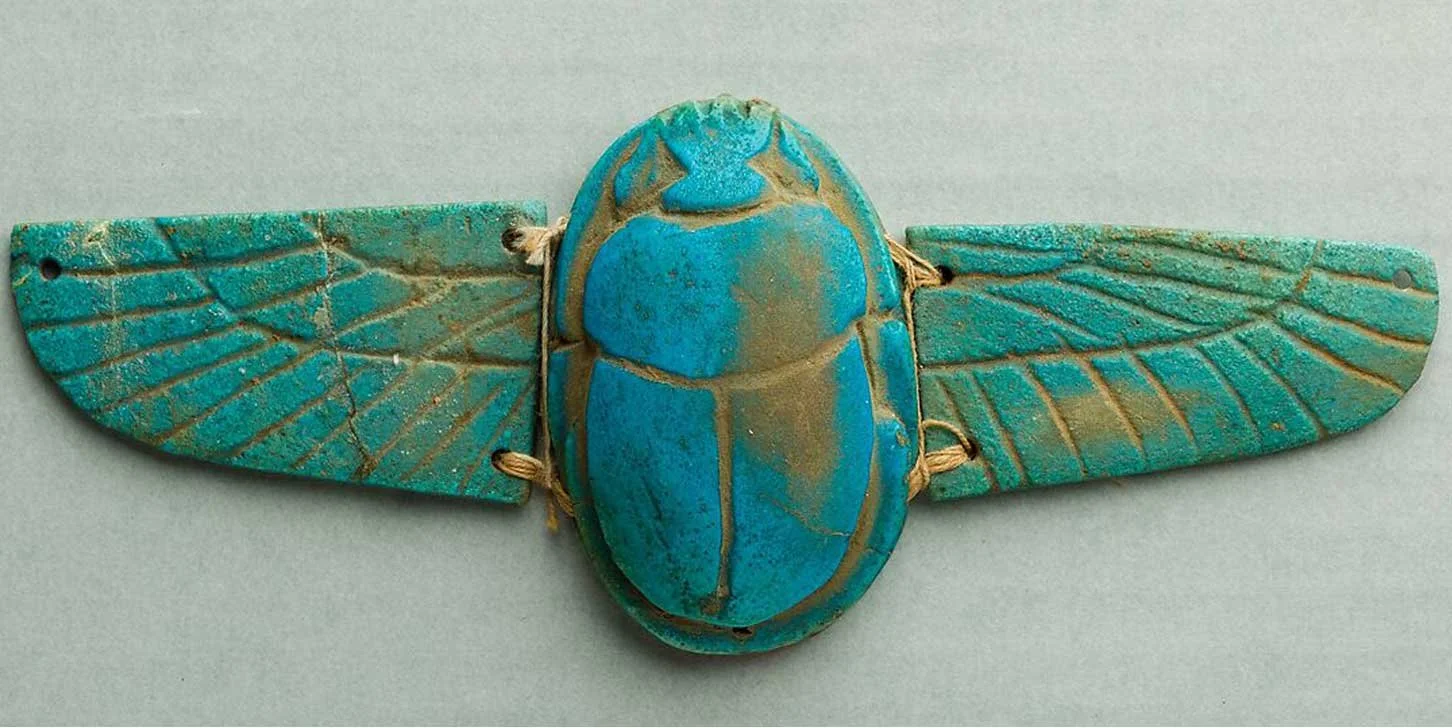
Winged scarab with holes to aid in fastening onto mummy wrappings. The wings are not beetle wings, but bird wings, and meant to ensure rebirth. Late Period, 664–332 BCE. Met Museum.
Interesting facts
Scarabs were used for centuries: they appeared as amulets by the First Intermediate Period and remained in use into Greek and Roman times.
On some heart scarabs, the owner’s name could be added over an earlier inscription. The Met’s scarab for Hatnefer, shown earlier in the post, for example, preserves evidence that it had first been made for someone else.
A winged scarab’s wings were often bird wings, not beetle wings; museum examples show individual feathers and holes for attaching the pieces to mummy wrappings.