
A Vaulted Coffin for a Young Girl
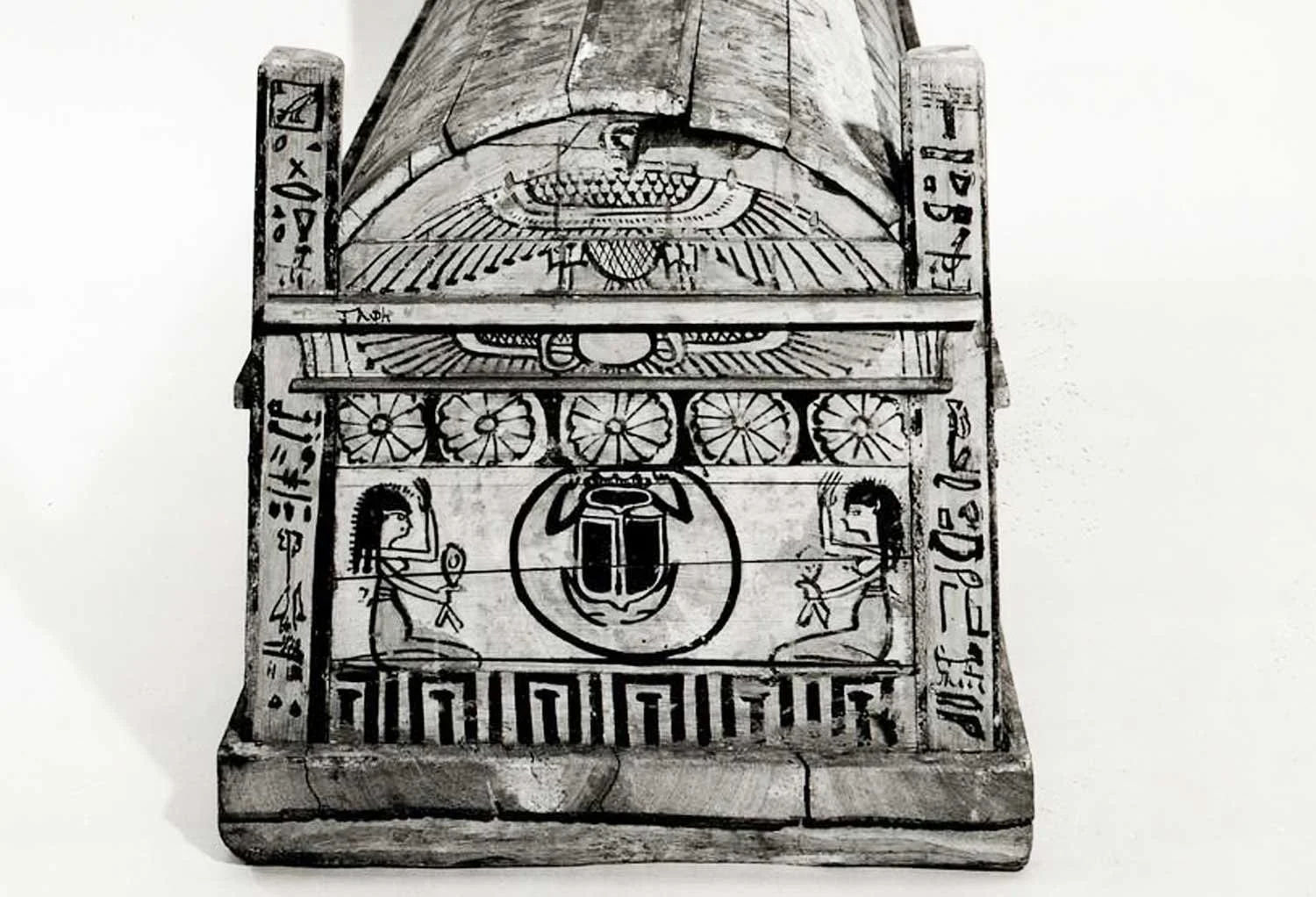
One end of the gable and vaulted coffin showing goddesses mourning (Isis and Nephthys, I believe) with scarab under winged solar disc. © The Trustees of the British Museum. Shared under a Creative Commons Attribution-NonCommercial-ShareAlike 4.0 International (CC BY-NC-SA 4.0) licence.
The Painted Coffin of Tphous
This rather whimsical (yet sad, due to the inhabitant’s age) painted wooden coffin was made for Tphous, a young girl from Roman-period Thebes. A Greek inscription identifies her as the daughter of Heraclius Soter and Serapous and records that she died during the reign of Emperor Hadrian, in approximately 120 CE, when she was only about six years old. Remarkably, the inscription also reveals that she was not placed in the family tomb until some ten months after her death. The coffin was discovered at Sheikh Abd el-Qurna in the Theban necropolis and was made from locally available sycomore-fig wood. It now resides at The British Museum.
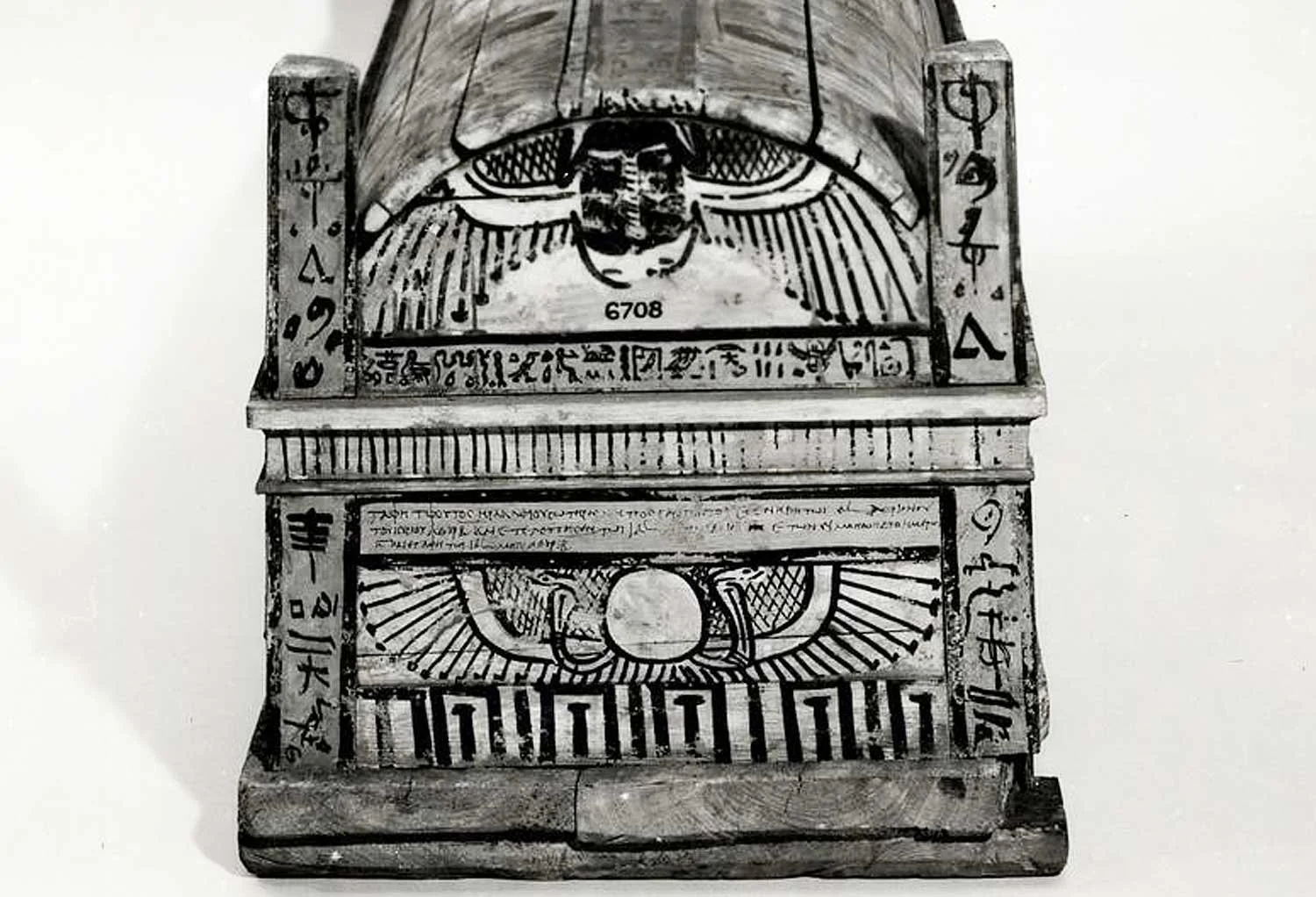
© The Trustees of the British Museum. Shared under a Creative Commons Attribution-NonCommercial-ShareAlike 4.0 International (CC BY-NC-SA 4.0) licence.
The coffin’s brilliantly painted decoration follows traditional Egyptian beliefs, even though Egypt had then been under Roman rule for more than a century. Tphous appears with the jackal-headed god Anubis before Osiris, lord of the afterlife. Other scenes include Ra-Horakhty, the Apis bull, the Sons of Horus and jackals towing the solar barque. At the gable ends are powerful images of regeneration and protection: winged sun discs, rearing cobras and the scarab beetle, accompanied by mourning goddesses. Together, these images were intended to protect the child and guide her toward rebirth in the next world.
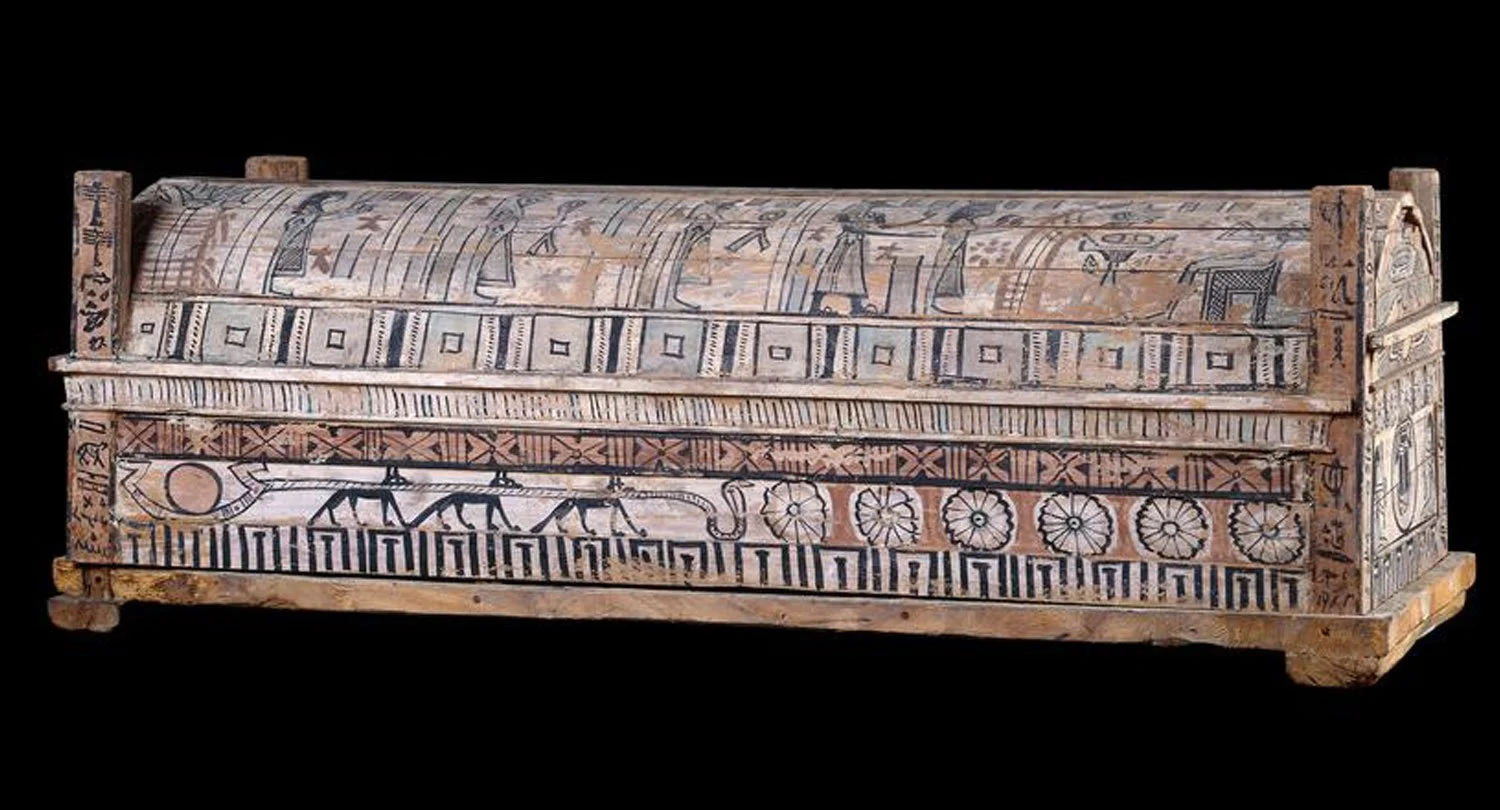
The vaulted, wooden coffin from the side, showing a solar barque being towed by a trio of jackals and a snake.
© The Trustees of the British Museum. Shared under a CC Attribution-NonCommercial-ShareAlike 4.0 International (CC BY-NC-SA 4.0) licence.
Tphous’s coffin belongs to a distinctive vaulted, shrine-shaped style, with a rectangular baseboard, four corner posts and an arched roof, also called a Qersu coffin. This prestigious form first became popular among elite burials during Egypt’s Twenty-fifth Dynasty and remained in use into the Ptolemaic and Roman periods. Its architecture made the coffin resemble a miniature funerary chapel, sacred shrine or the cosmos, a permanent divine dwelling for the deceased. Although its structure belonged to a centuries-old Egyptian tradition, the Greek inscription and the family’s Greek and Roman names reveal the richly blended culture of Roman Egypt.
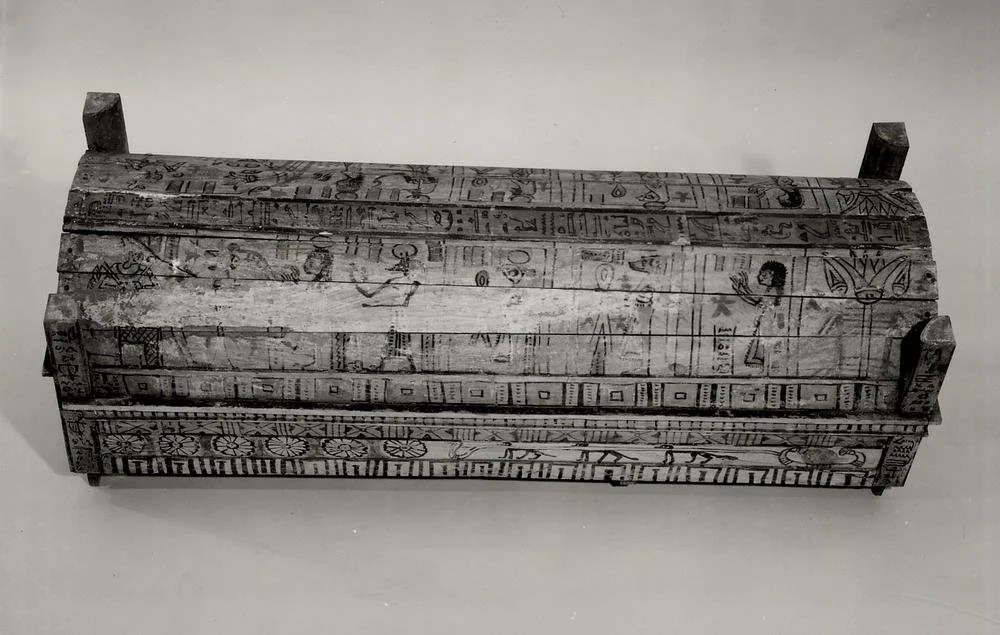
The top view of vaulted coffin. © The Trustees of the British Museum. Shared under a Creative Commons Attribution-NonCommercial-ShareAlike 4.0 International (CC BY-NC-SA 4.0) licence.
The coffin is especially touching because it preserves more than religious imagery: its unusually precise inscription restores something of Tphous’s individual story. Amid gods, sacred boats and symbols of eternity, we are reminded that this elaborate object was commissioned by a family mourning a very young child.
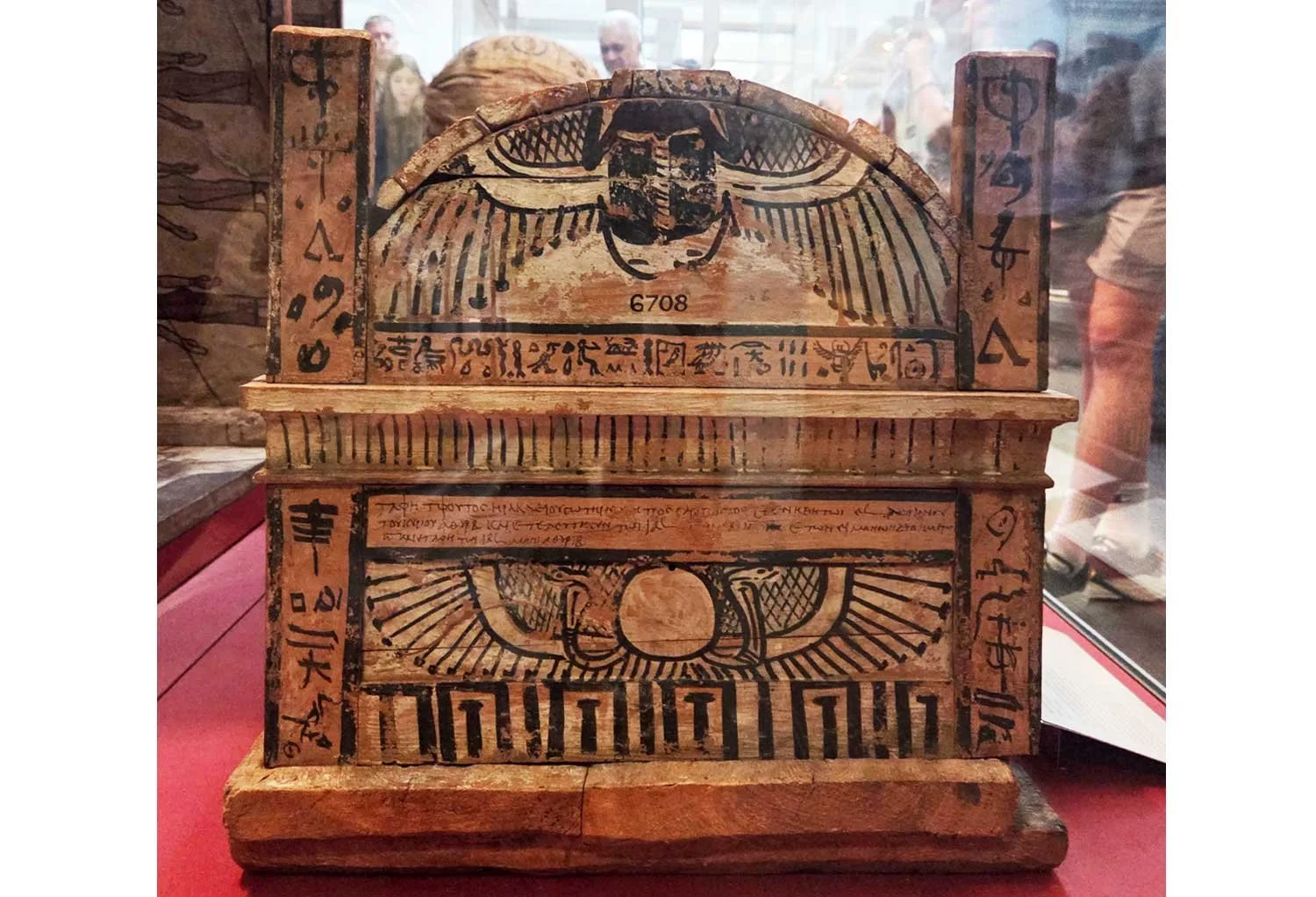
I took this image at the museum, I include it so you can see the color of the wood. I wish I had taken more of my own around the various sides but the gallery was getting crowded!
But I am again reminded, looking at the illustrative quality of this piece, how fitting it looks for someone younger. It’s informal line work is reminscent of a 1970s style ‘zine’ style artwork. I love it.