

Pendant of Hathor, Lapis and Gold, 22nd Dynasty
Last week I was passing through San Francisco and just happened to drive by the de Young Museum and see their banner for a special exhibit on display: Treasures of the Pharoahs. Showing from August until January 31, 2027.
I took a lot of photos, but decided I would break them up in posting. So, in this post, it’s all about jewelry.
I have to admit, I don’t wear a lot of jewelry but I love beautiful craftsmanship, and the ancient Egyptians were certainly artistic with their bling.
The above is a pendant featuring Hathor, identifiable by her little cow ears. I think the combination of lapis and gold is especially lovely.
Here’s another version, all in gold, this time she’s an amulet vs a pendant…
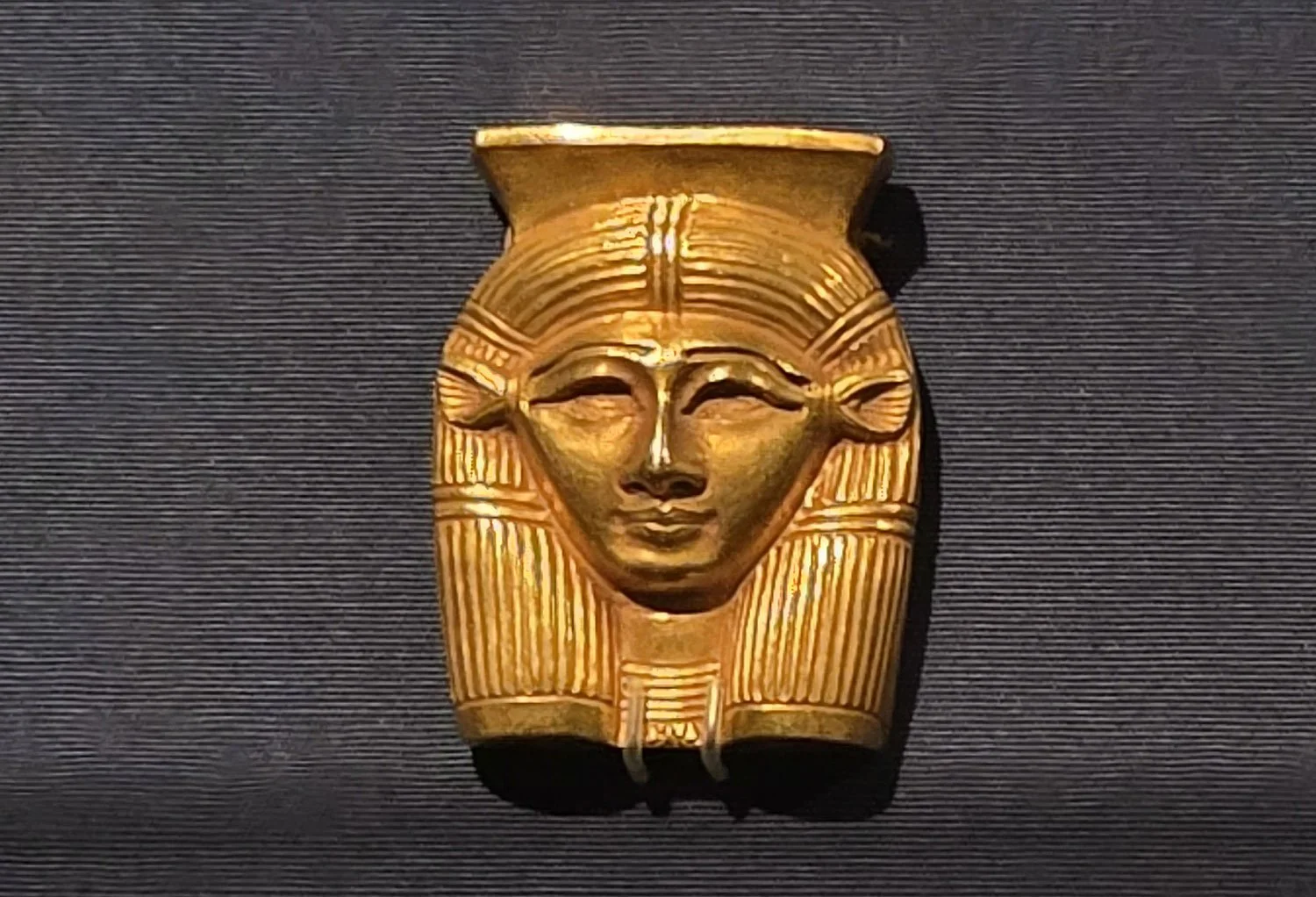
Hathor pendant in gold, 22nd Dynasty.
Both pendant and amulet are from Saqqara and the tomb of the Priest and Prince Sheshonq of the Third Intermediate period. Although, the gold piece is probably more valuable in terms of material value, I prefer the blue and gold.
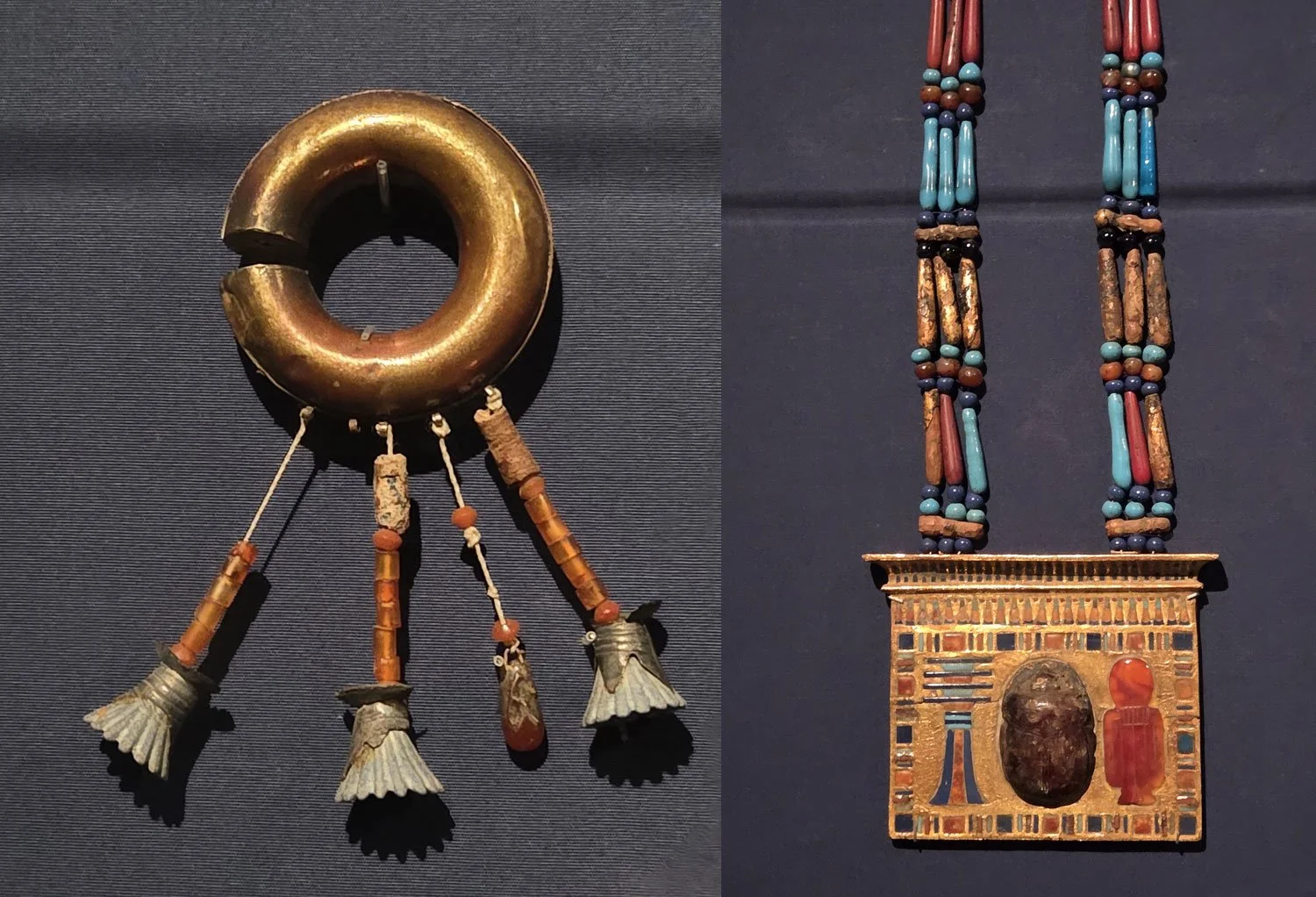
Child’s earring and Pectoral.
The piece on the left was described as ‘Earring of a Royal Child,’ while the piece on the right is the Pectoral of Hatiay.
The earring was found in the Luxor, the Valley of the Kings, from the 19th Dynasty. Materials are Electrum, carnelian and blue faience.
The pectoral, from the Tomb of Hatiay in the West Bank, is from the 18th Dynasty. It is made of gilded wood, lapis, carnelian, glass, turquoise and amber. The three elements on the front are a Djed Pillar, Scarab (I think) and the Knot of Isis.
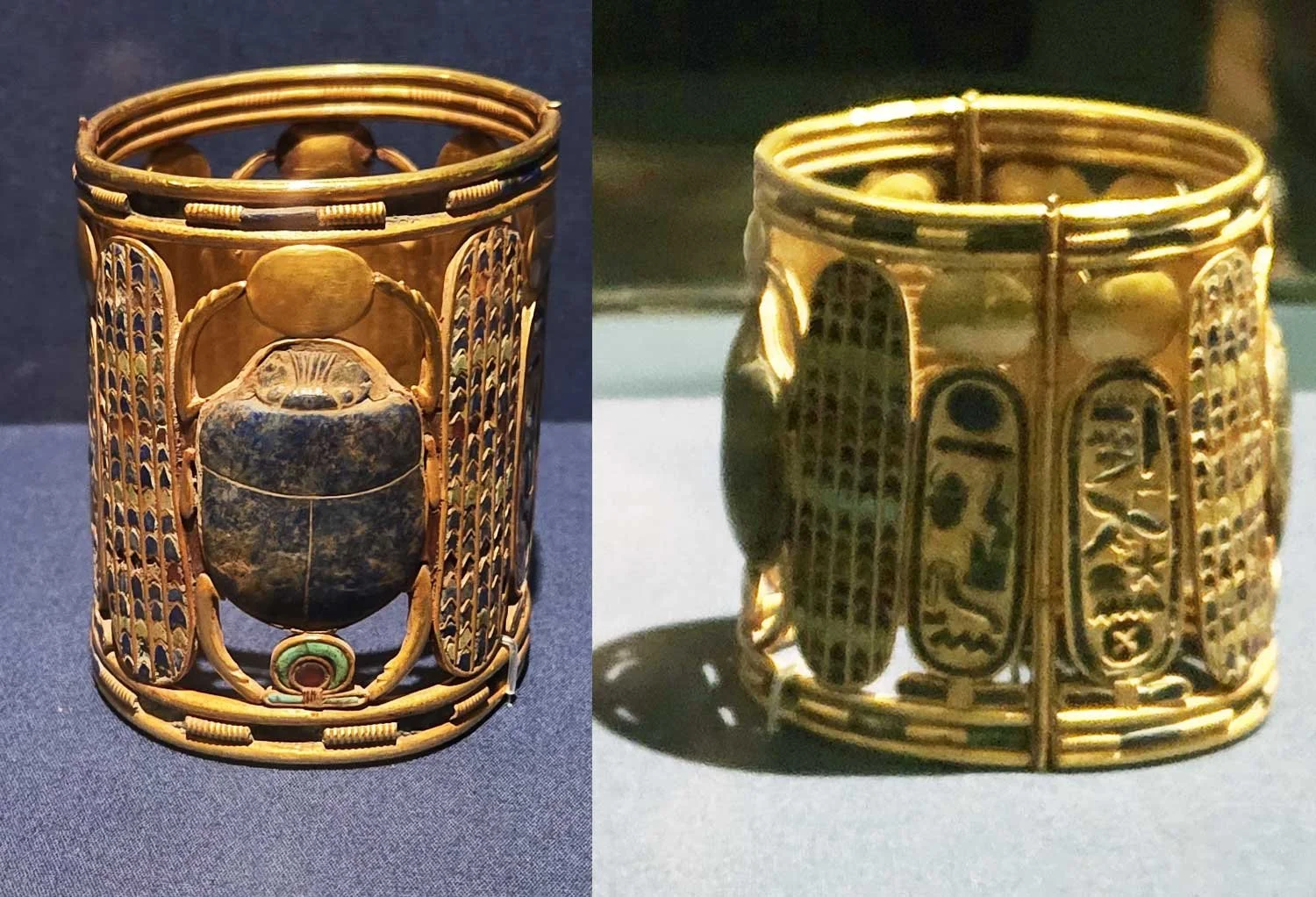
Bracelets of King Psusennes I, 21st Dynasty, Third Intermediate Period.
I’m pretty sure these are two different pieces…I believe there were over 20 bracelets and anklets found in this tomb. These are on loan from the Cairo Museum and the Cairo Museum, as far as I can tell, does not have a searchable website, so I’m having to off what I found on secondary sources. Usually, I always take a photo of the info card at the museum, but I couldn’t my image.
At any rate, these are from the tomb of King Psusennes I, the two cartouches contain his birth name and his throne name. The scarab is a major symbol of protection and this one is holding the solar disc. Made from gold and semi-precious stones.
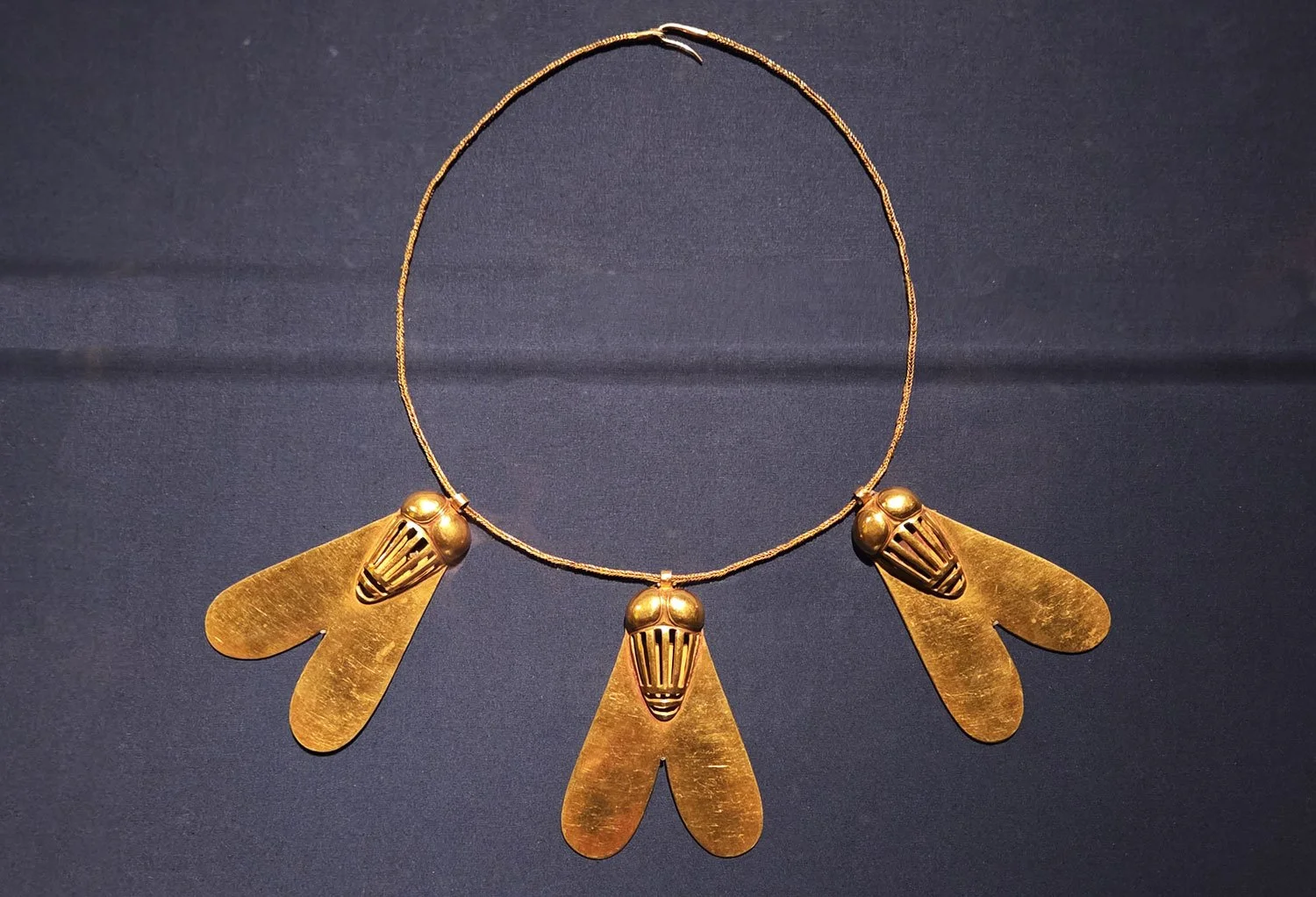
Necklace of Ahhotep II, tomb of Queen Ahhotep II, Late 17th Dynasty.
This is a stunning necklace in its simplicity but maximalist in style. It’s from the tomb of Queen Ahhotep II of the New Kingdom.
The necklace is representative of the Military Order of Valor, awarded for bravery in battle and the highest honor in ancient Egypt.
Someone wearing this would be acknowledged as a person of elite social status, great merit and heroism.
The flies, in ancient Egypt, symbolized tenacity and endurance, traits of a courageous warrior.
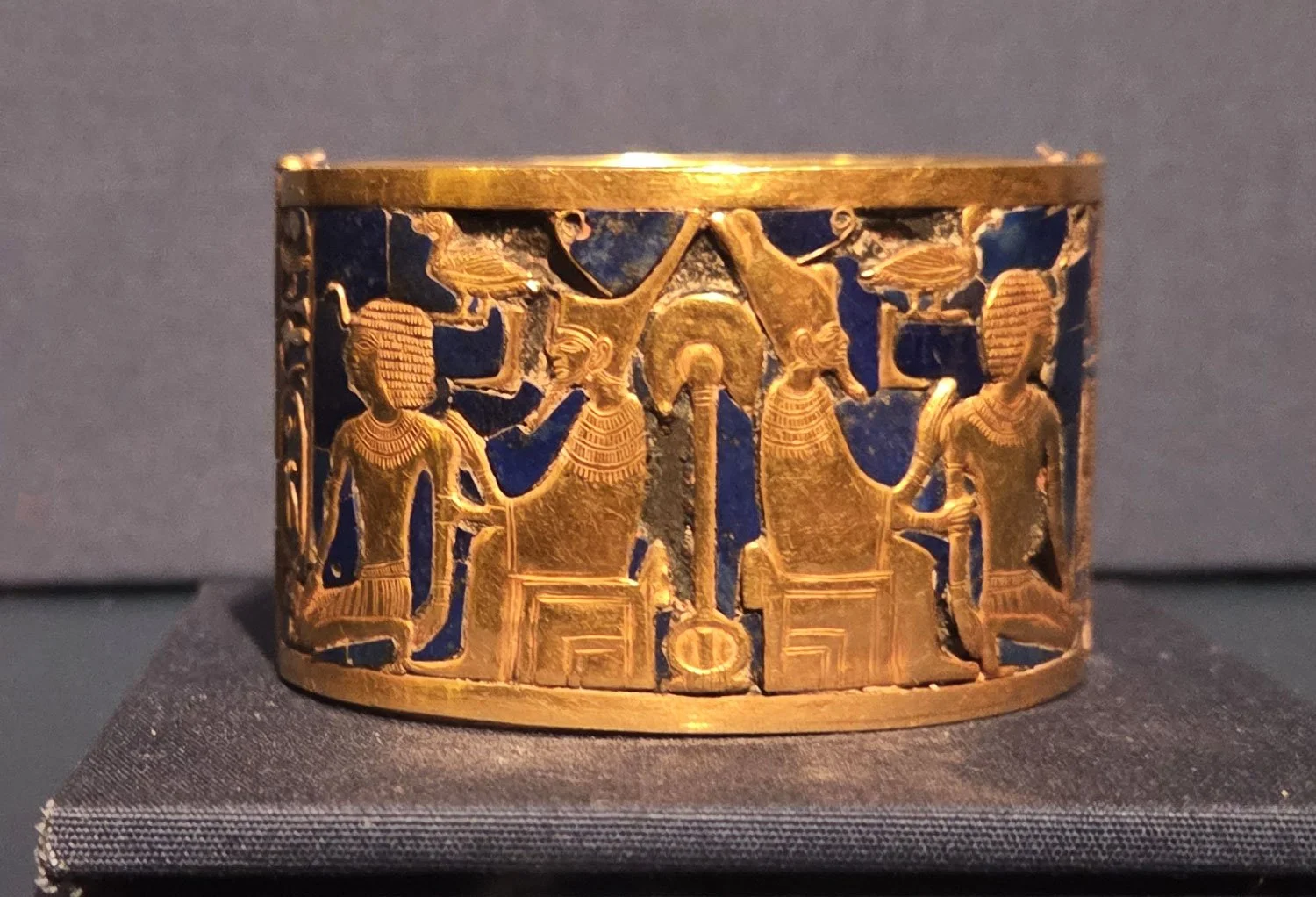
Bracelet of Queen Ahhotep
Queen Ahhotep I’s gold and lapis lazuli bracelet, residing in the Egyptian Museum in Cairo but temporarily on loan to the de Young for the exhibit, is dated to the 17th Dynasty. Its decoration is arranged in two semicircles: one shows the earth god Geb with a kneeling king, while the other depicts the falcon-headed and jackal-headed Souls of Pe and Nekhen. These figures were understood as mythical ancestors of Egypt’s rulers before unification, linking the bracelet’s elegant blue-and-gold design with the ancient foundations of kingship.
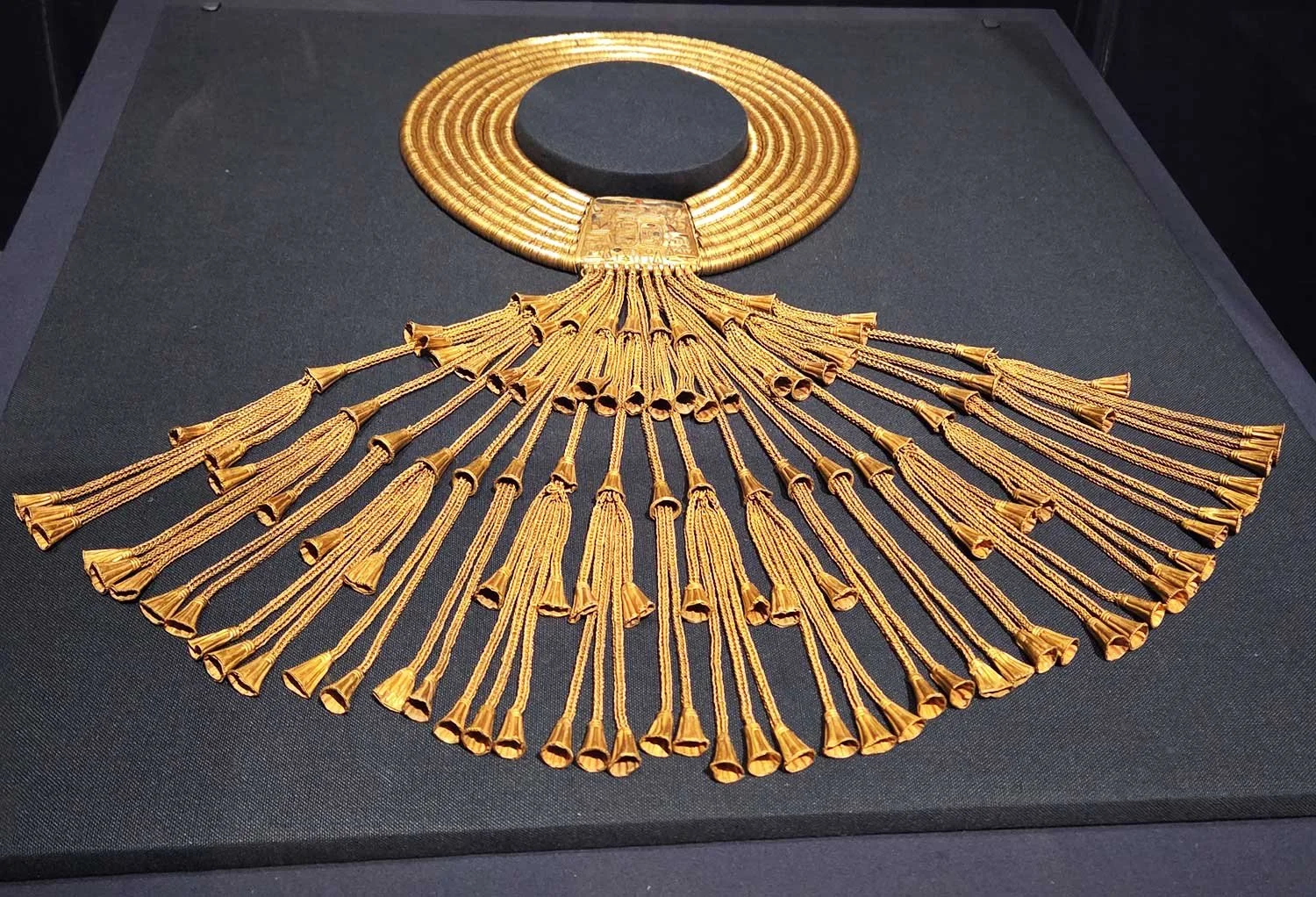
A gold broad collar of Psusennes I, 21st Dynasty. Tanis.
One thing you can say about ancient Egyptian jewelry is that many of them are what we could call today, statement pieces.
This gold Broad Collar is certainly that. This is another Gold of Valor design. Like the earlier Golden Flies necklace, it represented distinction. This Broad Collar, also known as a Shebyu collar, is one of the largest of its kind found. It was on the neck of Psusennes I’s mummy and is made of gold, lapis, carnelian and feldspar.
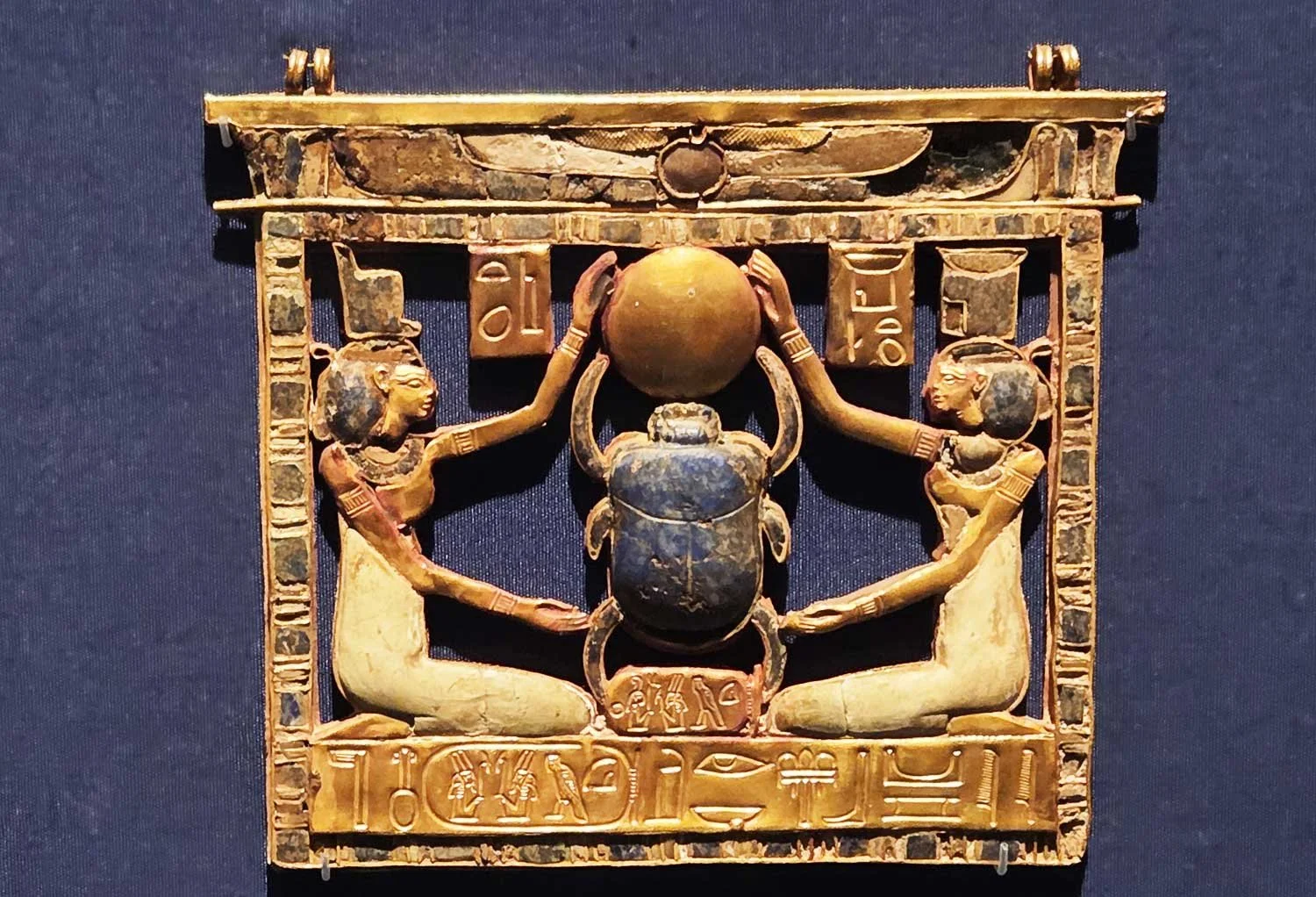
Pectoral pendant of Amenemope. 21st Dynasty, Tanis.
Another scarab, but not the last one!
This Pectoral pendant was found in the tomb of Amenemope of the Third Intermediate period. It’s made of gold, lapis, feldspar and glass.
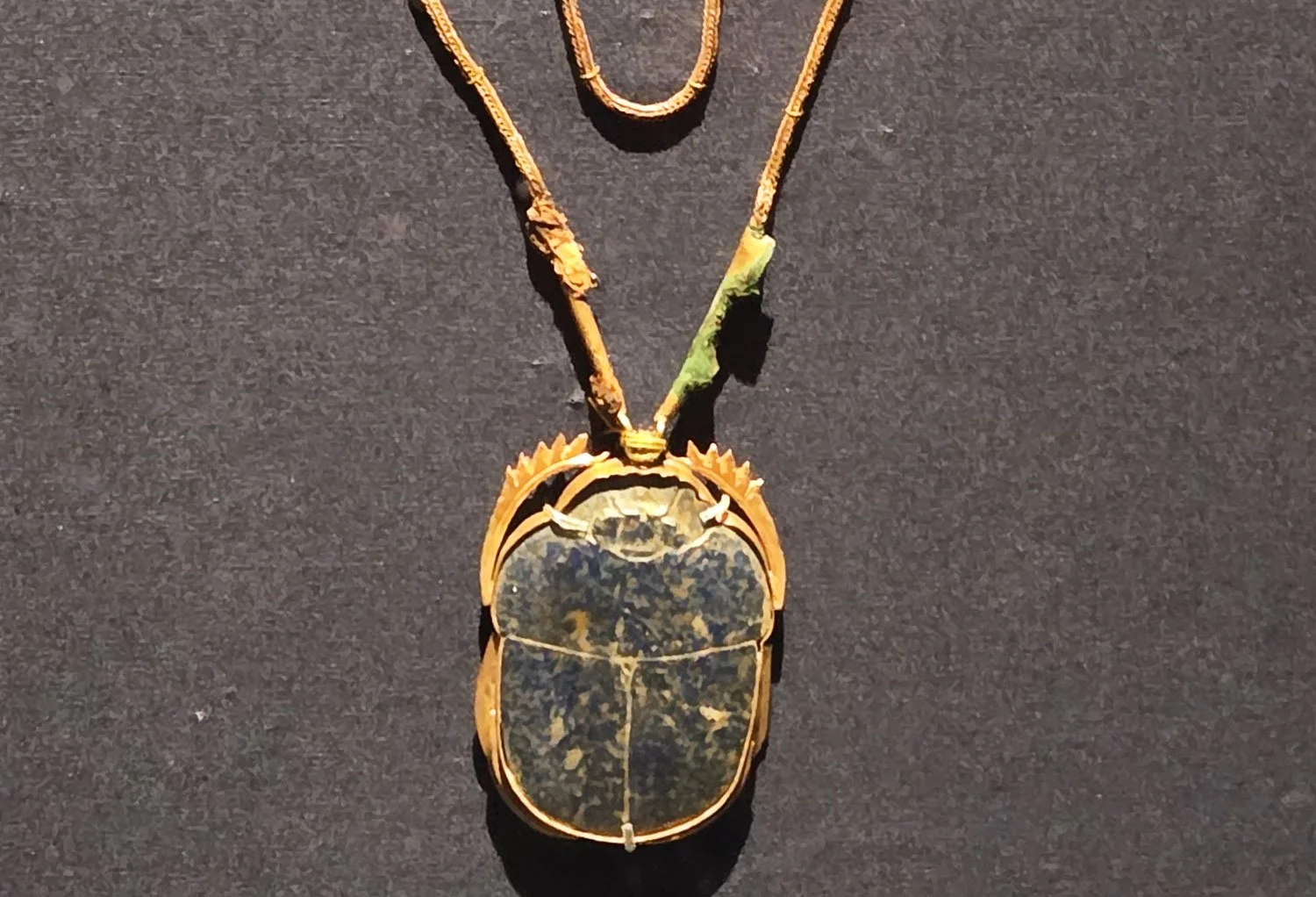
Scarab pendant necklace of Osorkon II. 21st Dynasty.
This will be the last scarab in this post. Large with beautifully detailed front legs in gold. It looks to have a corded chain and if I recall, this really was oversized. I think the scarab was about 3” high. Beautiful. Found in Tanis, Royal Tombs.
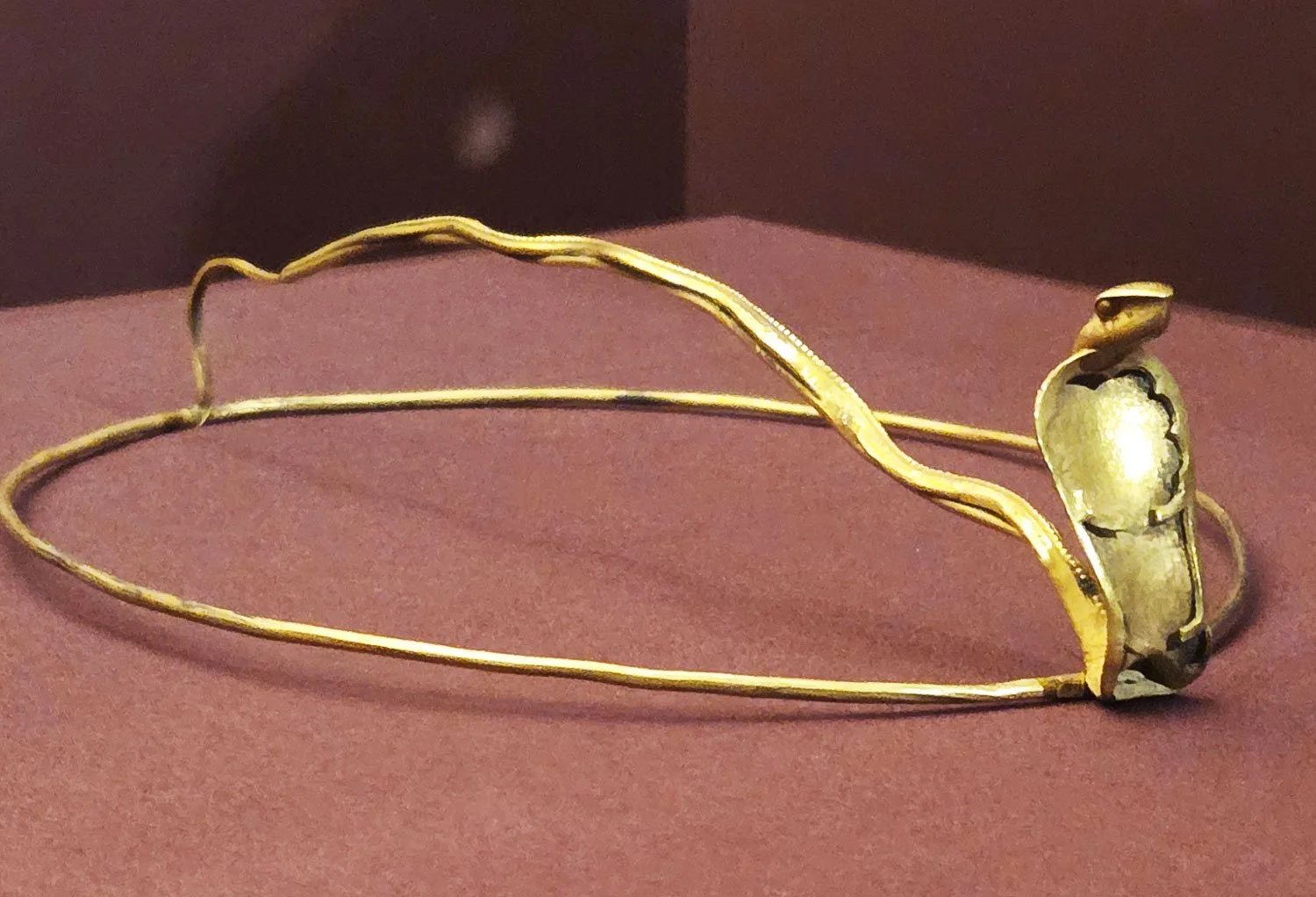
This is the final piece I am showing. There were a few more, but the images came out so blurry, I decided not to include them.
This is perhaps a fitting image to post around Halloween. All it needs is someone in a Cleopatra disguise.
This a diadem (sort of like a tiara) with uraeus, a cobra in the upright position.
Made of gold and from the Cemetery of Tell el-Muqdam, 22nd Dynasty.
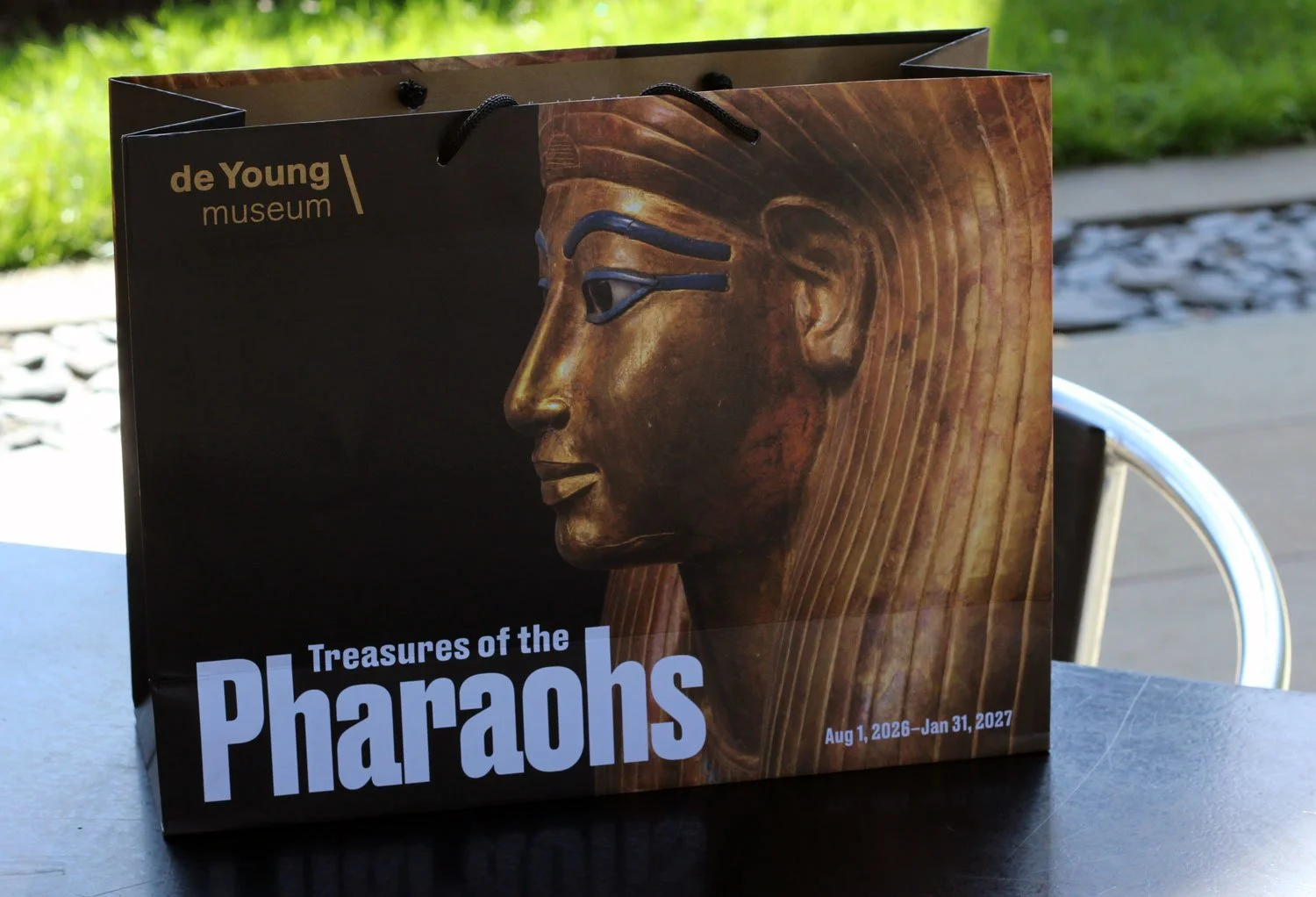
Museum exhibit bag…
There were so many pieces outside of the jewelry and I will put together another post that includes those.
Many of the pieces shown were on loan from the Cairo Museum in Egypt and they are just fabulous. The exhibit itself was very well laid out and since it’s showing through the end of January, 2027 - I hope you have an opportunity to see it!