
Magical Wands & Rods Through the Ages
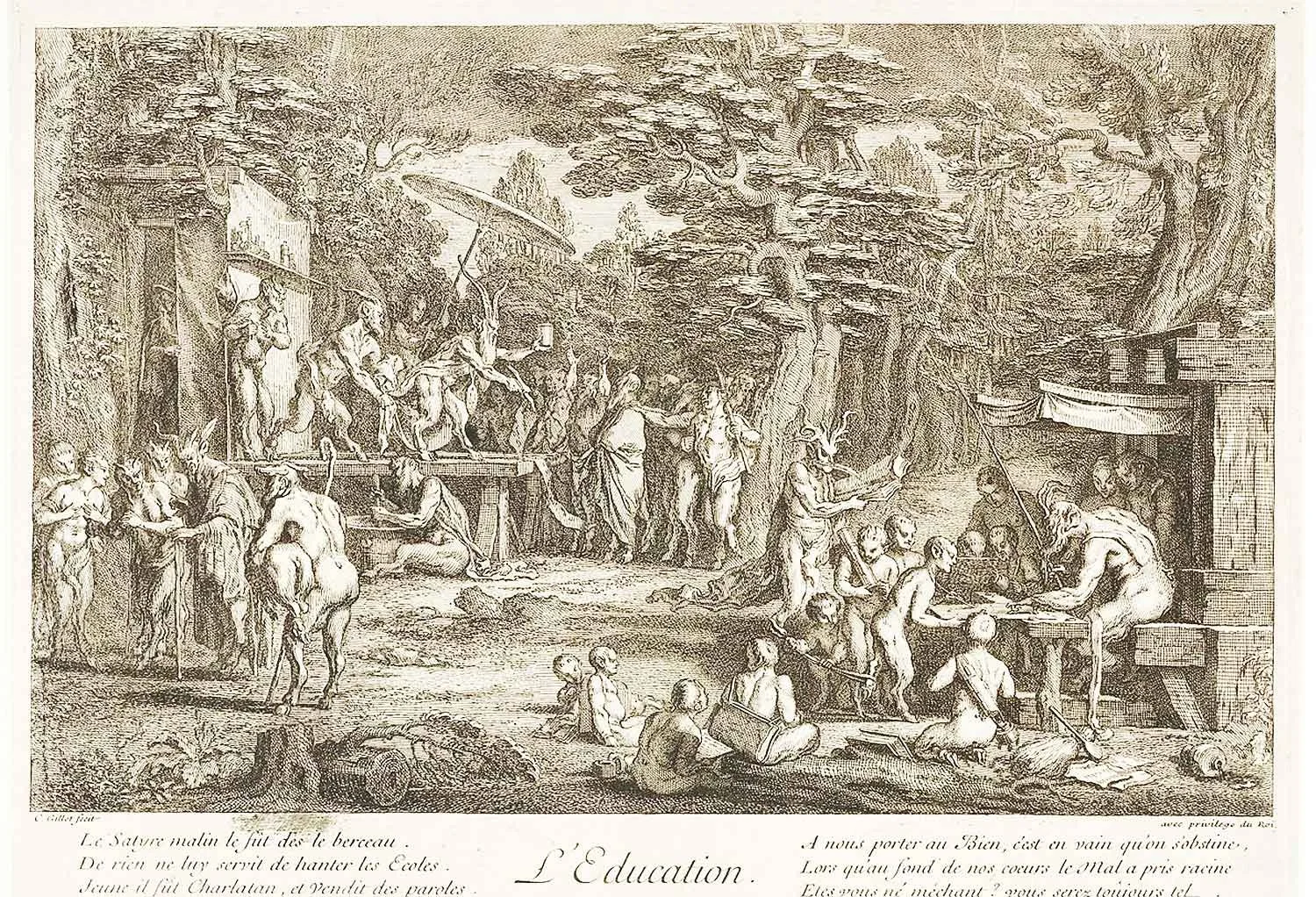
L’Education, part of ‘La vie des satyres,’ by Claude Gillot, 17th c. Old Satyr with wand.
Magic Wands from the Ancient to Medieval World…
As far as magical objects are concerned, there are few that are as instantly recognizable as the magic wand. For most of us, the magic wand conjures up (pardon the pun) an image of something about the length of a paint brush, easily hand-held and wielded a bit like a conductor’s baton.
A slender stick raised in the air can summon a spirit, transform a prince, reveal hidden water, or send a shower of sparks across a stage.
But historically there’s more to the magic wand, much more…
The history of the wand is complex, it originates in the ancient word and travels through the centuries shape-shifting along the way as it develops through different cultures. There was no single ancient ‘magic wand’ from which all later wands descended. Instead, many peoples developed their own sacred rods, staffs, branches, scepters, and ritual implements. Some were believed to protect and heal; others indicated authority, marked sacred space, or helped a practitioner direct invisible forces.
At its simplest, a wand is an extension of the hand.
It points, touches, traces, measures, commands, and draws boundaries. These practical actions gave the wand its enduring symbolic power: it allowed human intention to be made visible.
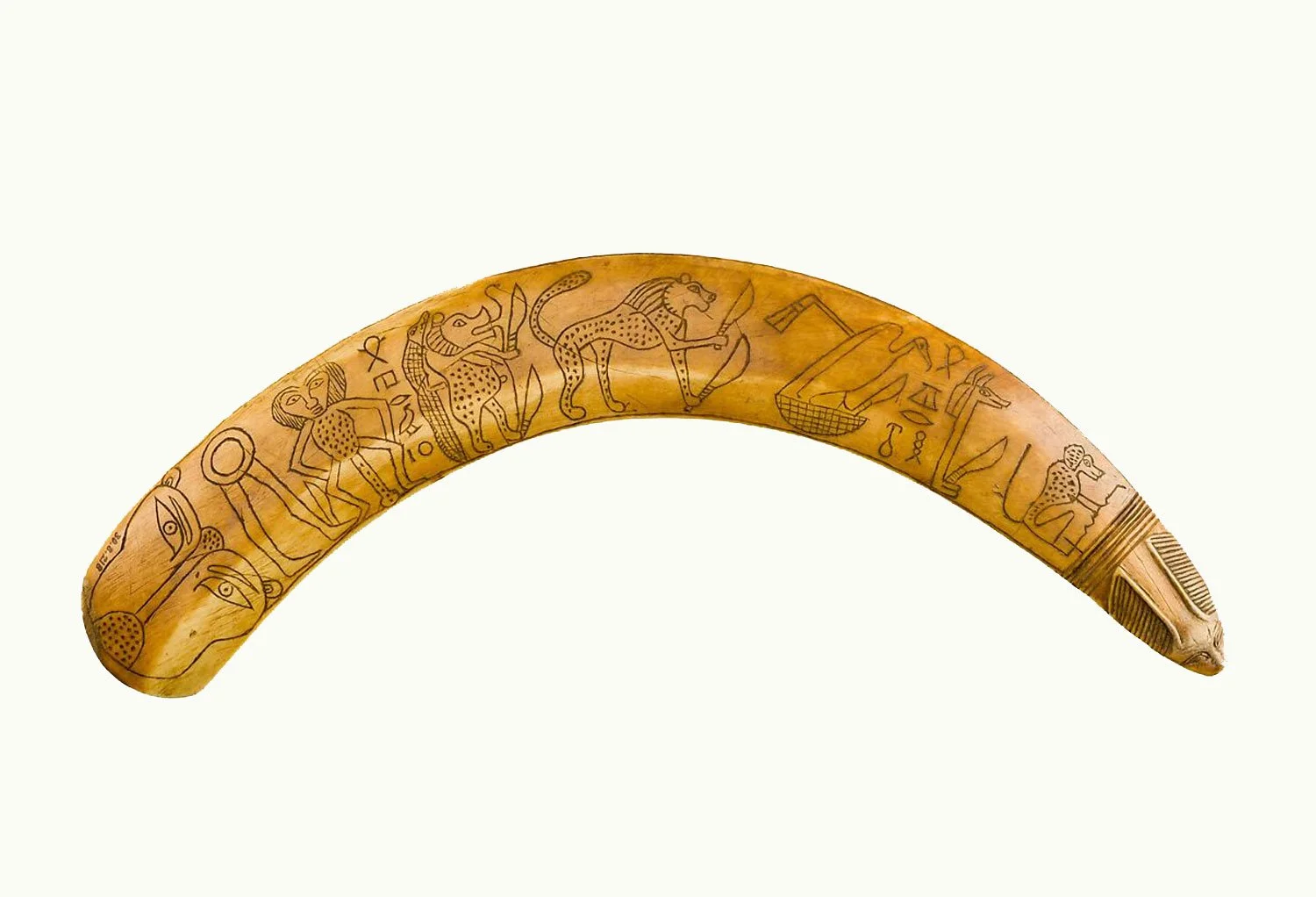
The magic wand of Ancient Egypt often looked like this. From the Middle Kingdom, Met Museum.
Protective Wands of Ancient Egypt
Some of the earliest surviving objects commonly described as magical wands come from Middle Kingdom Egypt, particularly the Twelfth and Thirteenth Dynasties, around 1980–1640 BCE. These curved objects were usually carved from hippopotamus ivory and are sometimes called apotropaic wands, meaning objects intended to repel evil.
Their shape follows the natural curve of the hippopotamus tusk, although it may also have suggested the throwing sticks used for hunting birds.
Because wild birds could symbolize chaos, the shape itself may have carried protective meaning. The strength and ferocity of the hippopotamus were likewise turned against dangerous supernatural forces. It also looks a bit like a modern day boomerang.
The surfaces of these wands were carved with protective beings, including lions, serpents, frogs, knife-bearing demons, and deities associated with childbirth. Taweret, the pregnant hippopotamus goddess, and the dwarf-like figure Aha, later closely related to the god Bes, were especially appropriate guardians of mothers and infants. Some examples were inscribed with phrases invoking “protection of day” and “protection of night.”
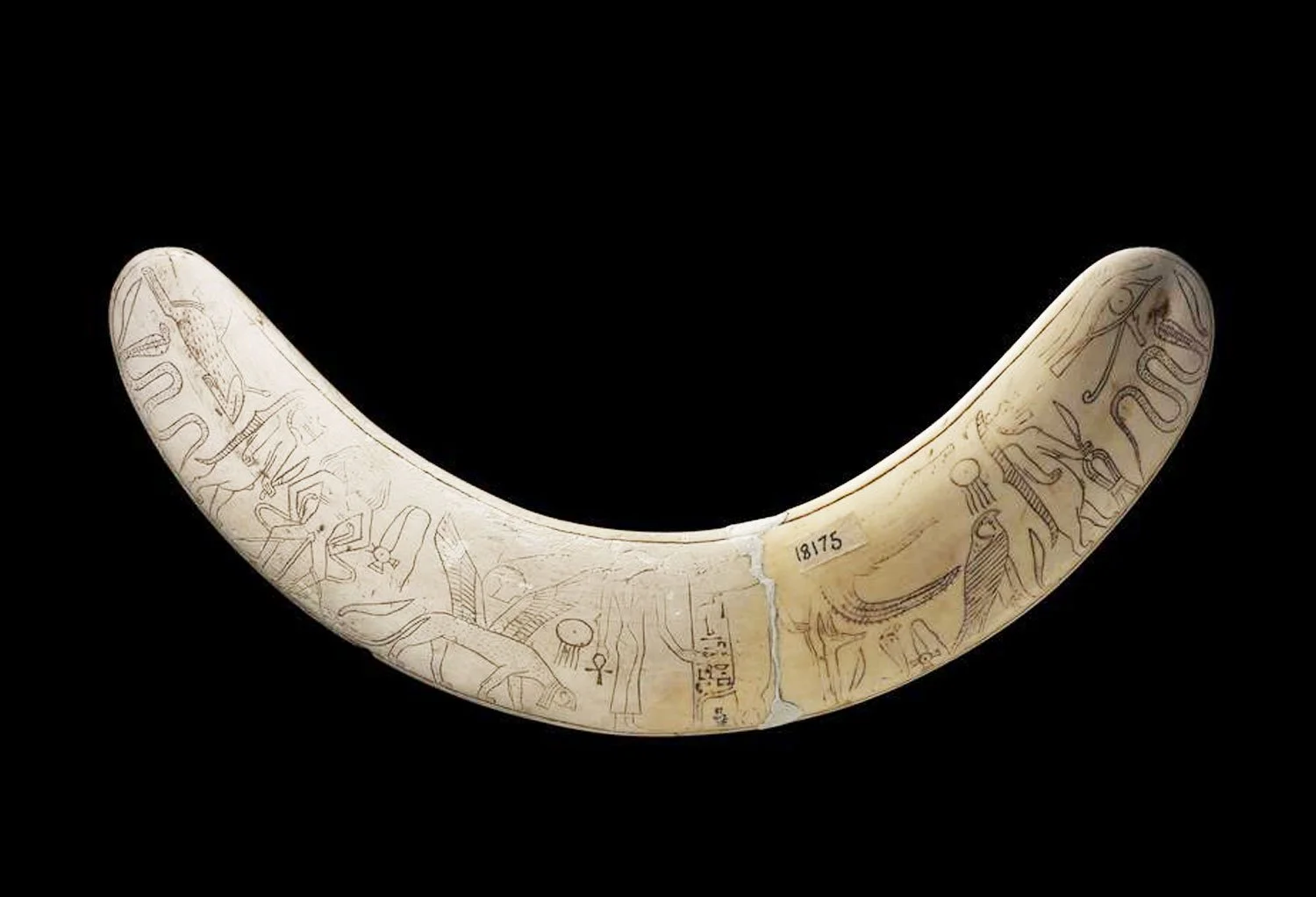
Ancient Egyptian Amulet Wand, Hippopotamus ivory incised with detities, 12th dynasty.
© The Trustees of the British Museum, shared under Creative Commons
Although their exact use remains uncertain, wear on surviving examples suggests that they were not merely funerary ornaments. They may have been passed around a bed, touched to the body, or used to trace a protective boundary on the ground. Many were later placed in tombs so that their protection might continue during the deceased person’s rebirth. The Metropolitan Museum’s Middle Kingdom apotropaic wand retains evidence of such repeated use, while the British Museum preserves a fine hippopotamus-ivory example from Thebes.
Rods of Gods and Magicians in the Classical World
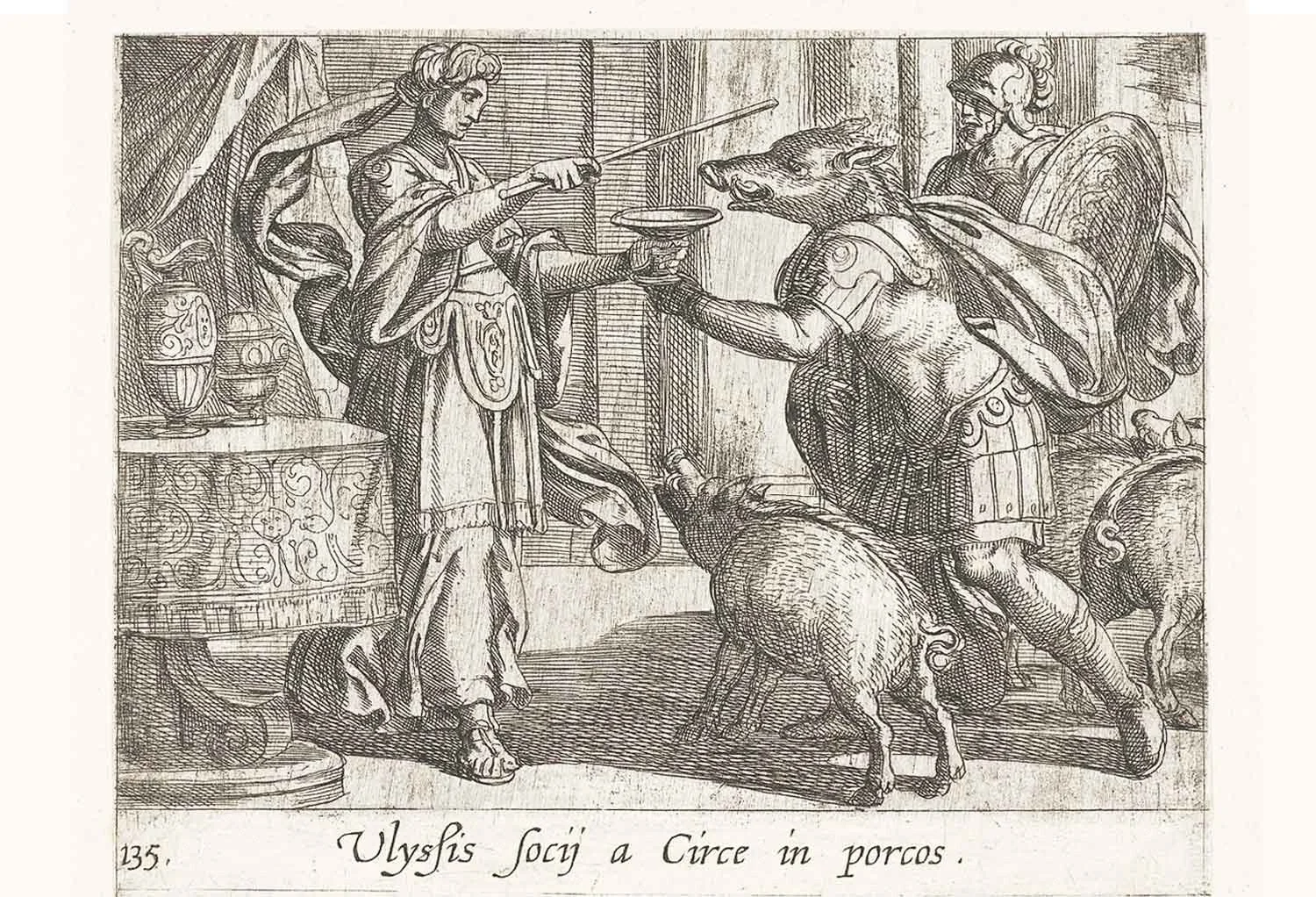
Circe and her wand, I think you get the gist of the translation!
In ancient Greece, the boundary between wand, staff, and scepter was fluid. The Greek word rhabdos could describe a rod, switch, staff, or wand. In Homer’s Odyssey, the enchantress Circe uses a wand when transforming Odysseus’s companions into swine. Athena also touches Odysseus with a golden wand to alter his appearance. Here, the wand performs its most enduring literary function: transformation through touch.
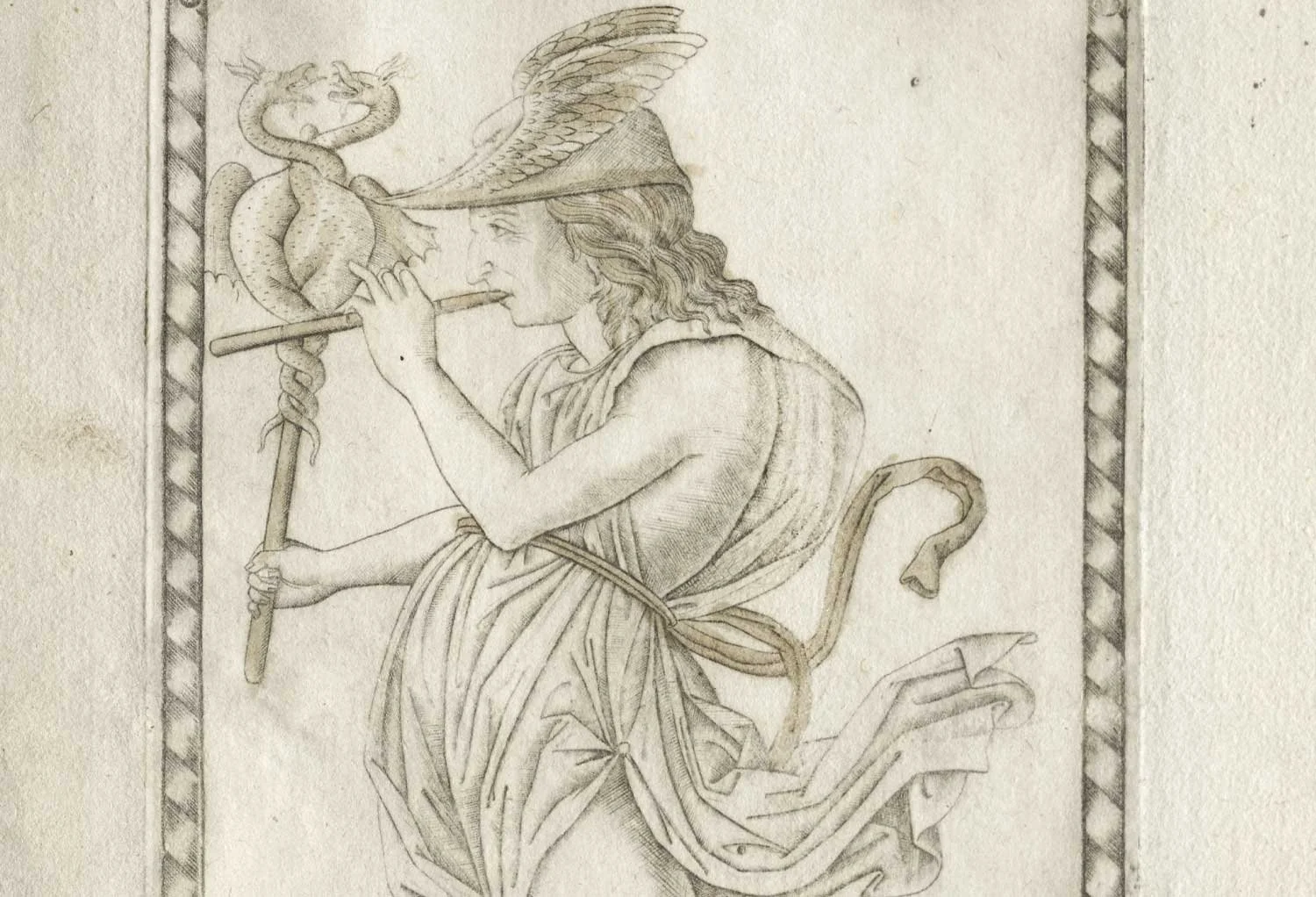
This is actually the Roman God Mercury, portraying his Greek equivalent, Hermes with a caduceus and flute. Cleveland Musuem of Art 15th c.
The god Hermes carried the kerykeion, better known by its Latin name, the caduceus. Originally a herald’s staff, it represented authority, safe passage, negotiation, and the ability to cross boundaries, including the boundary between the living and the dead. Although it was not simply a magician’s wand, its association with Hermes, a god of travelers, messages, cunning, and liminal places, gave it an unmistakably magical character.
Dionysus and his followers carried the thyrsus, a staff made from giant fennel, wrapped in ivy or vine leaves and often crowned with a pinecone. It symbolized fertility, vegetation, ecstasy, and the god’s mysterious power. Once again, this was a ritual staff rather than a spell-casting wand, but it illustrates how living plants could become vessels of divine presence.
Roman religion and literature inherited many of these images. Mercury carried the caduceus, while sorceresses in Roman poetry employed rods during acts of enchantment. In art, a raised staff or wand helped the viewer recognize that a deity or magician was exercising supernatural power.
Divine Rods in the Ancient Near East
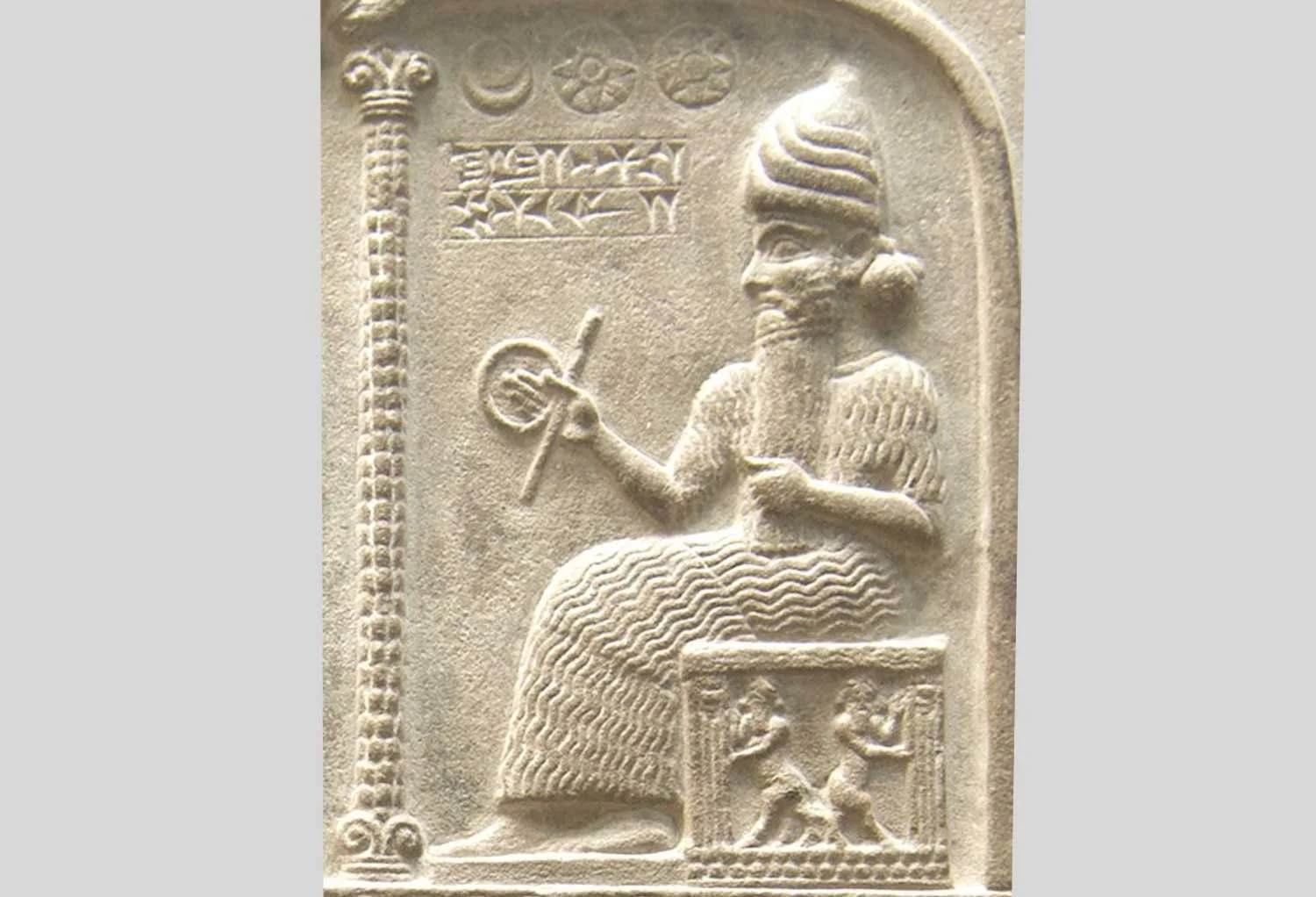
The Tablet of Shamash, showing the Mesopotamian Sun God, with ‘Rod and and Ring.’
Rods and scepters were also signs of divine and royal authority throughout the ancient Near East. In Mesopotamian art, gods sometimes present a king with the enigmatic “rod and ring,” probably connected with divinely sanctioned rule, justice, or measurement. It should not automatically be called a magic wand, but it belongs to the same broad symbolic language: the rod identifies the person who has the right to establish order.
The staffs of Moses and Aaron in the Hebrew Bible are similarly more than walking sticks. Aaron’s rod blossoms, while the staff of Moses becomes a serpent, brings forth water, and is raised during miraculous events. The staff does not possess an independent magical personality; it acts as an instrument of divine will and as visible proof of God-given authority. Its importance nevertheless helped shape later European ideas of the wonder-working rod.
Zoroastrian priests used, and continue to use, the barsom, originally a carefully gathered bundle of twigs and, in later practice, often a group of slender metal rods. It represents the plant world within sacred ritual. Although it is not a wand in the fairy-tale sense, it demonstrates another ancient connection between branches, purity, sacred order, and communication with the divine.
Sacred Rods in the Asian World
Objects resembling wands developed independently in many parts of Asia, although their purposes and meanings differed greatly.
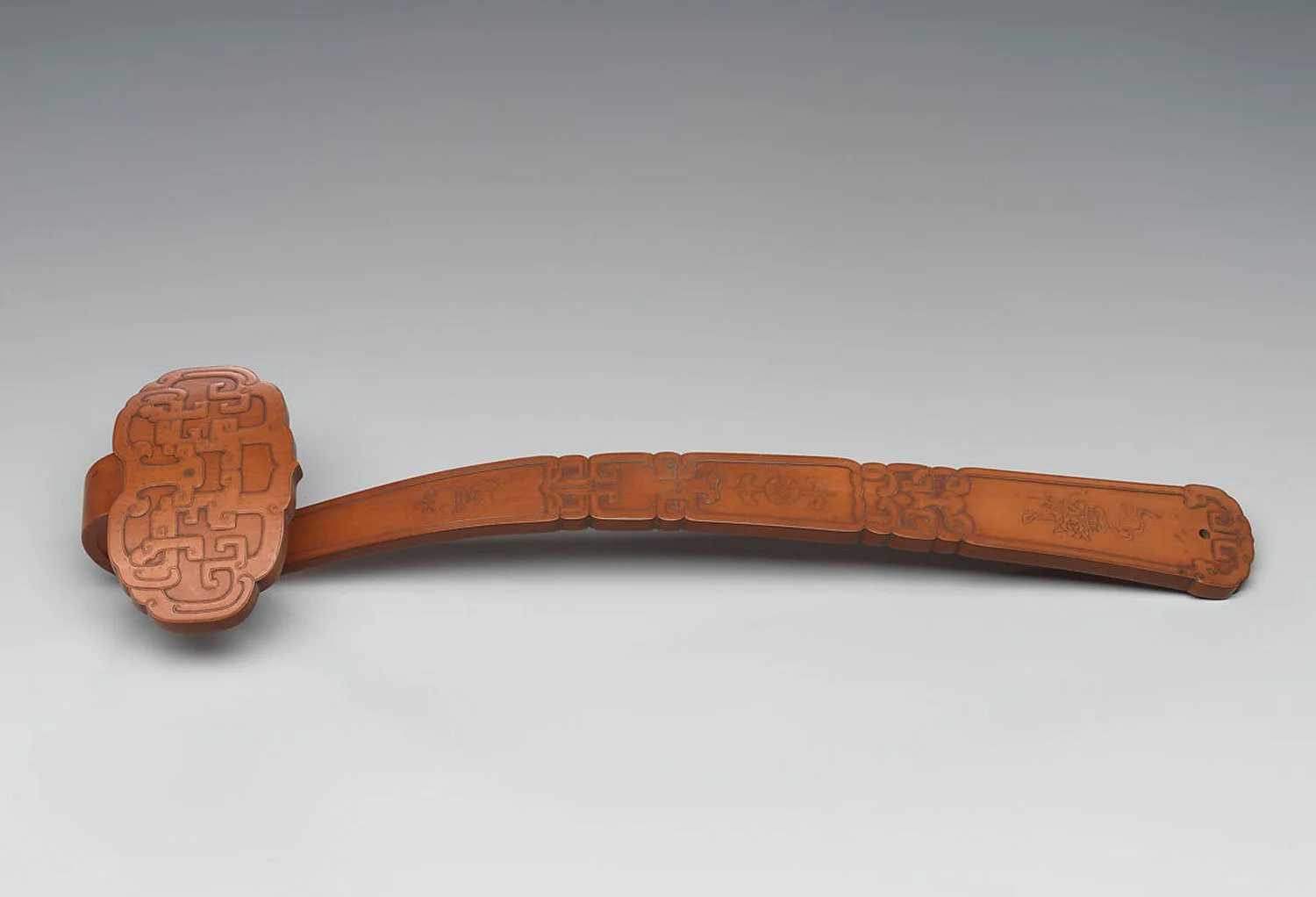
Ruyi scepter from the Chinese Qing dynasty. Met Museum.
In China, the curved ruyi scepter became an emblem of rank, good fortune, and the fulfillment of wishes. It’s name may be translated as ‘as you desire.’ Daoist ritual specialists also used staffs, inscribed wooden objects, talismans, ritual swords, and peachwood implements. Peachwood was traditionally valued for its power to repel harmful spirits. These objects were part of highly developed religious traditions and should not be treated merely as Chinese versions of a European wizard’s wand.
In Japan, Shinto priests employ purification wands such as the haraegushi or ōnusa, usually formed from a wooden staff hung with folded paper streamers. The wand is waved over people, places, or objects during rites of cleansing and blessing. Its movement does not fire a magical force in the manner of a fantasy wand; rather, it ritually removes pollution and helps restore purity and harmony.
South Asian traditions made extensive use of staffs as emblems of spiritual discipline, kingship, protection, and ascetic authority. The Sanskrit danda can mean a staff, rod, authority, punishment, or discipline. Hindu and Buddhist figures may carry staffs or implements such as the vajra, but these belong to particular philosophical and ritual systems rather than to a universal category of “magic wand.”
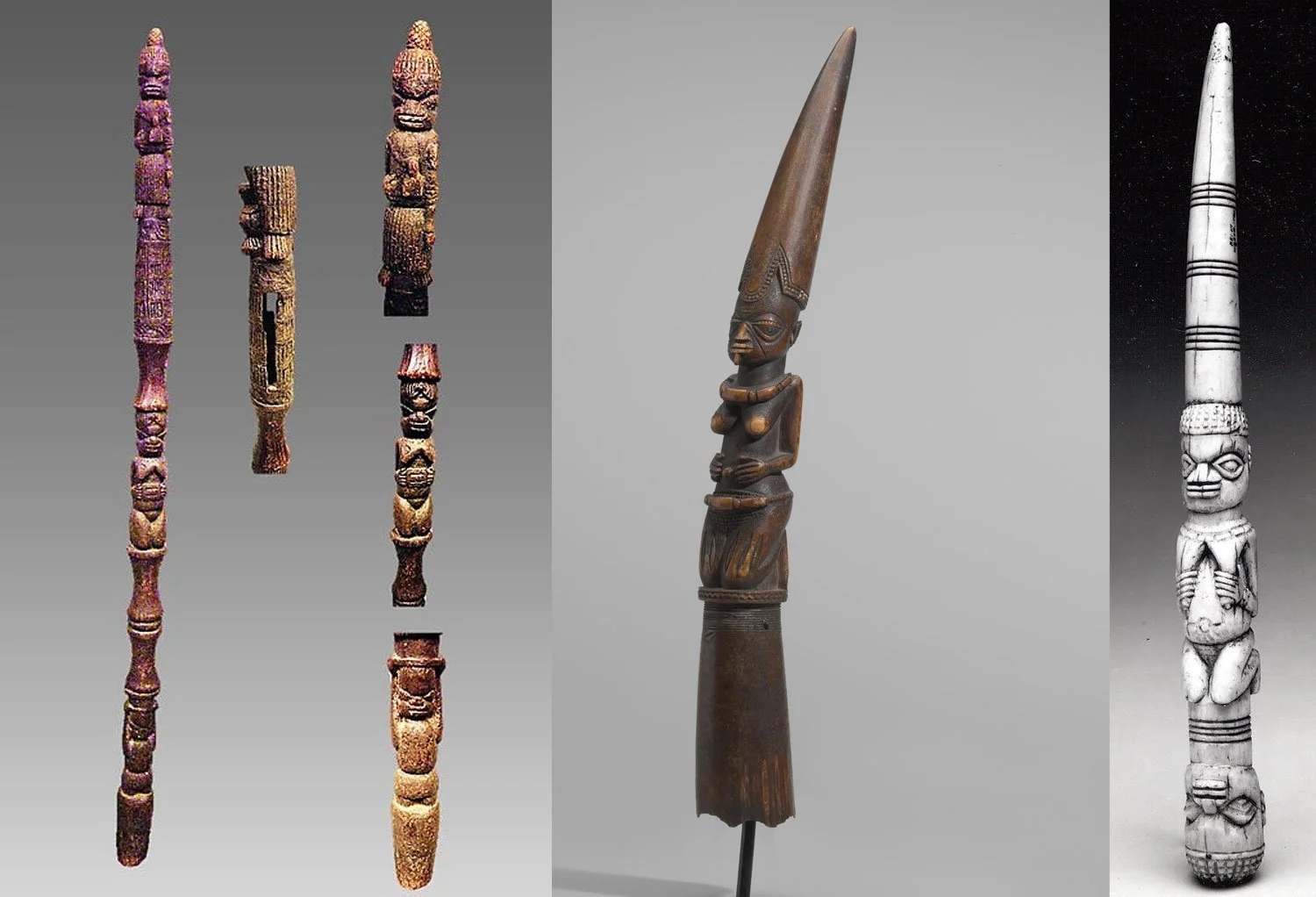
Rattle Staff, Yoruba Ifá Divination Tappers Met Museum, Yale Art, Met Museum. Africa.
Across Africa and the Indigenous cultures of the Americas, staffs, carved rods, prayer sticks, fly whisks, and insignia of healers, diviners, rulers, and spirit specialists have served many sacred purposes. Their meanings are specific to individual peoples. A Yoruba staff associated with a deity, for example, is not interchangeable with a European magician’s wand. The visual resemblance can be striking, but the object’s proper name, cultural setting, and ritual use matter far more than its shape.
The Medieval Magician’s Wand
Because of all the fantasy films and television shows set in the Medieval era, this is perhaps the period that many of us think of when we hear ‘magic wand’ or a titles like Sorcerer or Soceress, Harry Potter series aside.
During the European Middle Ages, the wand occupied an uneasy position between religion, learned magic, folklore, and literature. Christian art continued to show Moses and Aaron with miraculous rods, while bishops and rulers carried croziers and scepters as symbols of legitimate authority. At the same time, magical texts described rods used for drawing circles, directing spirits, blessing ritual space, or indicating where hidden things might be found.
Medieval and early modern grimoires often specified how a wand should be made. A branch might need to come from hazel or another particular tree, be cut at sunrise on an astrologically significant day, and be inscribed with sacred names or symbols. Its effectiveness depended not only upon the wood but upon the proper time, words, purity, and intention of the maker.
The ritual wand did not necessarily contain power like a modern battery. It was closer to an emblem of permission and control. Within the protective circle, the magician held the wand as a ruler held a scepter: it demonstrated authority over the ritual and directed the forces being invoked.
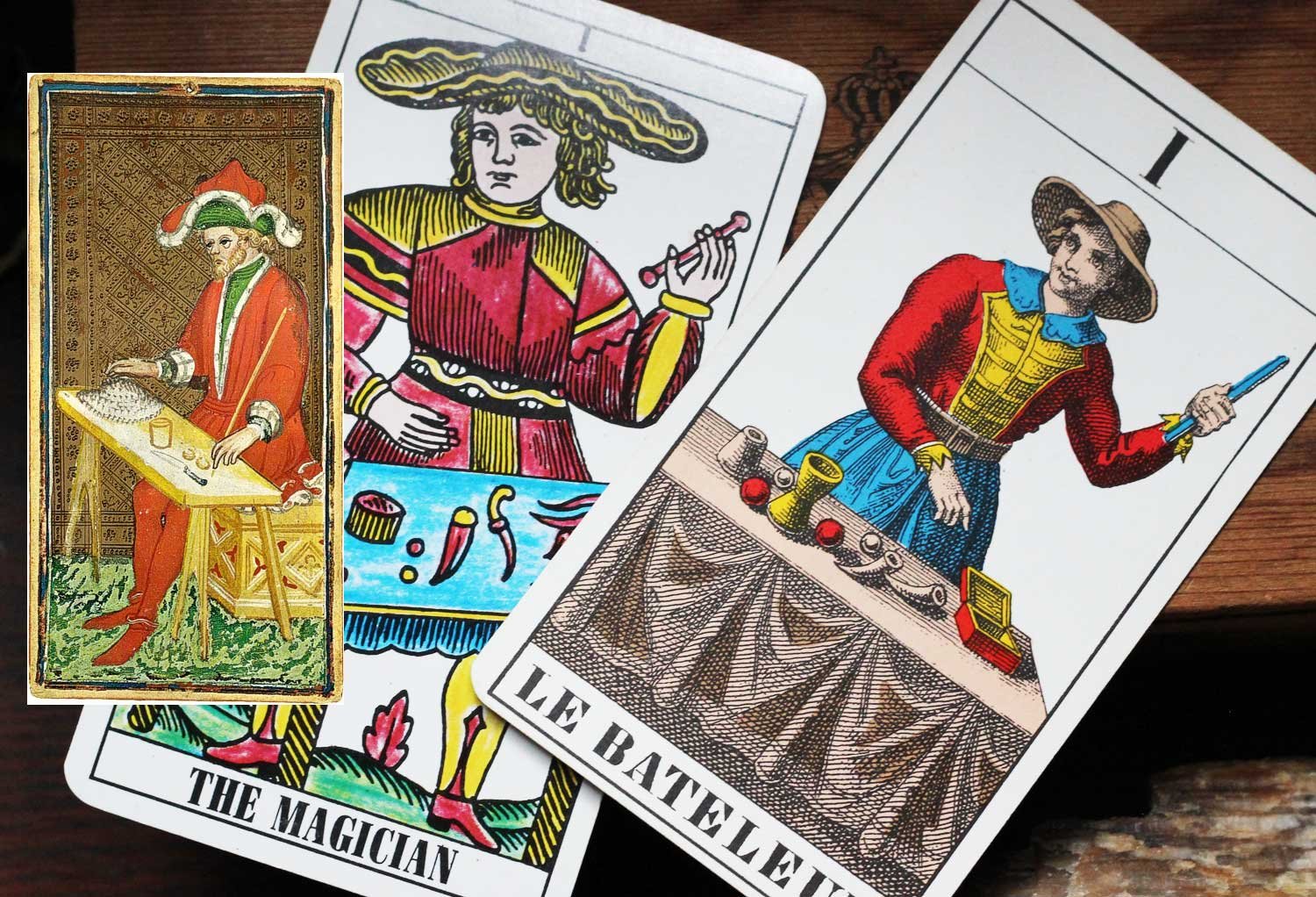
From early Tarot and the Major Arcana, ‘The Magician’ (or The Juggler or Le Bateleur) card with featured character holding a wand, along with a tableful of other accoutrement. The card on the far left is from the oldest Tarot deck know, the Visconti-Sforza set from the 15th c.
Popular beliefs were somewhat different. Cunning folk and village healers might employ forked branches for divination, sticks for measuring or transferring illness, and rods for locating water, minerals, stolen property, or buried treasure. Dowsing rods, often made from forked hazel, became especially well known in Europe. Whether regarded as magic, natural sensitivity, or fraud, the rod again transformed an invisible question into a visible movement.
The Symbolism of the Wand
Across its many forms, the wand repeatedly expresses several related ideas:
Authority: Like a scepter, it identifies the person permitted to command or officiate.
Direction: It concentrates attention and gives intention a visible path.
Protection: It may trace a circle, boundary, or barrier against danger.
Transformation: A touch of the wand changes bodies, appearances, circumstances, or states of being.
Purification: Ritual motion can cleanse a person or place.
Connection with nature: Wooden wands retain the symbolism of the living tree—growth, renewal, ancestry, and the link between earth and sky.
Mediation: The wand stands between the human and divine worlds, translating words or thoughts into ritual action.
Directing Focus…
The magic wand has therefore never been merely a decorative stick. Whether carved from hippopotamus ivory, cut from hazel, hung with white paper or wrapped in ivy, it directs focus. It extends the reach of the hand and gives physical form to an invisible intention whether it’s protecting someone, commanding a spirit or blessing a sacred place.