
5 Ideas for Medieval Tavern Pies
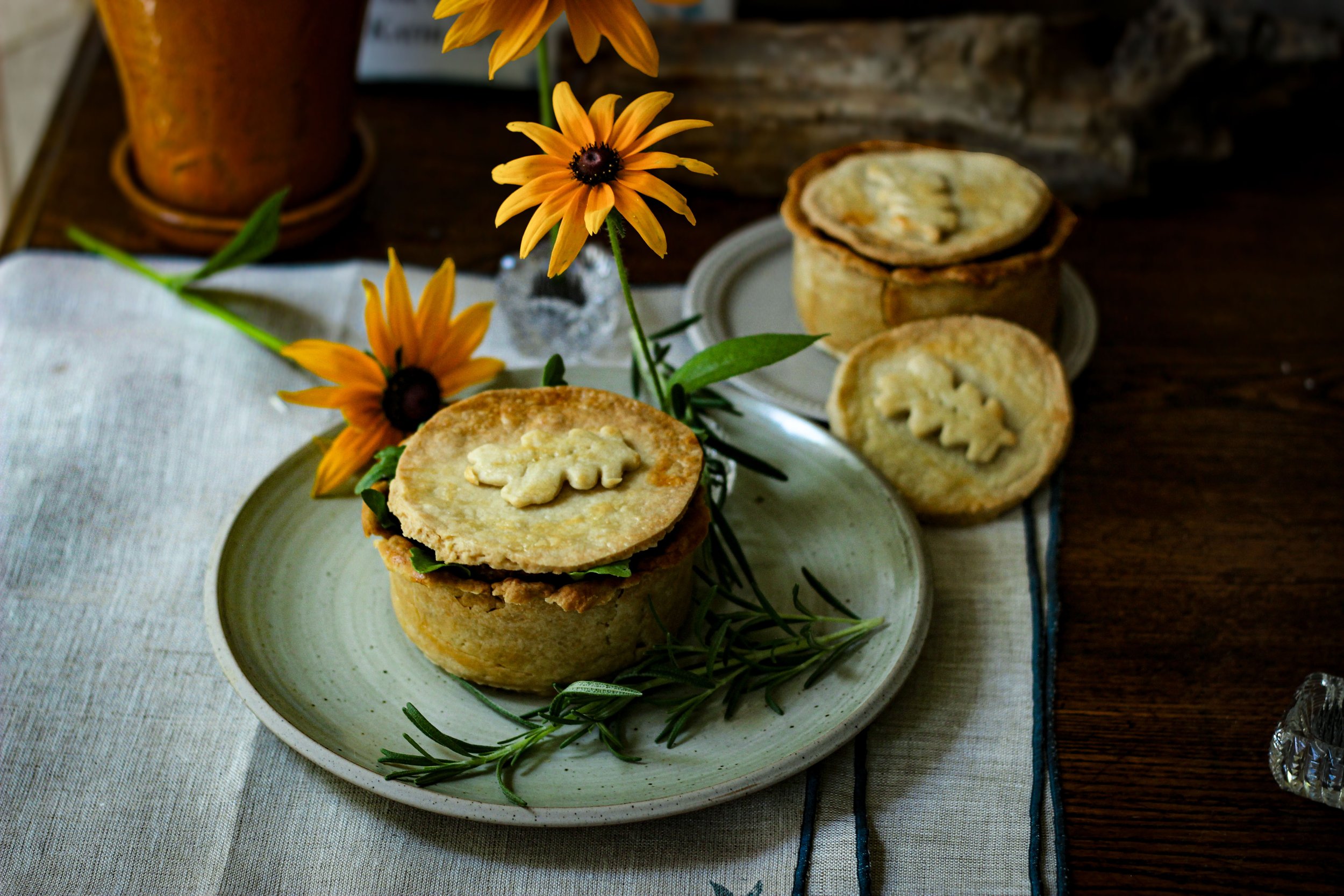
A savory pie with separate top…
A Word About My ‘Medieval Pies’
I want to start off by reminding you that this site is about Medieval and Renaissance inspired ideas…meaning, inspired - not strictly historical.
That said, hand pies, savory pies, sweet tart pies were all made and eaten during that time. The part of my pies that is not historical, are some of the ingredients and the baking utensils.
I rarely give recipes for things I make here, and this post is no different. For one thing, I don’t consider myself a good enough cook to be handing out recipes and for another, there are so many recipes already easily found on the web, I decided on my site, I would concentrate on the look. Or, as Paul Hollywood on the GBBB would reprimand, ‘style over substance.’
I will give some links to various recipes at the end of the post, including one to the book, Pie by Angela Boggiano that I have, and use often.
Individual Savory Pies with Medieval, Rustic Flair…
With that in mind…
Here are a few ideas I’ve used over the years when I make savory pies, or what I’m terming Medieval Tavern Pies…aka imperfect, handcrafted, made by a cook not necessarily a chef - Medieval or otherwise.
I usually make individual pies, but sometimes I make them family-size.
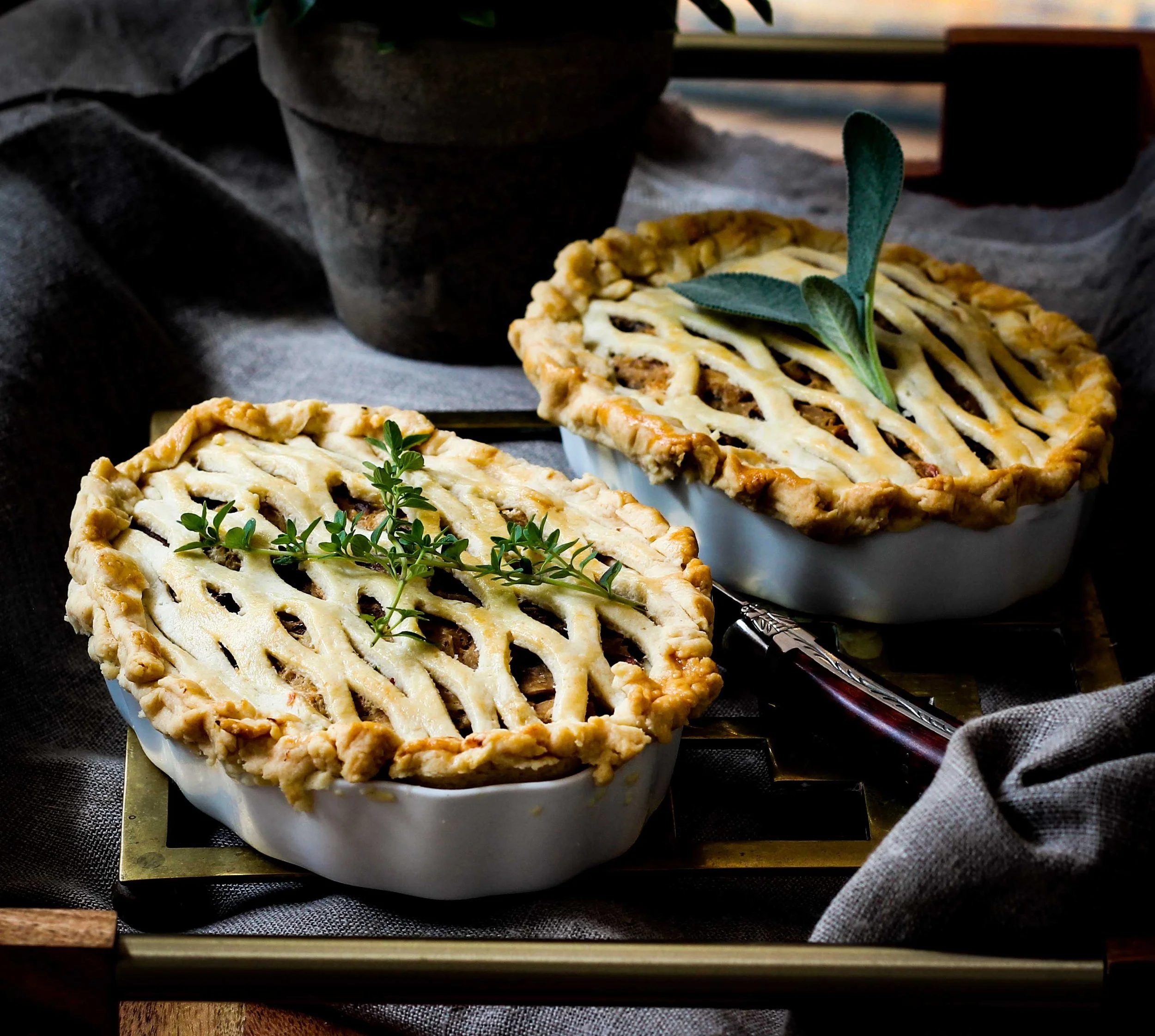
A lattice type decoration.
Imperfect is Perfect…
All my pies are very rustic. This is because I can’t be bothered to do a perfect crimped crust. I’m just not talented in that way and to be honest, I like the homemade-y look.
In England, savory pies are common whereas in the States, they are less so. Shepherd’s Pie is the one most people are familiar with - and usually what they’re actually making is not Shepherd’s Pie, but Cottage Pie. The latter is with beef and the former, is with lamb - hence the Shepherd’s in the name.
A Lattice Cutter…
The pies in this post can be made with the filling of your choice, for the most part.
The pies above were mushroom and beef with sage and thyme.
But the thing that makes these (above) pies special is the lattice-style top crust.
This was made with a special hand-roller mechanism which can be found in several versions. It’s also excellent for making a fancy Beef Wellington pastry cover. It’s very easy to use and makes for a dramatic presentation, even if your pies are less than perfectly crafted.
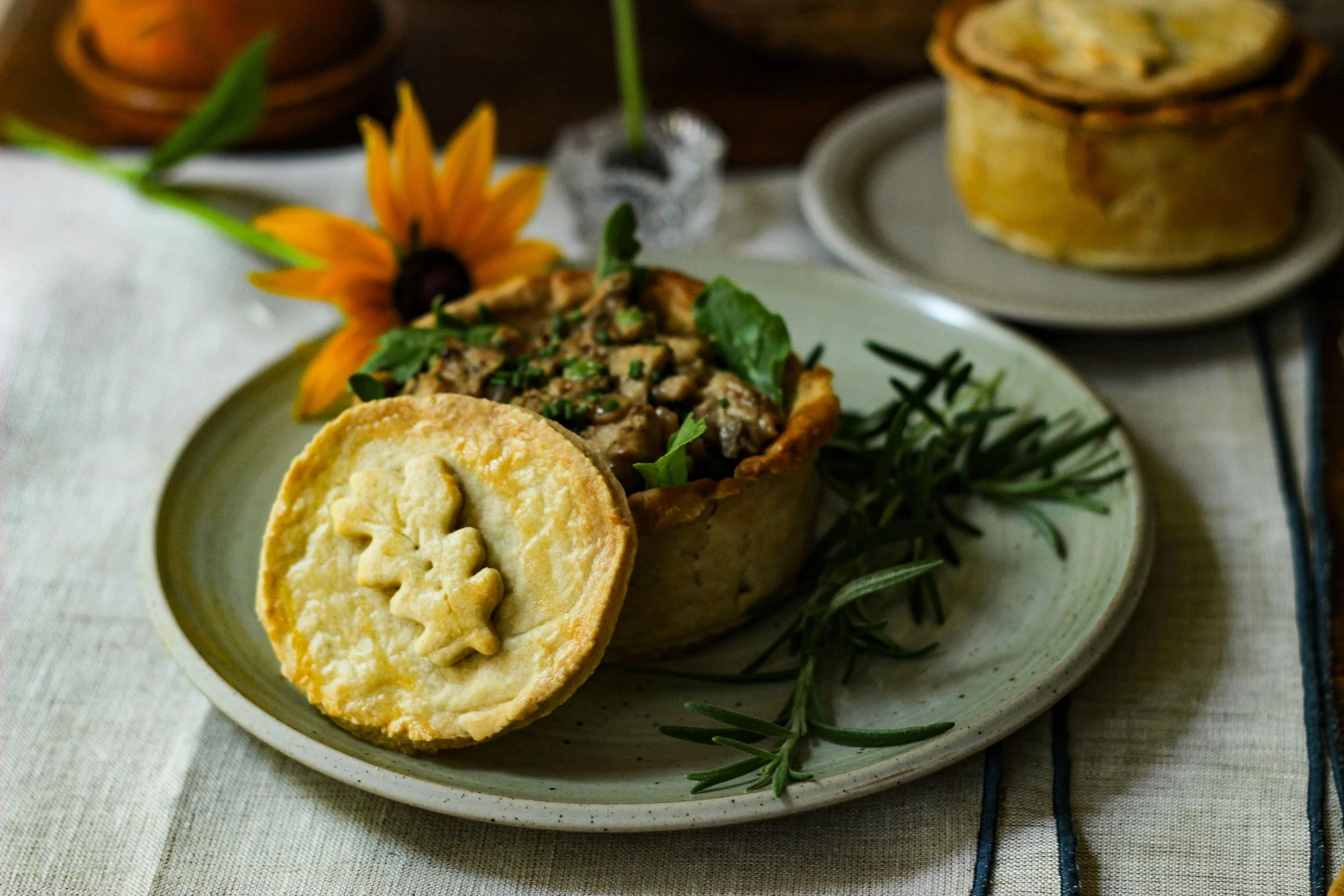
Botton filled Mushroom and Chicken savory pie with separate top.
Top and Bottom Crusts are Sometimes Separate…
I made these little ‘Medieval Pies’ yesterday. Using a creamy Chicken and Mushroom filling, I made the tops of these pies as separate pieces.
I like doing the pie casing/shells ahead of time. Especially for a party, this way I can tell if they came out okay and I don’t have to rely on the filling and the crust baking together at the last minute. I made both components, filling and crust, the day before, then just reheated separately (I lightly reheated the shells) and filled before serving.
Sometimes I like lining the shells with greenery, in this case, I lined with arugula leaves.
Decoration
As far as the decoration, I have a set of leaf-shaped cookie cutters that I often use. You can also cut something out by hand. Affix with a bit of egg wash before baking.
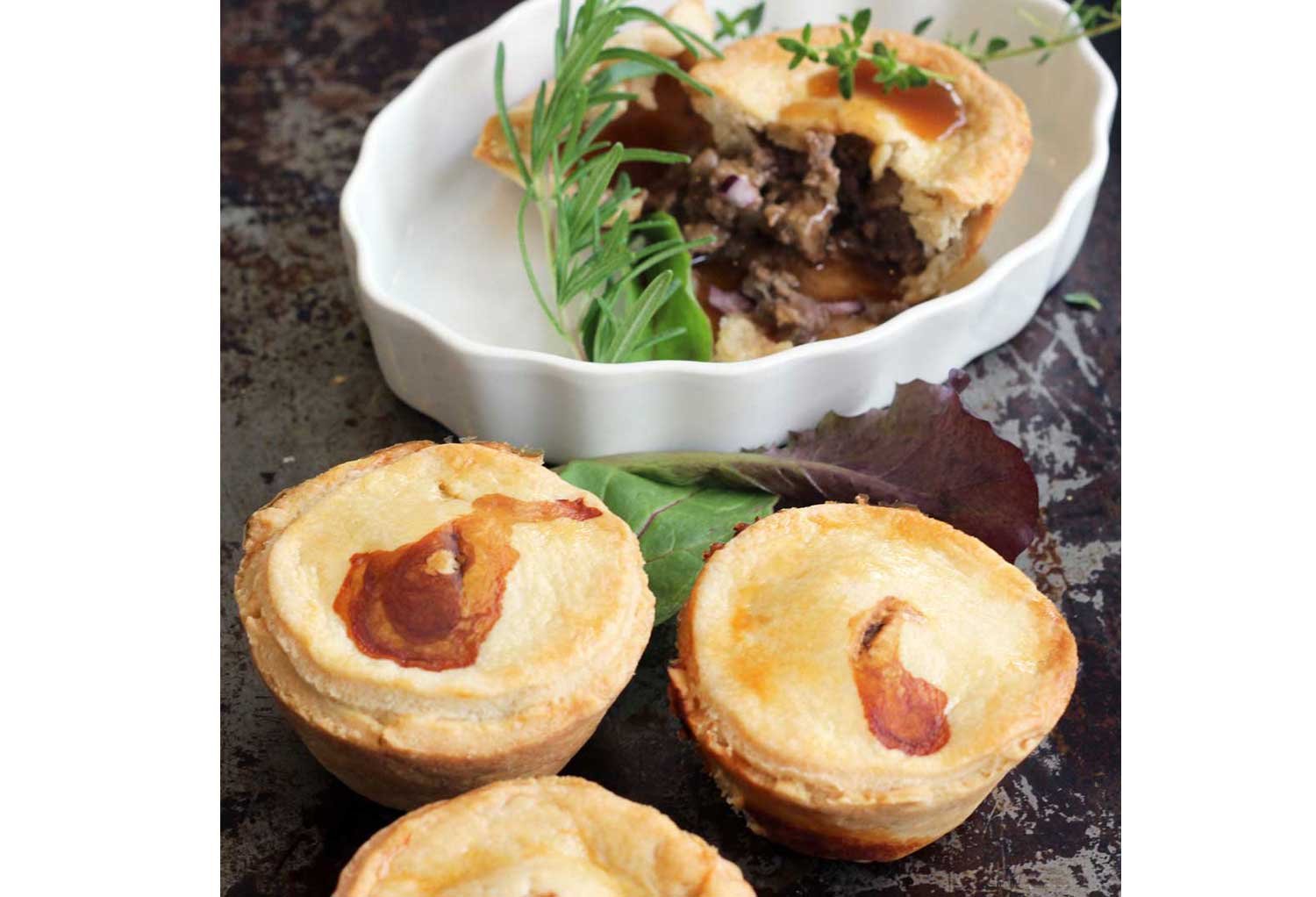
Mini Scotch Pies…made in muffin tin.
Easy vs Not as Easy…
The little Scotch Pies above were made in a muffin tin, for easy baking. Scotch Pie is usually filled with a minced meat and seasoned with a warm spice such as nutmeg along with salt and pepper etc.
Scotch Pies are hand pies, meaning, they were originally made to be eaten with your hand and often when travelling. Because of this they are usually made with a Hot Water Crust Pastry; this kind of pastry creates a hard, sturdy shell or coffin /coffyn as they were called in the Middle-Ages.
Coffins were used more like food storage and less like edibles, originally.
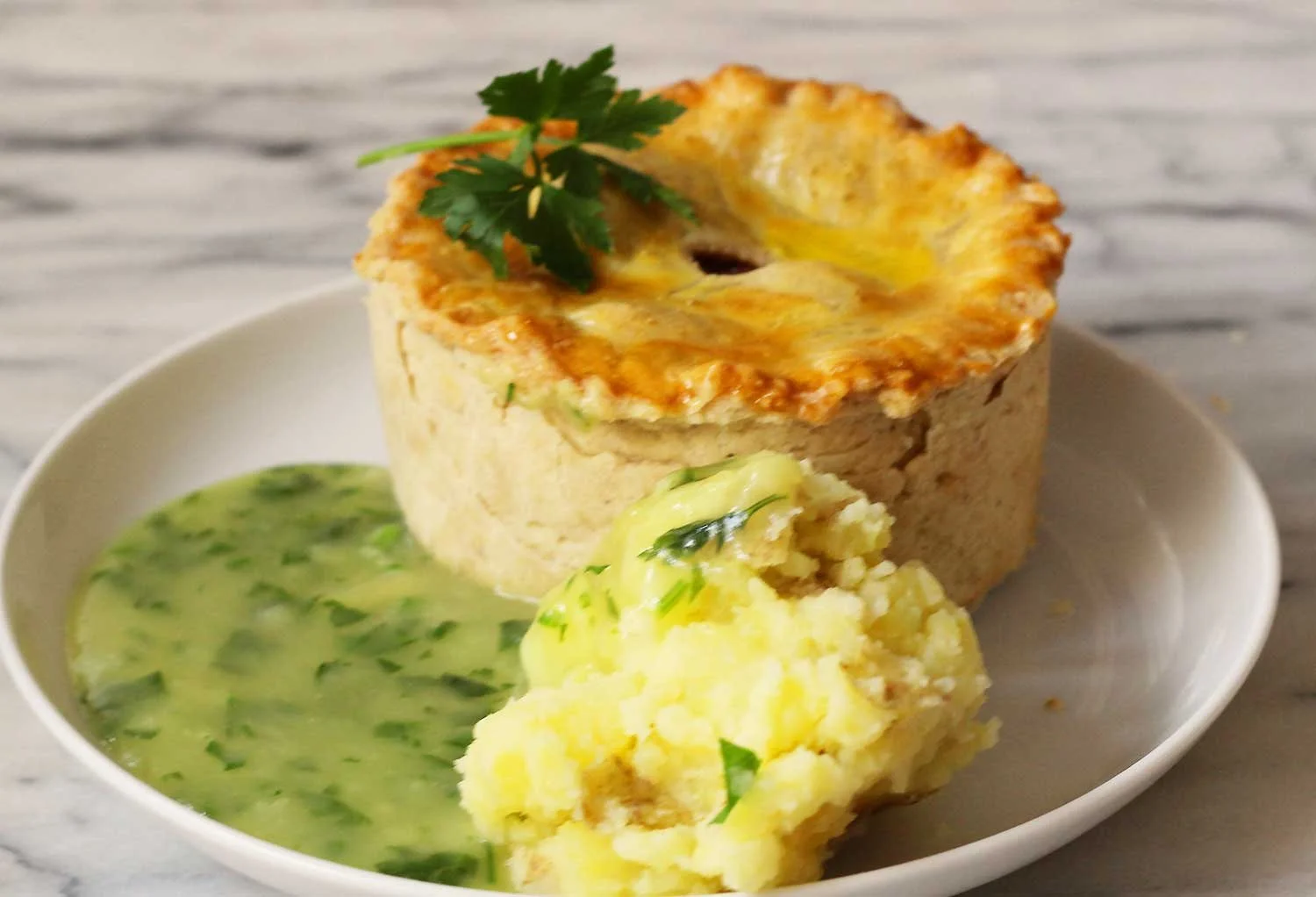
More traditional straight-sided Scotch Pie.
The traditional way to make Scotch Pies is not in a muffin tin but molded around a small glass or other form, and baked as standing pie, the muffin-tin method makes creating these much easier, but the traditional look has a charm of its own.
This is a version made with parsley sauce and mash.
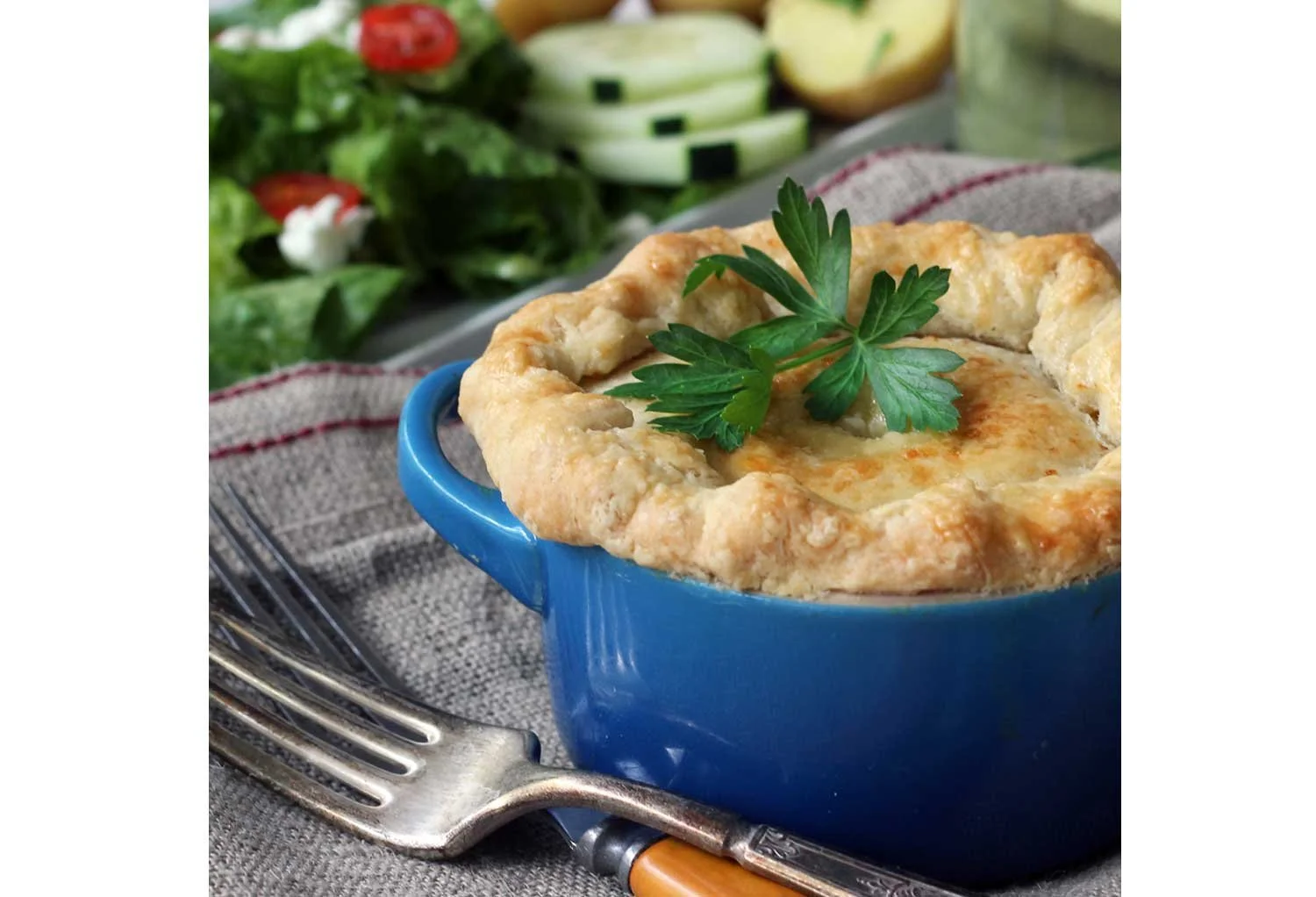
Leek Pie made in a small crock.
The Easiest Savory Pie option…
This ‘Medieval Pie’ is the easiest because you don’t make a full crust, only the top, and it’s made with super easy store-bought Puff Pastry.
This is great for any savory pie filling. You can, of course, do this as a full-size pie, but when I think of Medieval Tavern food, I think individual. I had small Le Creuset crocks on hand, but something more to the period would be even better.
Just cut out the pastry lid from puff pastry and affix it with a little egg wash to whatever you’re baking in, with the filling of your choice. Could even a be a very thick stew inside.
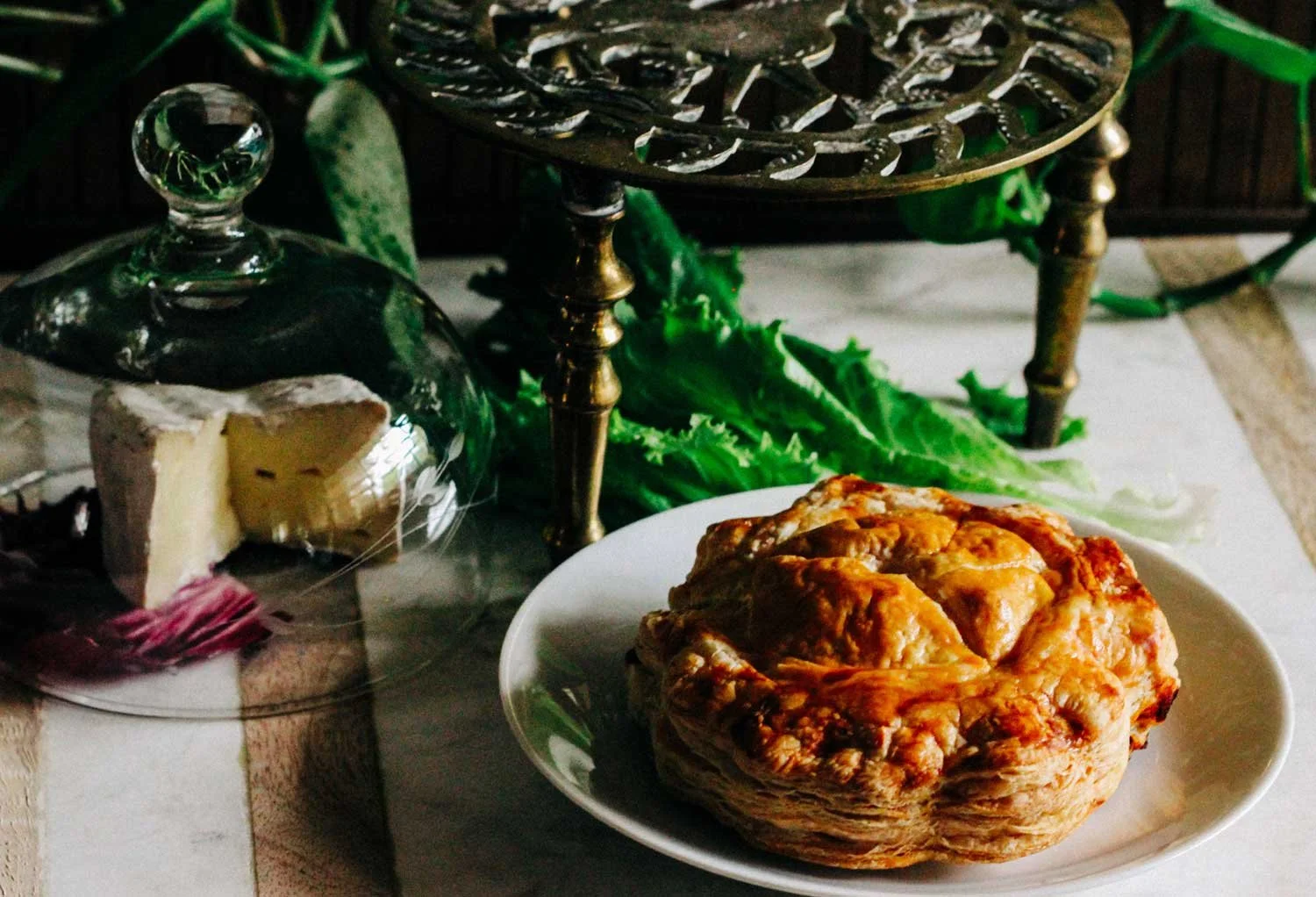
Bottom and top with Puff Pastry…
Full Puff-Pastry Crust…
The last pie is also made with Puff Pastry. With this pie, you cut out two pieces, a bottom and a top, and put a filling in the center of the bottom and encase with the top. The filling for this would be something without a lot of liquid because you would basically be laying it on the bottom pastry. In this case, I used a smoked spare-rib meat filling and sharp cheddar cheese.
I also used a large flower-shaped tart shell to cut out the pastry so that it has decorative, scalloped edging.
Medieval Tavern Pie Tips…
Puff Pastry is the very easiest because unless you plan on making your own Puff (which you shouldn’t unless you’re a professional pastry chef), you simply buy it from the store, thaw it, and use. It’s also extremely tasty.
Hot-Water Crust Pastry is best for standing pies, those that need a lot of support. It is not hard to make, but you need to work fast, because once it cools, it becomes difficult to shape.
If you like the look of the fancy, high-sided pies with decoration (think Victorian, actually), HWC is the one you want to use.There are other pastries that can be used, and it might depend on the recipe you’re following. Below I’ve included a selection.
Use decorative cookie or biscuit cutters to get creative shapes to attach to your pie lid or, if large enough, to cut our your whole mini-pie crusts.
Resources:
Lattice cutter for pie tops
Leaf Cookie Cutter Sets
Scotch Pie
Chicken and Leek Pie
Note: the two pies listed above are from the cookbook ‘Pie’, by Angela Boggiano, it’s the book I use most often when I’m making savory pies.
You can find it HERE.